Clear Sky Science · en
Prevalence and molecular characterization of Theileria sp. from endangered Arabian gazelles in Saudi Arabia
Hidden Threats to Desert Antelopes
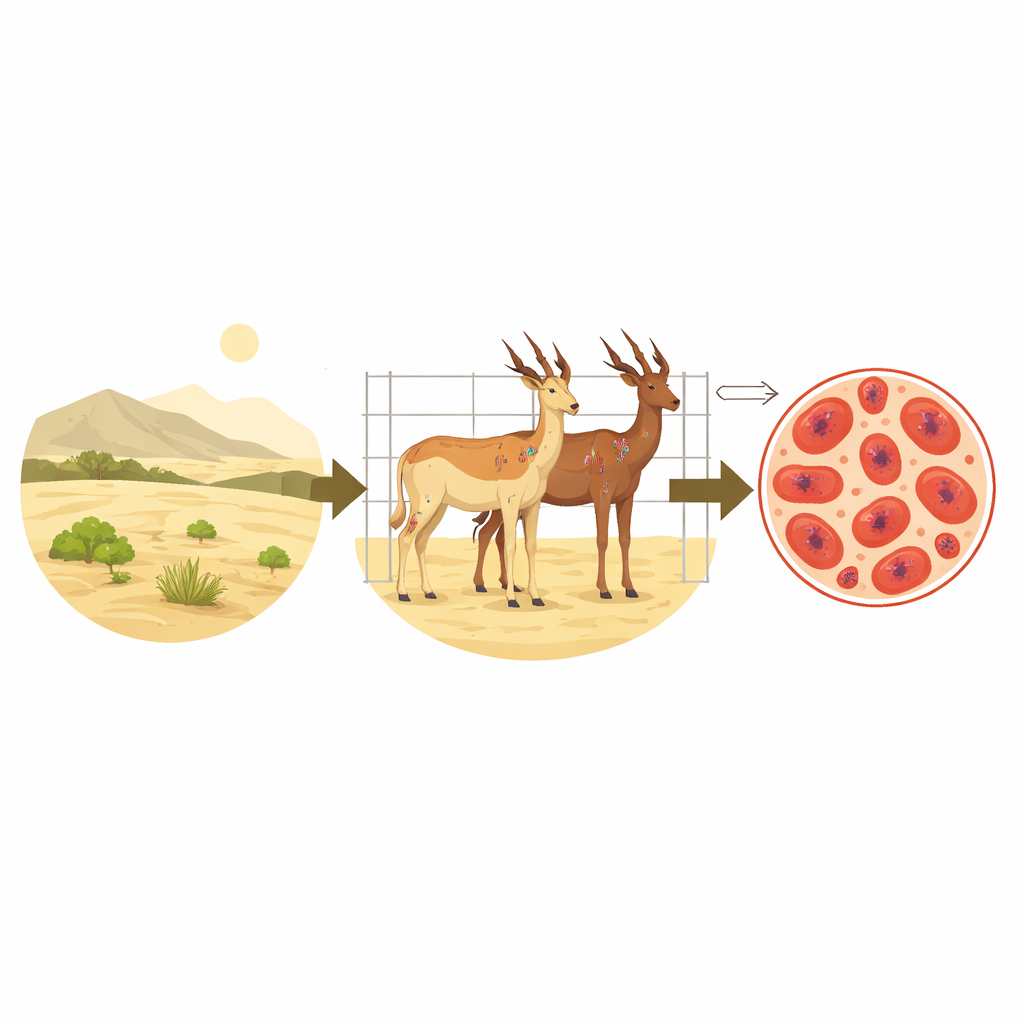
Across Arabia’s deserts, graceful gazelles are being bred in protected centers so they can someday return to the wild. Yet even in fenced reserves, invisible blood parasites carried by ticks can quietly infect these endangered animals. This study explores how common one such parasite, called Theileria, is in two species of Arabian gazelles in Saudi Arabia and what that means for efforts to conserve and reintroduce them.
Endangered Gazelles Under the Microscope
At King Khalid Wildlife Research Center near Riyadh, scientists examined 233 apparently healthy gazelles of two species: the sand gazelle (locally called Reem) and the Arabian gazelle (Idmi). These herds are managed specifically for breeding and release into protected areas, making their health crucial for conservation. Researchers collected blood from the neck vein of each animal and prepared stained slides to look for tiny parasites living inside red blood cells. They were particularly interested in Theileria, a tick-borne organism that can cause fever, anemia, and serious disease in cattle, sheep, and goats, but whose impact on wild gazelles is not well known.
Modern DNA Tools Reveal a Wider Problem
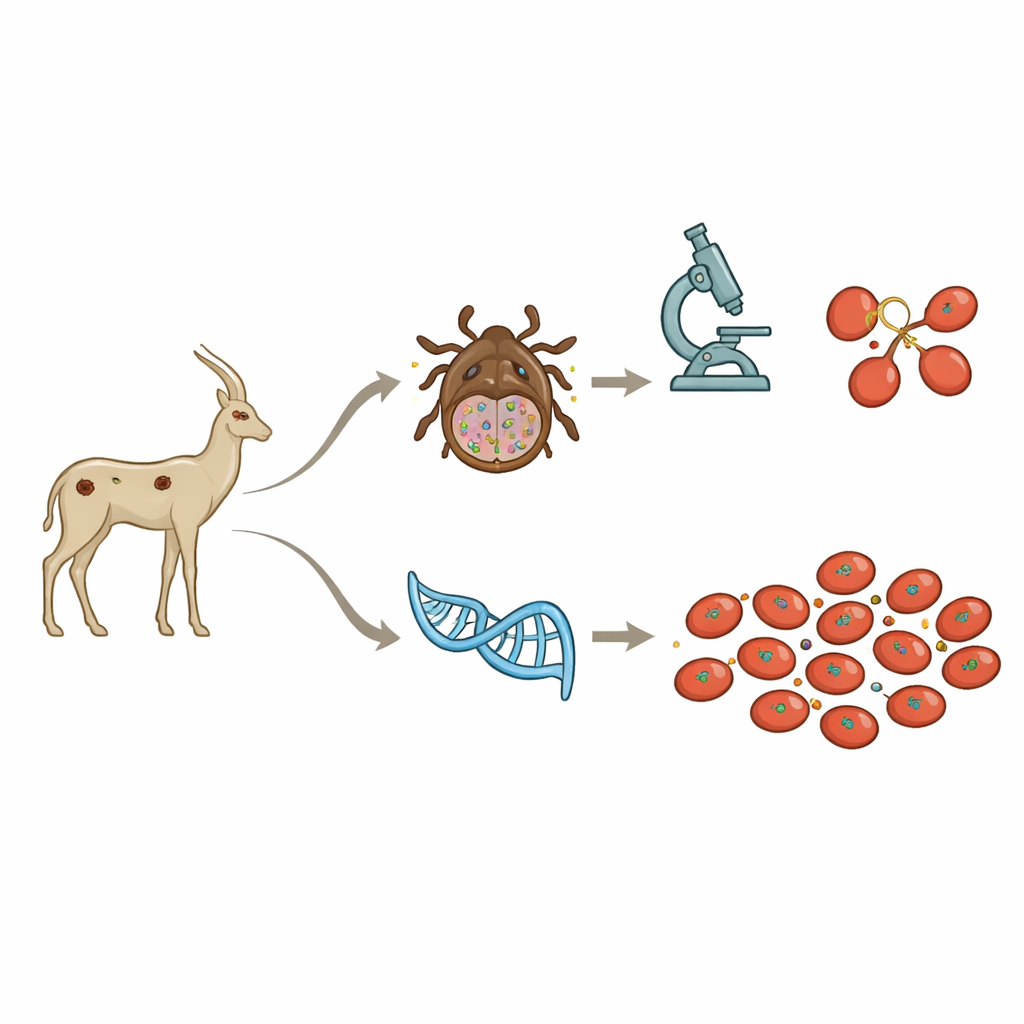
Microscopic examination showed parasite-like forms in the red blood cells of about 18% of the gazelles. To dig deeper, the team also used a DNA-based test known as PCR, which can detect very small amounts of parasite genetic material. This more sensitive method nearly doubled the detection rate: about 28% of gazelles were positive for Theileria DNA. Infection levels were similar in both gazelle species and in males and females, but juveniles were more often infected than adults, suggesting that younger animals may be especially vulnerable. When the researchers compared the two testing approaches, they found that microscopy rarely gave false positives, but it missed many infections that PCR picked up, especially when parasite levels in the blood were low.
Tracing Family Ties in a Parasite Family Tree
The team sequenced part of the parasite’s 18S rRNA gene, a standard genetic marker used to compare related microbes, from dozens of infected gazelles. The sequences from Reem and Idmi gazelles were almost identical, differing at only one or two positions, indicating that both species share essentially the same strain. When these sequences were placed onto a large genetic “family tree” alongside known Theileria from around the world, the parasites from Arabian gazelles clustered closely with Theileria previously found in Chinkara gazelles in Pakistan and dama gazelles in the United Arab Emirates and the United States. This suggests a distinct group of Theileria that tends to infect gazelles and related antelopes rather than livestock, and it appears to belong to the milder, non-transforming branch of the genus that usually causes little or no obvious illness.
Ticks as Suspected Middlemen
Because Theileria is spread by ticks, the researchers also collected 41 ticks from some of the gazelles over time. Using traditional identification keys and a genetic marker from the ticks themselves, they determined that all belonged to a species called Hyalomma impeltatum, already known from other parts of Saudi Arabia. When they tested DNA from these ticks, they detected the same Theileria strain found in Reem gazelles in two of them. This confirms that the ticks can carry the parasite’s DNA and strongly suggests they may be involved in transmission, although more work is needed to prove they can successfully pass the parasite between animals.
What This Means for Saving Gazelles
For the first time, this research documents how widespread Theileria infection is in endangered Arabian gazelles in a major Saudi breeding center and links the parasite to a specific local tick species. Although the parasite appears to be relatively mild in gazelles, hidden infections could still weaken animals or complicate reintroduction plans. The study shows that relying on microscope examination alone will miss many infected individuals, whereas DNA testing provides a much clearer picture. The authors recommend regular screening of breeding herds, careful tick control, and excluding infected gazelles from release programs until treated. By understanding and managing this unseen parasite, conservationists can give reintroduced gazelles a better chance to thrive once they leave the safety of the fence.
Citation: Almalki, S., Omer, S.A., Al-Shaebi, E. et al. Prevalence and molecular characterization of Theileria sp. from endangered Arabian gazelles in Saudi Arabia. Sci Rep 16, 10182 (2026). https://doi.org/10.1038/s41598-026-41035-y
Keywords: Arabian gazelles, tick-borne parasites, Theileria, wildlife conservation, Saudi Arabia