Clear Sky Science · en
Quality of life, sleep quality, and psychological wellbeing of patients with chronic kidney disease in Sabaragamuwa Province, Sri Lanka: a descriptive cross-sectional study
Why Life with Kidney Disease Matters
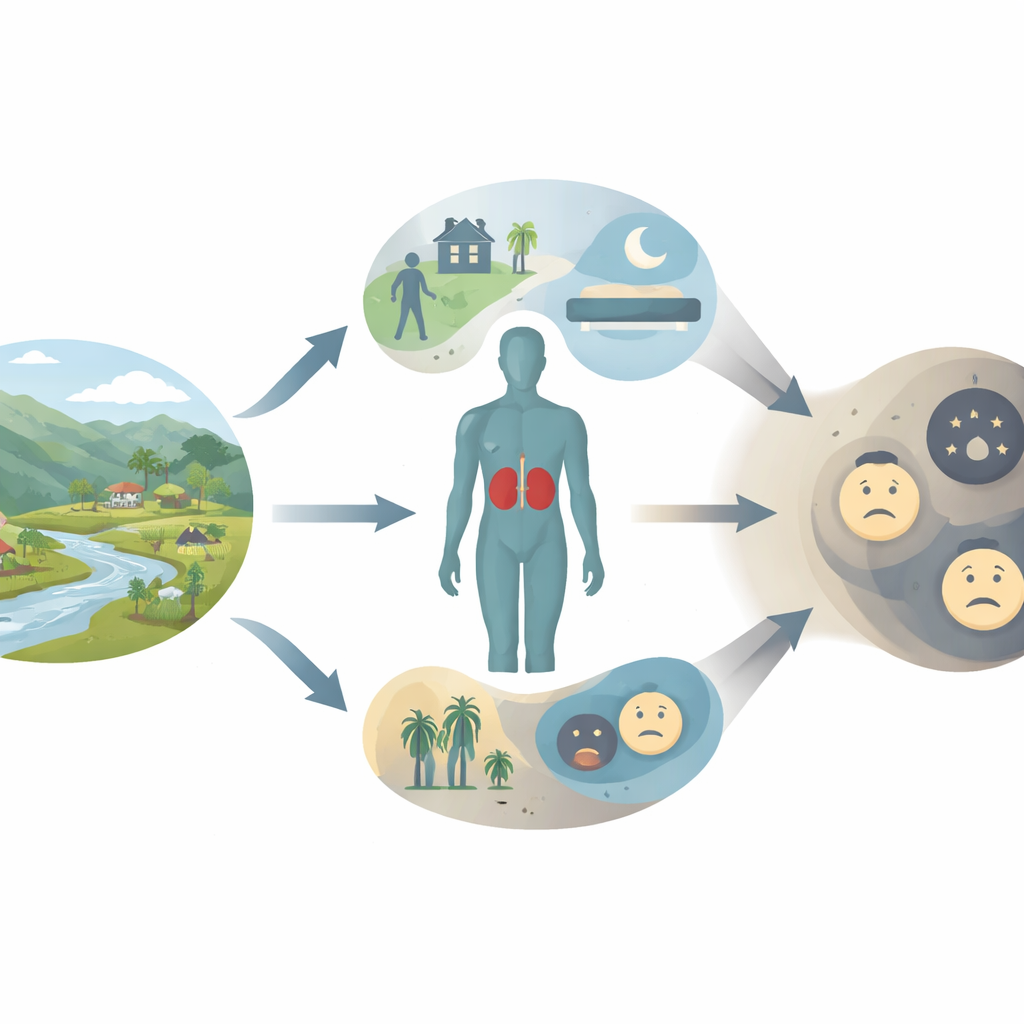
Chronic kidney disease is often seen as a problem of failing organs and medical tests, but for people actually living with it, the story is much broader. It can shape how well they sleep, whether they can keep working, and how they feel emotionally from day to day. This study looks closely at those everyday experiences among adults with long‑standing kidney disease in Sri Lanka’s Sabaragamuwa Province, offering a window into how a silent illness can quietly transform lives, families, and communities.
A Look at Patients in a Gem‑Mining Region
The research team focused on 153 adults who had been diagnosed with chronic kidney disease for more than a year and were receiving care at two major public hospitals in the Rathnapura District, a rural area famous for gem mining. Many residents there may be exposed to substances in soil and water that can harm the kidneys, making it an important region to study. The participants were mostly middle‑aged or older, lived in rural areas, and had modest levels of formal education. Most were not employed and relied on tap water for drinking. Many also lived with other long‑term health problems, especially high blood pressure and diabetes, conditions that often go hand in hand with kidney disease.
How Everyday Life Is Affected
To understand daily functioning, the researchers used a standard health questionnaire that asks about movement, self‑care, usual activities, pain, and emotional state. On average, scores showed that more than half of the patients had a noticeably reduced quality of life. Many struggled with pain or discomfort and with carrying out ordinary tasks such as household chores or work. These limitations fit with what is known about advanced kidney disease: fatigue, weak muscles, cramps, and other symptoms make it harder to stay active. In this study, those burdens likely contributed to the high number of people who were no longer working, which can in turn add financial strain and social isolation.
Restless Nights and Tired Days
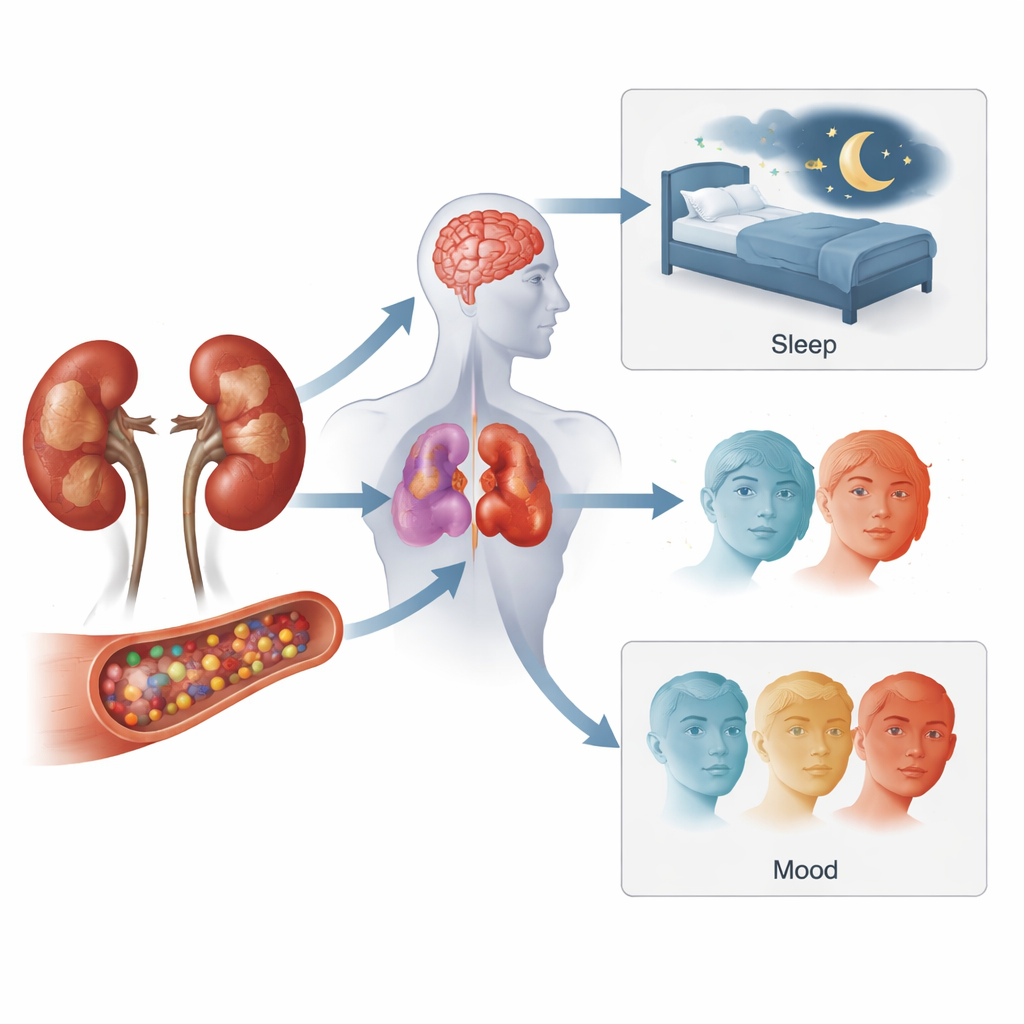
Sleep emerged as a major challenge. Nearly three out of four participants were classified as having poor sleep quality. Although they reported sleeping around seven hours per night on average, many had trouble falling asleep, woke up frequently in the middle of the night or early morning, or relied on sleeping pills. These patterns suggest that even when time in bed is long enough, sleep is often shallow or broken. Problems such as itching, breathing difficulty, night‑time trips to the toilet, and anxiety about health can all interrupt rest in people with kidney disease. Over time, this kind of unrestful sleep can worsen fatigue, mood, and overall health.
Mood, Worry, and Hidden Distress
The study also explored emotional wellbeing using a widely used scale that measures depression, anxiety, and stress. Almost half of the patients showed signs of depression, and just over half showed signs of anxiety, ranging from mild to extremely severe. In contrast, most had stress scores in the normal range. This pattern suggests that people may have learned to live with the ongoing pressures of a chronic illness, yet still feel sadness, hopelessness, or constant worry. Cultural factors may also play a role: in a largely Buddhist, family‑oriented society, people may receive strong support and use spiritual practices to manage everyday tension, even while deeper emotional suffering goes unrecognized.
What These Findings Mean for Care
Taken together, the results show that chronic kidney disease in this Sri Lankan province is not only a matter of damaged kidneys but also of painful bodies, broken sleep, and heavy minds. Many patients are living with poor quality of life and disturbed sleep, along with high levels of depression and anxiety that might not be obvious in a routine clinic visit. The authors argue that kidney care should be more holistic: alongside dialysis machines and medicines, clinics need regular checks for sleep problems and emotional distress, access to counseling or other psychological support, and practical advice on better sleep habits. By treating the person rather than just the lab values, health services could ease suffering, help people stay engaged in family and community life, and reduce the long‑term burden of kidney disease.
Citation: Jayasingha, U.C., Kumarage, S.W., Niroshani, K.S.R. et al. Quality of life, sleep quality, and psychological wellbeing of patients with chronic kidney disease in Sabaragamuwa Province, Sri Lanka: a descriptive cross-sectional study. Sci Rep 16, 14620 (2026). https://doi.org/10.1038/s41598-026-40999-1
Keywords: chronic kidney disease, quality of life, sleep problems, mental health, Sri Lanka