Clear Sky Science · en
Long-term HBsAg clearance, relapse, and safety following tenofovir or entecavir discontinuation in non-cirrhotic, HBeAg-negative chronic hepatitis
Why this matters for people living with hepatitis B
Chronic hepatitis B affects hundreds of millions of people worldwide and can silently damage the liver for decades. Many patients now take powerful daily pills that keep the virus under control, often for life. This study tackles a question that matters to patients and health systems alike: can some people safely stop these long-term drugs, and if so, who benefits and who is put at risk?
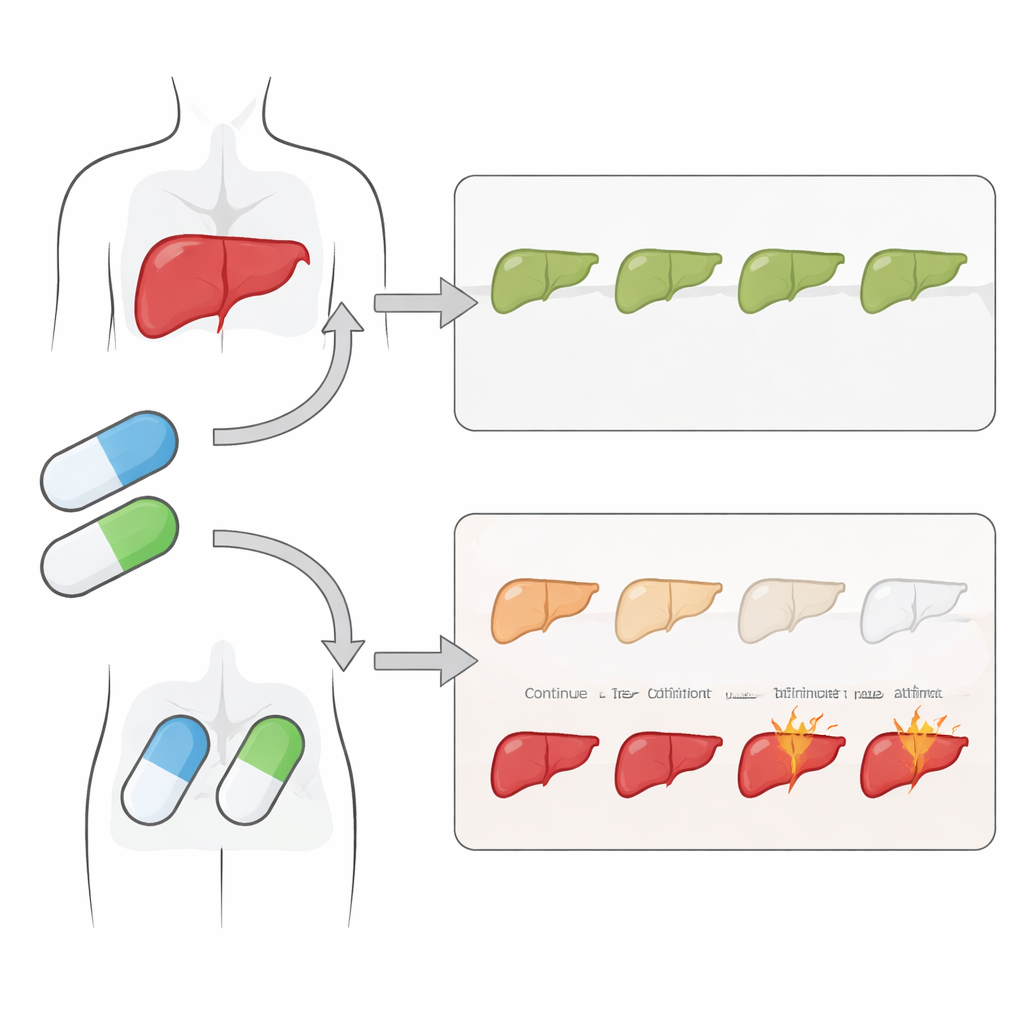
Two common pills and a bold question
The researchers focused on adults with long-standing hepatitis B who did not have advanced scarring of the liver and had a quieter form of the disease known as HBeAg-negative infection. All had taken one of two standard antiviral pills—tenofovir disoproxil fumarate or entecavir—for many years, and the virus in their blood had been undetectable for at least two years. Instead of simply continuing treatment indefinitely, the team followed 98 such patients at a Thai hospital and, together with their doctors, grouped them into three paths: stopping tenofovir, stopping entecavir, or continuing on their existing pill.
Chasing a functional cure
Modern hepatitis B drugs are excellent at suppressing the virus, but rarely achieve the closest thing to a cure: complete disappearance of the surface protein (HBsAg) from the blood. Losing this marker greatly reduces the risk of future liver cancer. Over nearly three years of close follow-up, about one in ten patients who stopped treatment cleared HBsAg, while none of those who stayed on their pills did. Most of these clearances happened within the first year after stopping. A striking pattern emerged: every person who cleared HBsAg started out with a very low level of this protein at the moment they stopped, suggesting that a low end-of-treatment HBsAg level is a key signal that the immune system is ready to finish the job if given a chance.
The heavy price of relapse
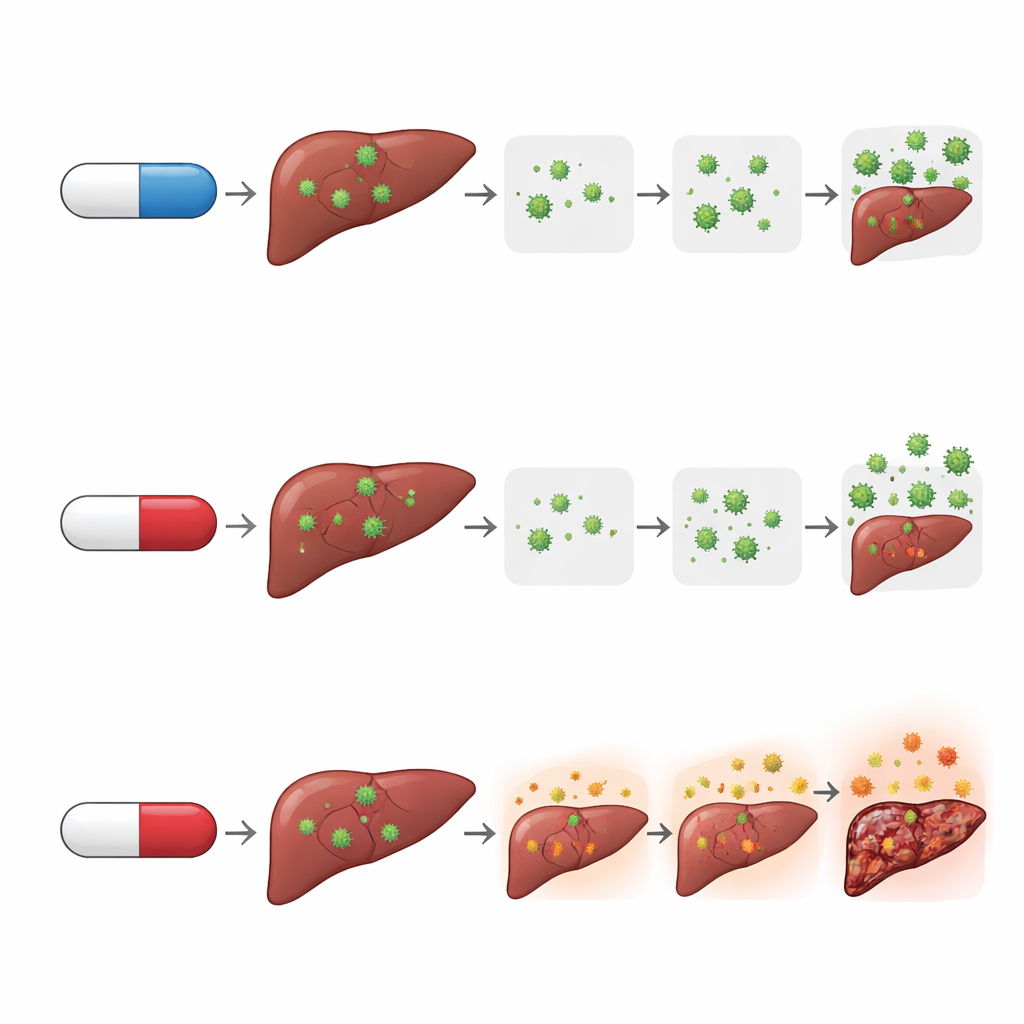
Stopping treatment came with major downsides. In most people who discontinued pills, the virus eventually came back, and liver enzymes—signals of liver irritation—often spiked. These relapses were far more common and arrived much earlier after stopping tenofovir than after stopping entecavir. By roughly three years, more than four in five people who had been on tenofovir had a strong return of the virus, compared with just over half of those who had been on entecavir. About half of former tenofovir users and a quarter of former entecavir users also developed clinical flares, where virus rebound was accompanied by signs of liver inflammation.
Serious safety concerns after tenofovir
The most worrying findings were about safety. Overall, side effects and liver-related health problems were most frequent in people who stopped tenofovir. Six of these patients experienced very severe hepatitis flares; two required hospital care for liver failure, and one patient died despite restarting treatment. Severe problems tended to occur within the first three months after stopping. In contrast, no such extreme events occurred in the entecavir-stop group or in those who continued therapy. Many people who stopped drugs eventually had to restart them because of relapse, and this happened sooner and more often after tenofovir than after entecavir.
What this means for patients and doctors
For carefully selected people with hepatitis B, stopping long-term antiviral pills can modestly increase the chance of a “functional cure,” but it is not a simple off-switch. This study shows that having very low levels of the virus’s surface protein at the time of stopping is crucial, and that the risks differ between drugs. Coming off entecavir may be safer, while stopping tenofovir can trigger earlier, more intense relapses that, in rare cases, lead to life-threatening liver failure. The authors conclude that any attempt to withdraw treatment should be reserved for highly motivated patients with low HBsAg levels, managed in experienced centers, and accompanied by intensive blood monitoring for at least the first six months so that therapy can be restarted quickly if the liver comes under threat.
Citation: Sattayalertyanyong, O., Bandidniyamanon, W., Limsrivilai, J. et al. Long-term HBsAg clearance, relapse, and safety following tenofovir or entecavir discontinuation in non-cirrhotic, HBeAg-negative chronic hepatitis. Sci Rep 16, 10404 (2026). https://doi.org/10.1038/s41598-026-40972-y
Keywords: chronic hepatitis B, tenofovir, entecavir, treatment withdrawal, HBsAg clearance