Clear Sky Science · en
Probabilistic carcinogenic and health risk assessment of heavy metals in lettuce and cabbage from Behbahan, Iran, using Monte Carlo simulation
Why salad safety matters
Many people reach for lettuce and cabbage as symbols of a healthy diet. Yet even the freshest greens can quietly carry unwanted passengers: invisible traces of heavy metals that build up in soil and water. This study looks at how much of four such metals—lead, chromium, cadmium, and nickel—are present in lettuce and cabbage sold in Behbahan, a city in southern Iran, and what that might mean for long‑term health. The work blends field sampling with computer‑based risk calculations to ask a simple but pressing question: are these everyday vegetables truly safe to eat?
Where the vegetables come from
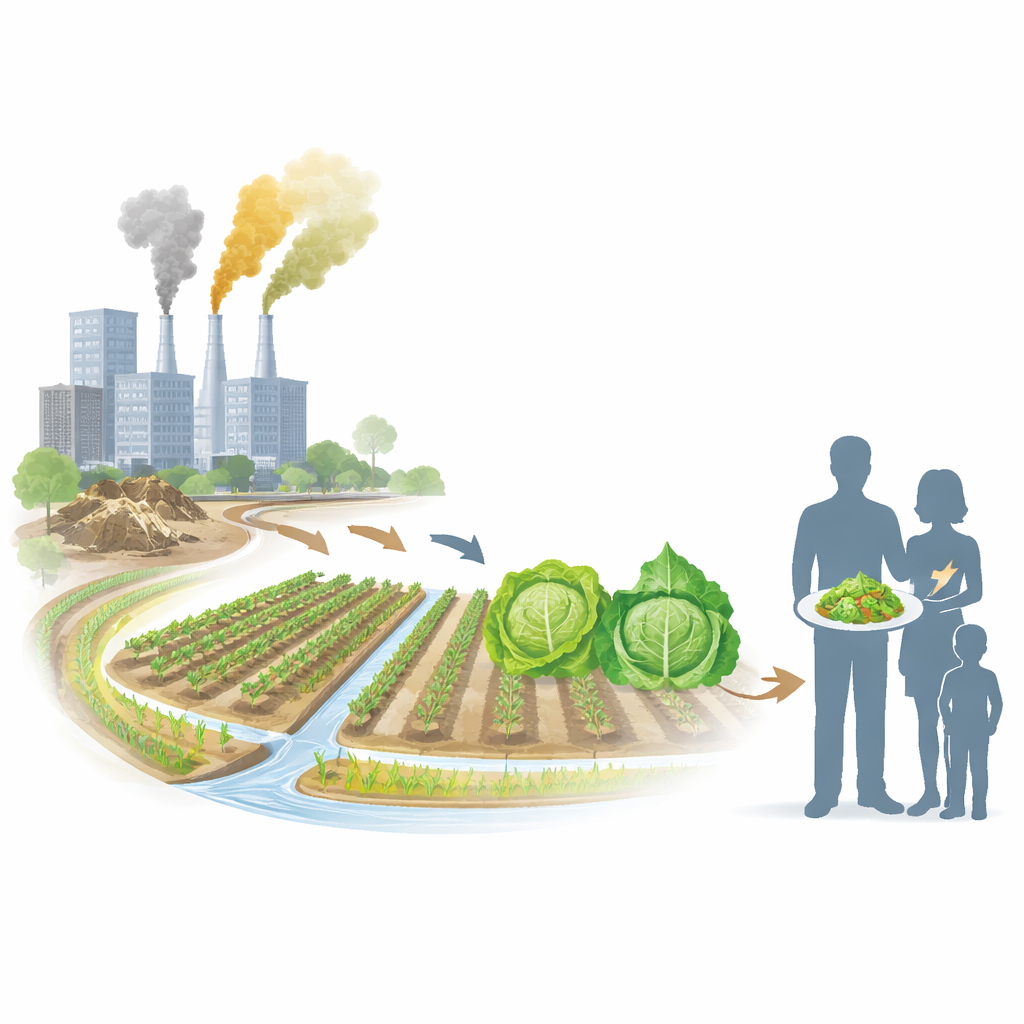
Behbahan lies in a fertile agricultural region of Khuzestan Province, close to oil and gas fields and growing urban and industrial areas. Farmers there rely on traditional practices but increasingly use chemical fertilizers to boost yields. At the same time, more factories, more people, and more waste mean more potential sources of pollution. Heavy metals can leak from industrial effluents, solid waste, and traffic, then move into soil and irrigation water and finally into crops. Lettuce and cabbage are especially important to study because they are widely eaten and their broad leaves can readily absorb contaminants.
How the study was carried out
The researchers bought lettuce and cabbage from ten retail vegetable shops across Behbahan, returning four weeks later to repeat the sampling. In total, they analyzed 20 samples of each vegetable. After careful washing, drying, and chemical digestion in the laboratory, they measured the concentrations of lead, chromium, cadmium, and nickel using a sensitive instrument that detects metals at very low levels. To translate these measurements into health implications, they estimated how much of each metal an average person would ingest daily from these vegetables and then used standard toxicology formulas to calculate both non‑cancer and cancer risks. To reflect real‑world uncertainty in body weight, intake, and metal levels, they employed Monte Carlo simulation, which repeats the calculations thousands of times with slightly varied inputs to produce probability‑based risk ranges.
What was found in the greens
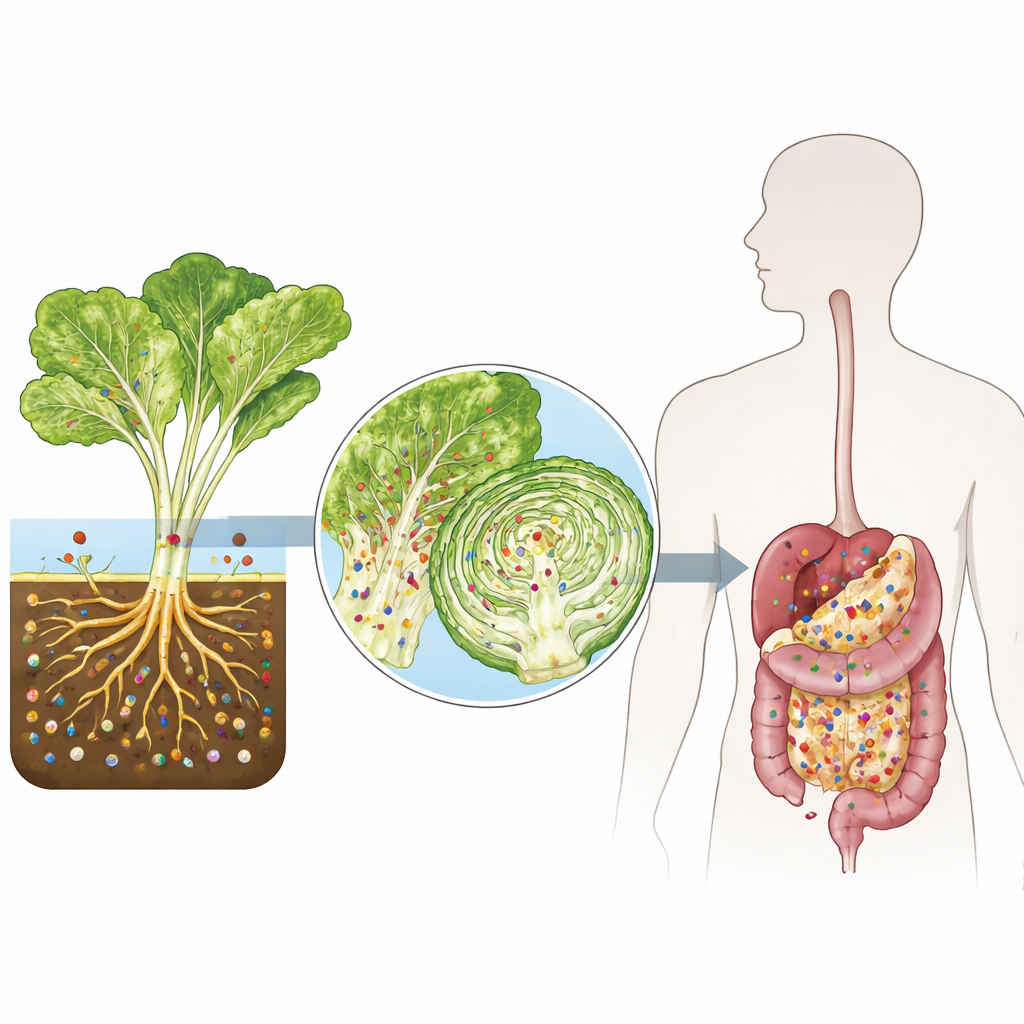
On average, cabbage contained about twice as much of the four metals combined as lettuce. In both vegetables, chromium had the highest concentration, followed by nickel, lead, and then cadmium. When compared with guideline values set by national and international agencies, all metals in lettuce were below recommended limits. In cabbage, however, the average levels of lead and chromium exceeded their respective guideline thresholds, while cadmium and nickel remained below. The metal pattern and amounts differed from those reported in other cities in Iran and abroad, underscoring how local farming practices, fertilizer use, wastewater inputs, and nearby industries can strongly shape what ends up in people’s food.
Estimating health risks from everyday eating
To judge non‑cancer effects such as damage to organs over a lifetime, the team calculated a “hazard index” that combines the contributions of all four metals. Values below one are generally considered not of concern. For both lettuce and cabbage, the hazard index was well under this cut‑off, suggesting that typical exposure levels are unlikely to cause non‑cancer illnesses by themselves. The picture changed when they looked at cancer risk, expressed as the excess lifetime chance of developing cancer due to these exposures. Here, the totals for both vegetables were higher than one in ten thousand, a level usually considered unacceptable from a public health standpoint. Lettuce, despite having lower metal concentrations than cabbage, produced a higher calculated cancer risk because it is eaten more frequently and in larger portions.
What it means for everyday eaters
For ordinary consumers, the study sends a mixed message. On one hand, Behbahan’s lettuce and cabbage do not appear likely to trigger immediate or non‑cancer health problems at current consumption levels. On the other hand, their heavy metal content could meaningfully raise long‑term cancer risk, especially in a population that relies heavily on these vegetables. The authors argue that this risk is a consequence of rapid industrialization, urban growth, and intensive farming in the region. They call on policymakers to reduce metal releases from sewage, solid waste, and industrial sources, and to better protect agricultural soils and water. In simple terms, the study shows that keeping salads safe in the long run requires cleaning up the environment in which they are grown, not just rinsing the leaves on our plates.
Citation: Armand, R., Rafati, L., Mohammadi, H. et al. Probabilistic carcinogenic and health risk assessment of heavy metals in lettuce and cabbage from Behbahan, Iran, using Monte Carlo simulation. Sci Rep 16, 10460 (2026). https://doi.org/10.1038/s41598-026-40958-w
Keywords: heavy metals, vegetable contamination, food safety, cancer risk, Iran agriculture