Clear Sky Science · en
Ecosystem structure influences human health outcomes as the basis for green prescriptions
Why the Right Kind of Woods May Be Medicine
Doctors in several countries are beginning to write “green prescriptions,” sending people outdoors as part of their treatment. But is any patch of trees good enough, or do some forests act more like a healing ward than others? This study followed people with complex, long-lasting health problems through months of guided visits to an Italian woodland. By comparing different parts of the same forest, the researchers asked a simple but powerful question: does the structure and richness of an ecosystem change how much it can help us feel and function better?
A Living Pharmacy Among the Trees
The work took place in Bosco di Puck, a small deciduous woodland in Tuscany that has been carefully protected for over a decade. Instead of logging or mowing, the area has been allowed to recover its natural rhythms, becoming a kind of open-air clinic. A physician there offers individualized green prescriptions: twice-weekly, two-hour sessions in the woods for people dealing with combinations of chronic pain, autoimmune disorders, breathing difficulties, and mental health challenges. Rather than group walks or simple exercise, each visit is a one-on-one therapeutic encounter, where patients explore, rest, and move in ways that ease their symptoms while respecting the plants and animals around them. 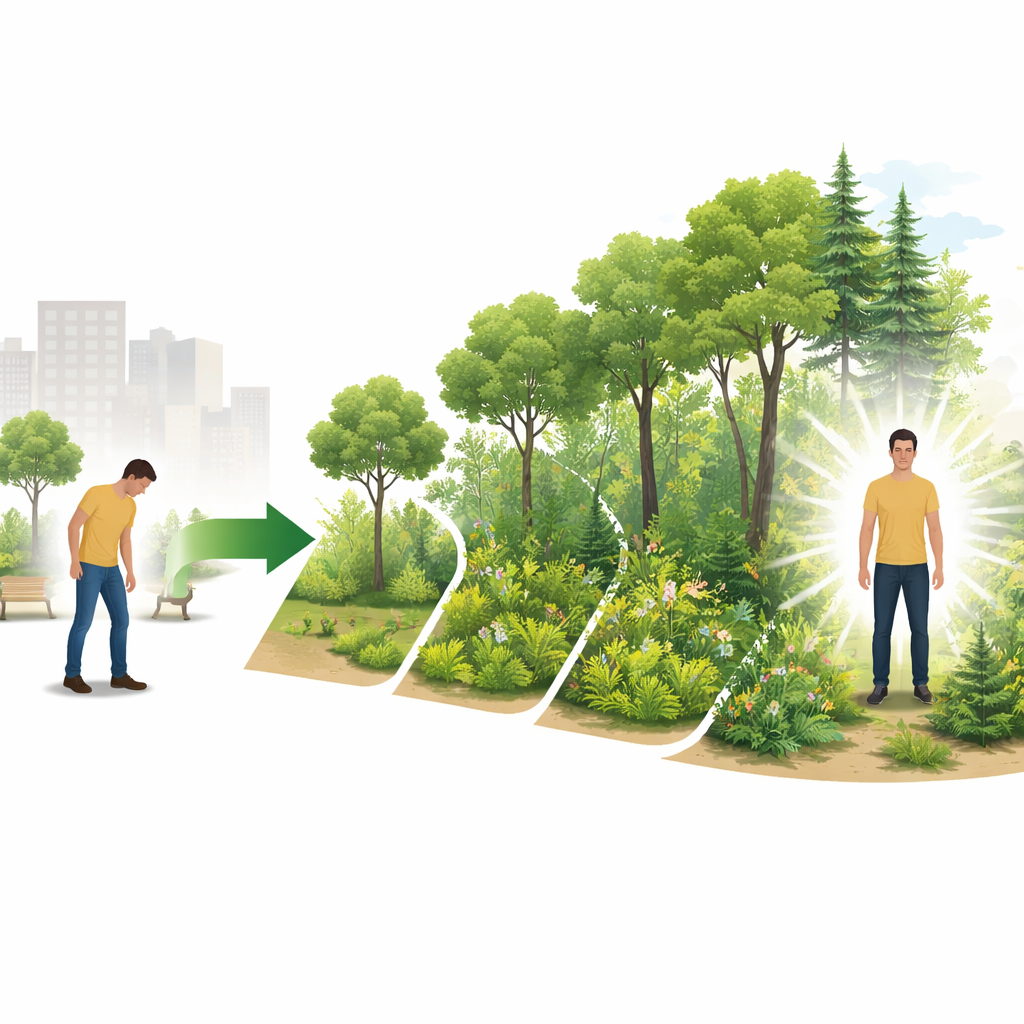
Four Patches, Four Very Different Feelings
Although the woodland looks unified on a map, the team identified four distinct “patches,” ranging from a simple grassy glade to a dense, mature oak stand with a lush undergrowth of shrubs, ferns, and other plants. They measured each patch in three ways: how much vegetation covered the ground, how thick and layered the vegetation appeared from a human eye level, and how many different species of plants, lichens, liverworts, and mushrooms appeared over a year. These numbers were combined into a single index of structural complexity, forming a gradient from the barest patch to the richest. At the same time, all 15 patients visited every patch in a rotating sequence over nine months, spanning autumn, winter, and spring, while reporting how much they liked each place, how it affected their mood, and whether it eased symptoms such as pain, fatigue, or breathing problems.
Mind and Body Responses to Forest Complexity
Clear patterns emerged. The two most complex patches—the young transitional oak forest and the older, species-rich oak stand—were consistently favored by participants. People described them using words linked with beauty and variety, and rated them higher for psychological restoration. Simpler areas, like the open glade and a more uniform pine stand, were more often called monotonous or even oppressive and ranked lower in terms of comfort and fascination. Yet preferences alone did not explain the health results: weather and people’s preexisting sense of connection to nature had little influence, and even those who said they did not like wild places at first reported calm and clarity after repeated sessions. 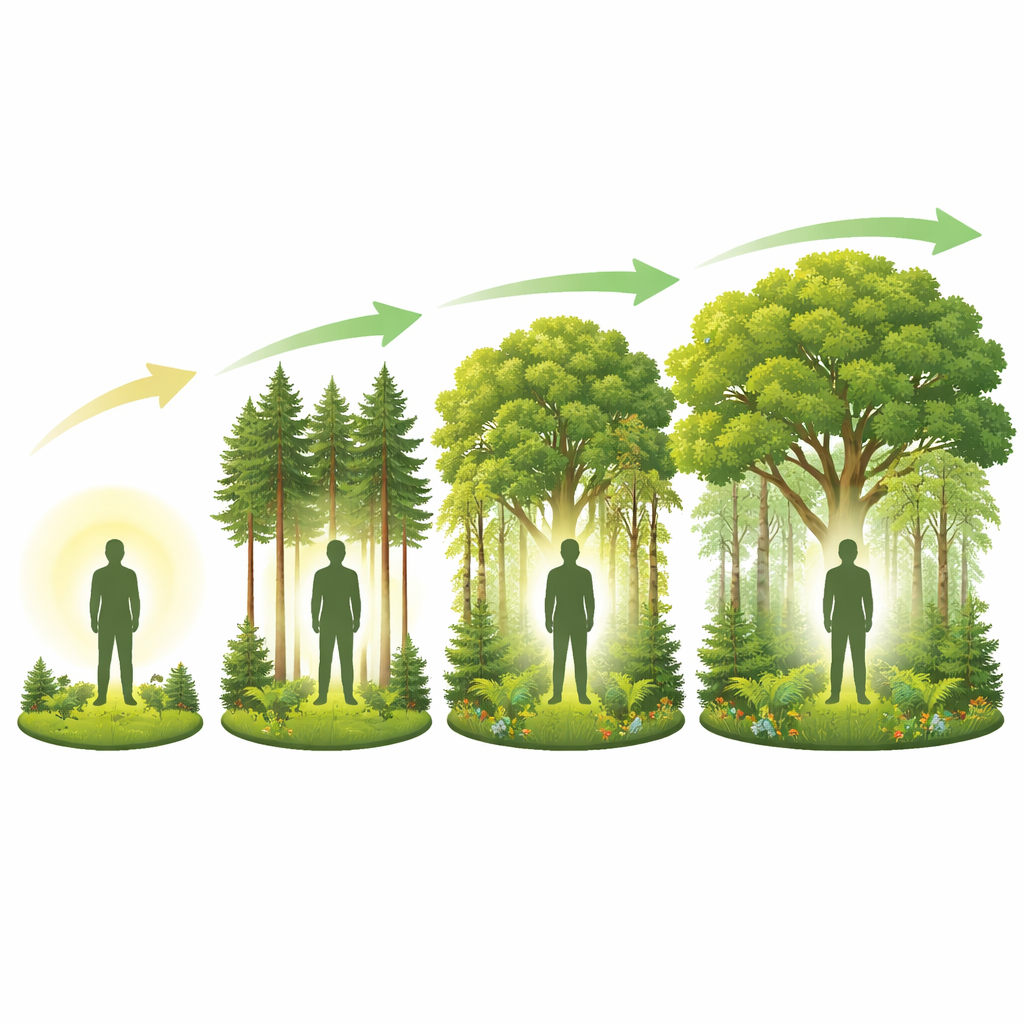
Less Medicine, Easier Breathing, Gentler Pain
Physical outcomes mirrored these impressions. All patches brought some relief, but the richer oak areas showed the strongest and most stable improvements in both pain and respiratory symptoms, especially by the third trimester of the study. For those with breathing problems, the simple glade helped at first but lost its impact over time, whereas the complex oak patches kept working. Overall, participants’ use of medication for their chronic conditions fell sharply—by more than 80 percent on average compared with their starting doses—while they were engaging in the green prescription program. These changes unfolded even though patients continued their usual medical care, suggesting that regular, carefully guided time in the woods amplified their ability to cope and heal.
Seeing Ourselves as Part of the Forest
The way the program was designed may have strengthened this effect. Patients were asked not only to notice their own bodies but also to protect seedlings, nesting birds, fungi, and other forest residents. Being gently redirected to avoid disturbing wildlife or fragile plants seemed to deepen their sense of belonging and responsibility. Over time, they shifted away from treating the forest as a resource to be used—picking flowers or expecting instant results—and toward seeing it as a partner in a slow, mutual process. The authors argue that this reciprocity sits at the heart of “Planetary Health”: people thrive when living ecosystems are allowed to function fully, and, in turn, people who feel better are more likely to defend those ecosystems.
What This Means for Health and Cities
To a layperson, the study’s take-home message is straightforward: not all green spaces are equal. A tidy, uniform lawn or a single-species plantation may be pleasant, but this work suggests that richer, more layered, more biodiverse places offer deeper and more lasting health benefits. The healing power of nature seems to come from the whole web of life and the complex mix of sights, scents, sounds, and invisible signals that a well-functioning ecosystem provides—not from one special tree or chemical. If healthcare systems and city planners want to use green prescriptions seriously, they will need to protect and restore living, diverse landscapes, especially near where people live. In doing so, they would not just be adding another treatment option; they would be investing in a shared infrastructure where healthy forests and healthy humans sustain each other.
Citation: Stocco, A., Piras, P., Barbiero, G. et al. Ecosystem structure influences human health outcomes as the basis for green prescriptions. Sci Rep 16, 11439 (2026). https://doi.org/10.1038/s41598-026-40752-8
Keywords: green prescriptions, forest therapy, ecosystem complexity, chronic disease, planetary health