Clear Sky Science · en
New records of fimicolous myxomycetes for the Pampa biome, Brazil, and a new occurrence for the Americas
Why tiny life on dung matters
Out in the open grasslands, piles of animal dung may look like waste, but they are bustling little worlds that help keep ecosystems running. This study explores little-known organisms called myxomycetes—slimy, mold-like creatures that feed and grow on dung—and reveals new species records from the Pampa grasslands of southern Brazil, including two never before seen anywhere in the Americas. Understanding who lives in dung, and where, helps scientists grasp how nutrients are recycled in nature and how resilient our grassland ecosystems really are.
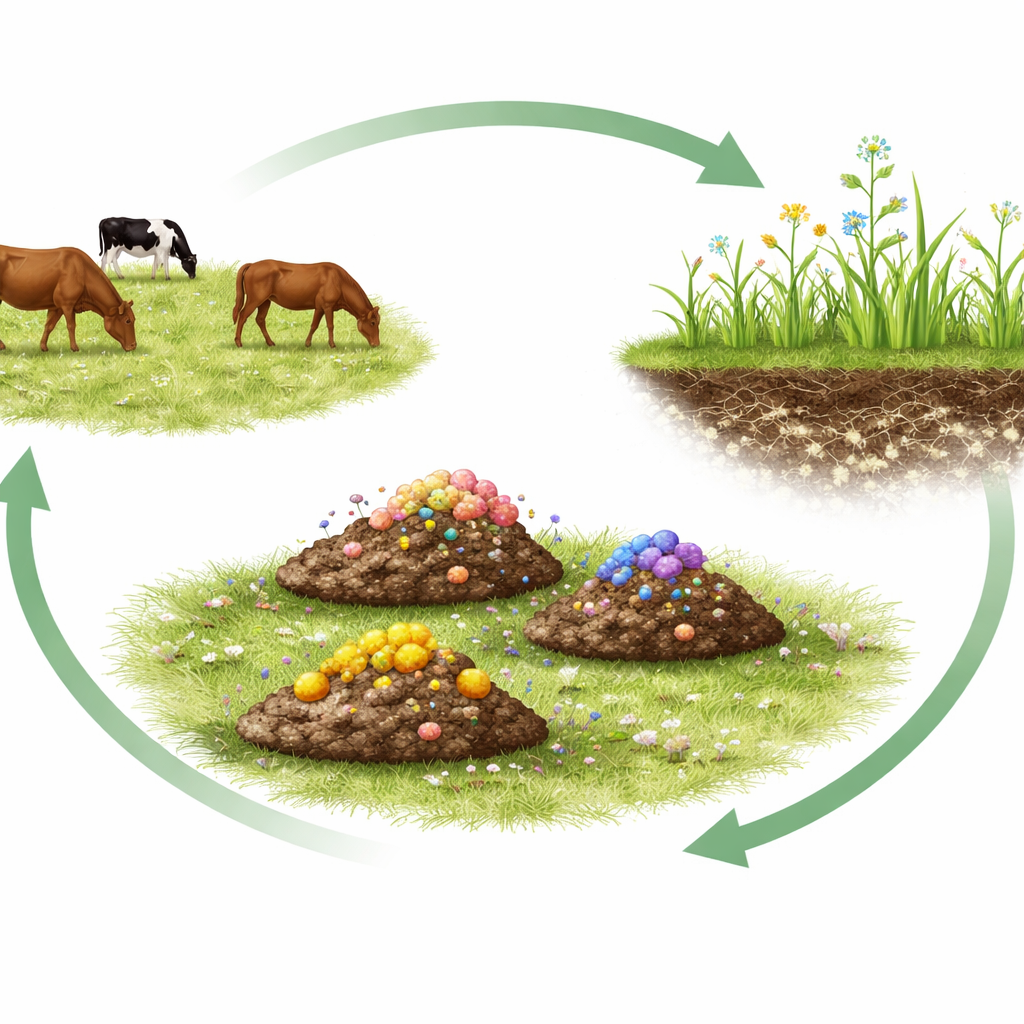
The hidden city on a cow pat
Dung is far from dead matter. It is a rich, temporary home and food source for many organisms, from bacteria and fungi to insects and microscopic predators. Among them are myxomycetes, or slime molds, a group of amoeba-like creatures with just over a thousand known species worldwide. Only about a tenth of these regularly use dung as a key resource, earning the name "fimicolous"—dung dwellers. These species help break down the organic matter that herbivores leave behind, turning it back into forms that plants and other organisms can reuse, and forming part of a specialized community known as the copromicrobiota.
Exploring life in the southern grasslands
The researchers focused on the Pampa biome, a vast native grassland in southern Brazil that is heavily used for cattle and horse grazing. Over a year, they visited prairie areas in three municipalities, collecting dry dung from cows and horses in small plots and taking it to the laboratory. There, they watched for the appearance of myxomycete fruiting bodies—tiny, often colorful structures that produce spores—both directly on field samples and in controlled moist chambers, where they kept dung damp and monitored it daily for three months under microscopes.
New arrivals on the American continent
More than half of the dung samples showed signs of myxomycete activity, and nearly a third produced fruiting bodies that could be identified. The team recorded five species from these Pampa grasslands. Three species in the genus Perichaena—P. liceoides, P. pachyderma, and P. taimyriensis—were found on cattle and horse dung, alongside other species such as Arcyria denudata and Diderma effusum. All three Perichaena species were recorded for the first time in southern Brazil, and two of them, P. pachyderma and P. taimyriensis, were documented for the first time anywhere in the Americas. Until now they had only been known from dung of animals like deer, elk, and reindeer in the Northern Hemisphere.
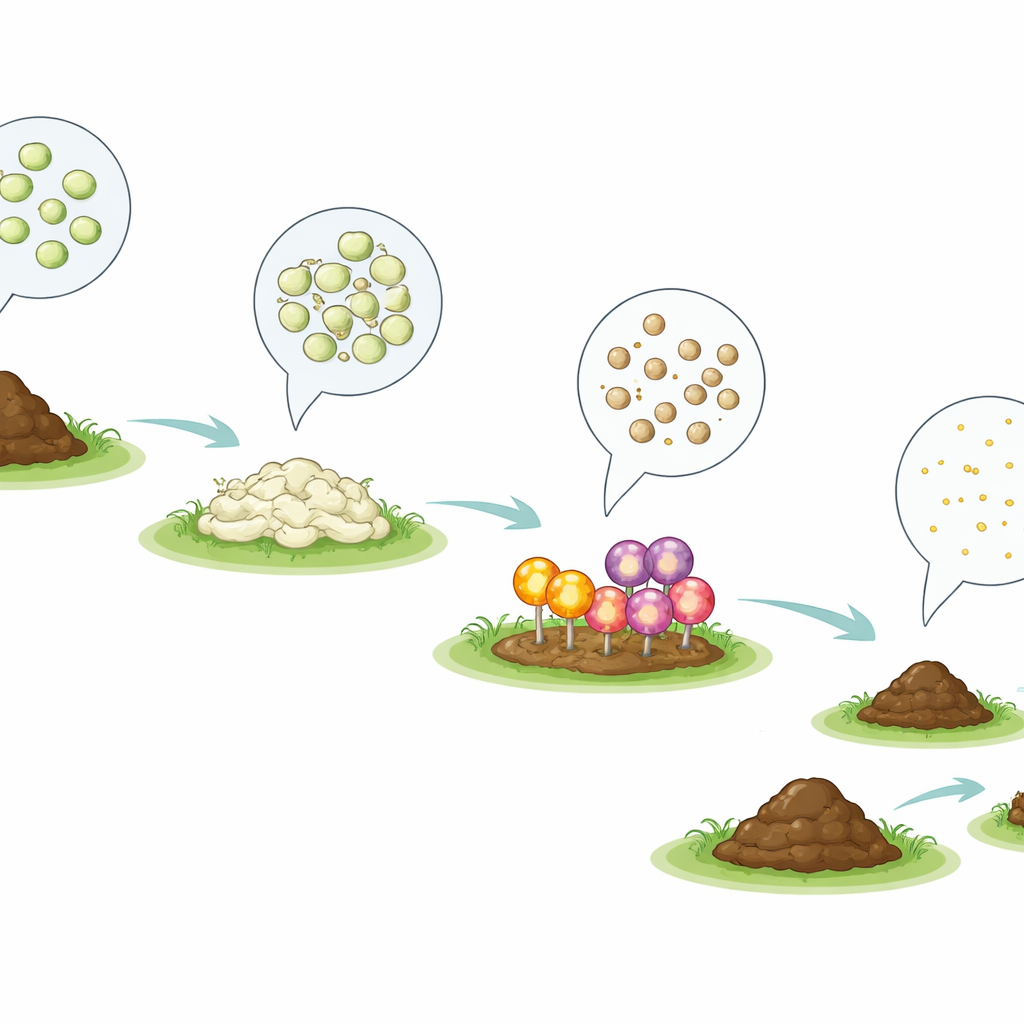
Why dung selects for specialists
The findings support the idea that some myxomycetes are highly specialized dung dwellers, rarely or never found on other materials. Dung turns out to be a selective, chemically distinct habitat, with its nutrient mix and often alkaline pH shaping which species can thrive there. Although the total number of species on dung tends to be low, those that do occur are often well adapted and may hide a great deal of unseen genetic diversity. The study brings the known number of dung-associated myxomycete species in Brazil from 13 up to 17, showing that even familiar landscapes and common substrates still hold surprises.
What this means for grasslands and beyond
For non-specialists, the key message is that dung is not just waste but a vital engine of recycling in grassland ecosystems. By documenting new records of fimicolous myxomycetes in the Pampa, including two species newly reported for the Americas, this research shows how these tiny organisms expand their ranges and quietly support soil health. The authors argue that more global and molecular studies, especially involving native wild animals, are needed to uncover the full diversity of dung-dwelling slime molds and to understand how their choice of substrate shapes where they live. In a biome under strong livestock pressure, knowing how these hidden recyclers contribute to resilience and environmental quality may prove crucial for conserving grasslands in a changing world.
Citation: Velloso, J.R.P., Calaça, F.J.S., Putzke, J. et al. New records of fimicolous myxomycetes for the Pampa biome, Brazil, and a new occurrence for the Americas. Sci Rep 16, 9874 (2026). https://doi.org/10.1038/s41598-026-40744-8
Keywords: slime molds, grassland ecosystems, dung microbiota, Pampa biome, microbial diversity