Clear Sky Science · en
Executive functioning in schizophrenia using a novel virtual reality-simulated workplace: validity, test-retest reliability, and links to competitive employment
Why this virtual office matters
Holding down a job requires more than just knowing how to do the work. We have to plan our day, juggle several tasks at once, remember instructions, and adapt when things change. Many people living with schizophrenia struggle precisely with these kinds of mental skills, often called "everyday thinking" or "executive" abilities. This study introduces a virtual reality (VR) office that acts like a realistic test-drive for those skills, and asks whether it can reliably show who is more likely to manage real-world employment.
A pretend workday on a laptop
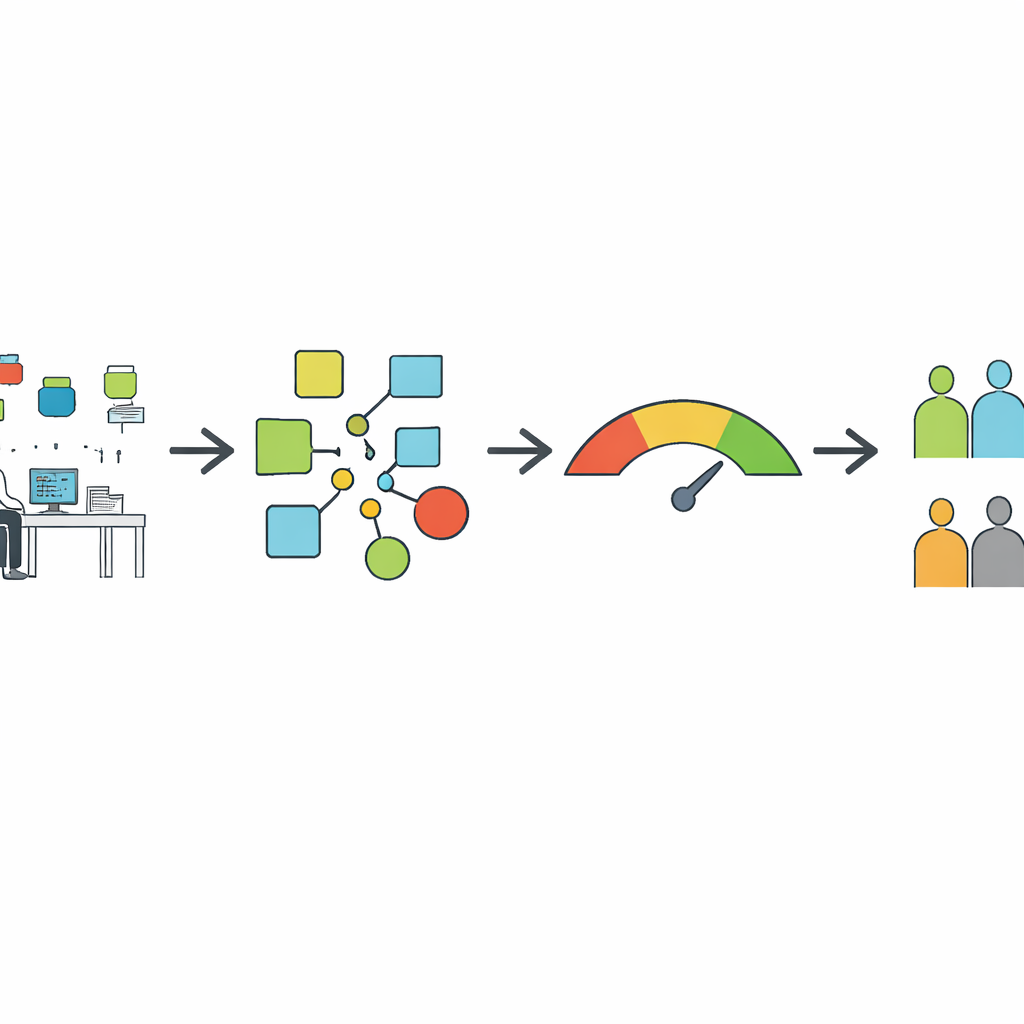
Instead of showing people abstract puzzles or cards, the researchers used a computerized simulation called the Jansari assessment of Executive Functions (JEF©). On a standard laptop screen, participants enter a simple office and meeting room. Their main mission is to organize a staff meeting that has to happen that same day. Within this pretend workday they must notice alarms, respond to reminders, sort information on paper cards, and keep track of several overlapping requests. The test quietly scores how well they plan, set priorities, switch strategies, and remember to finish tasks at the right time or when certain events occur.

Who took the virtual job test
The study compared 69 adults with schizophrenia to 67 adults without psychiatric diagnoses. Everyone completed the VR office task as well as well-known paper-and-pencil and computerized tests of thinking, planning, and mental flexibility. People with schizophrenia were carefully screened to ensure they were clinically stable and not in an acute episode. A large subgroup of patients repeated the JEF© eight weeks later so that the team could see whether the tool gives stable results over time, or if scores bounce around too much to be useful.
What the virtual office revealed
Compared with the control group, people with schizophrenia performed worse on the overall JEF© score and on nearly all of its specific areas. They had particular difficulty setting priorities, adjusting to unexpected changes, coming up with new solutions, and remembering to carry out intentions while doing other things. Planning inside the virtual office was less impaired, likely because the task provided clear materials and step-by-step cues that helped guide people through it. Performance on the VR task lined up with more traditional neuropsychological tests that tap problem solving and mental flexibility, and with clinicians’ ratings of everyday difficulties, though it was less tied to simple inhibition tests such as “stop–go” reactions.
Stable scores and links to real jobs
When patients repeated the JEF© eight weeks later, their scores were generally similar, showing that the test is reasonably stable over time and not simply capturing random day-to-day variation. Most people’s changes fell within the range expected from measurement noise or mild practice effects. Importantly, higher JEF© scores were associated with better real-world outcomes: patients who scored higher were more likely to be in regular paid work on the open job market, even after taking age and years of education into account. Lower scores were tied to heavier antipsychotic medication doses and more severe "negative" symptoms such as lack of motivation and emotional flatness.
What this means for everyday life
To a layperson, the message is straightforward: a realistic, game-like office simulation can capture the kinds of thinking problems that make work difficult for many people with schizophrenia, and it does so in a way that predicts who is more likely to be competitively employed. Because the JEF© behaves reliably over time and mirrors day-to-day challenges, it can complement traditional tests when planning treatment or vocational support. In practice, these findings suggest that using such VR tools could help clinicians identify strengths to build on—like performance when tasks are well structured—and pinpoint weak spots, such as juggling priorities or remembering future tasks, that might benefit from targeted cognitive training and practical supports in the workplace.
Citation: Tyburski, E.M., Zawadzka, E., Bober, A. et al. Executive functioning in schizophrenia using a novel virtual reality-simulated workplace: validity, test-retest reliability, and links to competitive employment. Sci Rep 16, 13169 (2026). https://doi.org/10.1038/s41598-026-40643-y
Keywords: schizophrenia, virtual reality assessment, executive function, workplace performance, competitive employment