Clear Sky Science · en
Randomized study of the efficacy, safety, and pharmacokinetics of SPR720 for the treatment of Mycobacterium avium complex pulmonary disease
Why this matters for people with lung disease
Chronic lung infections caused by environmental bacteria are becoming more common, especially in older adults and people with underlying lung problems. These infections are hard to cure and current treatments can be long, toxic, and complicated. This study tested a new experimental pill, SPR720, designed specifically to target one major group of these germs, to see whether it could safely reduce the amount of bacteria in the lungs and improve symptoms.
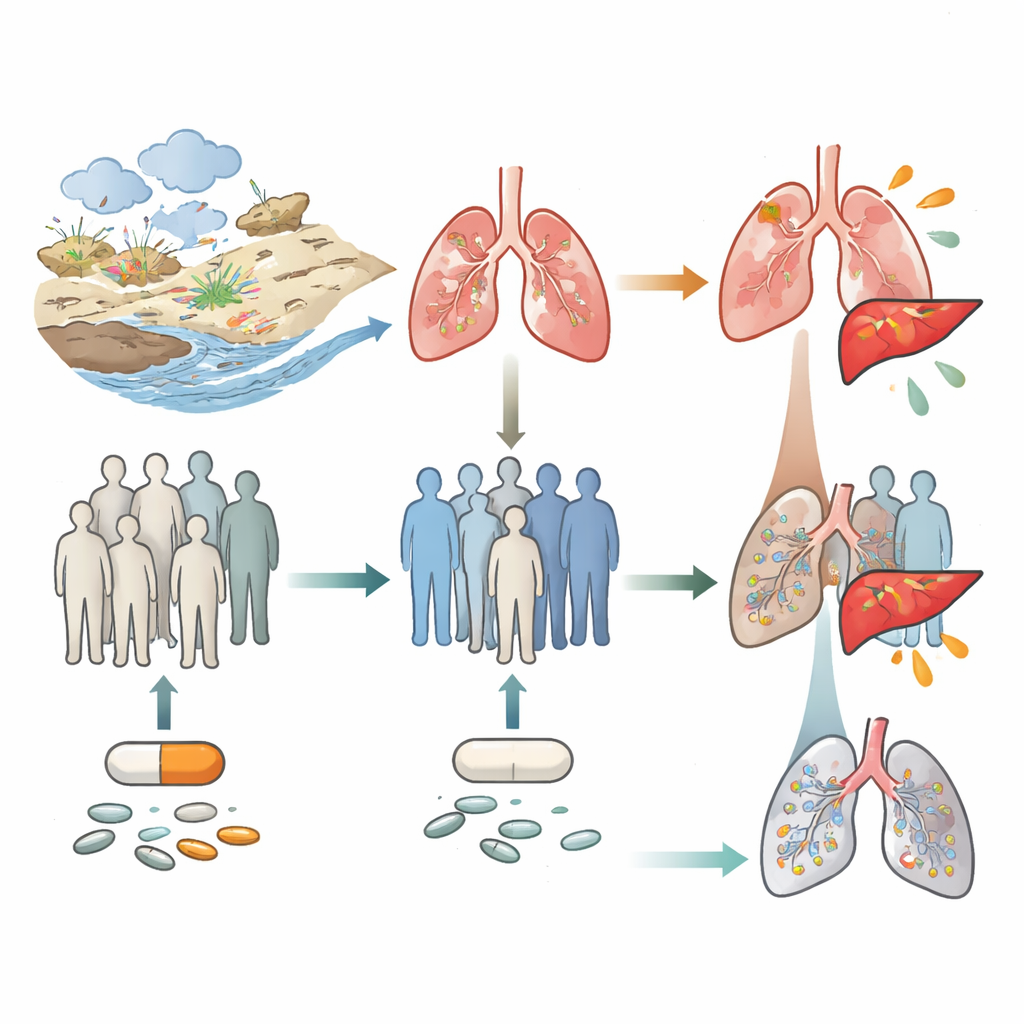
A stubborn lung infection from everyday environments
Nontuberculous mycobacteria are a family of slow-growing bacteria that live in dust, soil, and water and can cause a chronic lung condition called nontuberculous mycobacterial pulmonary disease. One subgroup, the Mycobacterium avium complex, is the most frequent culprit. People with this disease often have cough, fatigue, and damaged airways, and they typically need combinations of three or four antibiotics taken for up to a year and a half. These regimens can be difficult to tolerate, interact with other medications, and still do not always clear the infection, so there is a pressing need for better, easier options.
A new pill aimed at the bacteria’s survival machinery
SPR720 is a prodrug, meaning it is converted in the body into an active form called SPR719. That active form is designed to block an essential enzyme that the bacteria use to manage and copy their DNA, a function not targeted by current standard drugs. Earlier laboratory and animal work suggested the drug could kill or slow several mycobacterial species at doses that were thought to be achievable in humans. In healthy volunteers, the active compound reached higher levels in lung tissue than in blood, raising hopes that an oral pill could deliver targeted action in the airways.
How the trial was set up and what was measured
Researchers conducted a Phase 2 clinical trial at 13 centers in the United States. Twenty-two adults with a specific form of Mycobacterium avium complex lung disease were randomly assigned to receive placebo, SPR720 once a day at 500 milligrams, or SPR720 once a day at 1000 milligrams for 56 days. Three additional patients received open-label SPR720 to allow more detailed blood sampling. All participants had relatively mild lung disease but clear evidence of chronic infection. The main yardsticks were how the amount of bacteria in sputum changed week by week and how long it took for laboratory cultures to turn positive, alongside doctor-rated symptoms, patient questionnaires, and careful tracking of side effects.
What the study found in the lungs
Over the first two weeks, both the SPR720 groups and the placebo group showed a drop in bacterial counts and a delay in culture positivity, suggesting some early suppression of the infection in everyone. However, when the researchers compared the slopes of bacterial decline and culture timing across treatment arms, they found no meaningful differences and no clear benefit of the higher dose over the lower one. After treatment stopped, patients who had received SPR720 actually showed more rebound of bacteria by Day 84 than those on placebo. Only two people, both on the higher dose, maintained negative cultures through follow-up, and overall there was no consistent improvement in symptoms or patient-reported well-being compared with placebo.
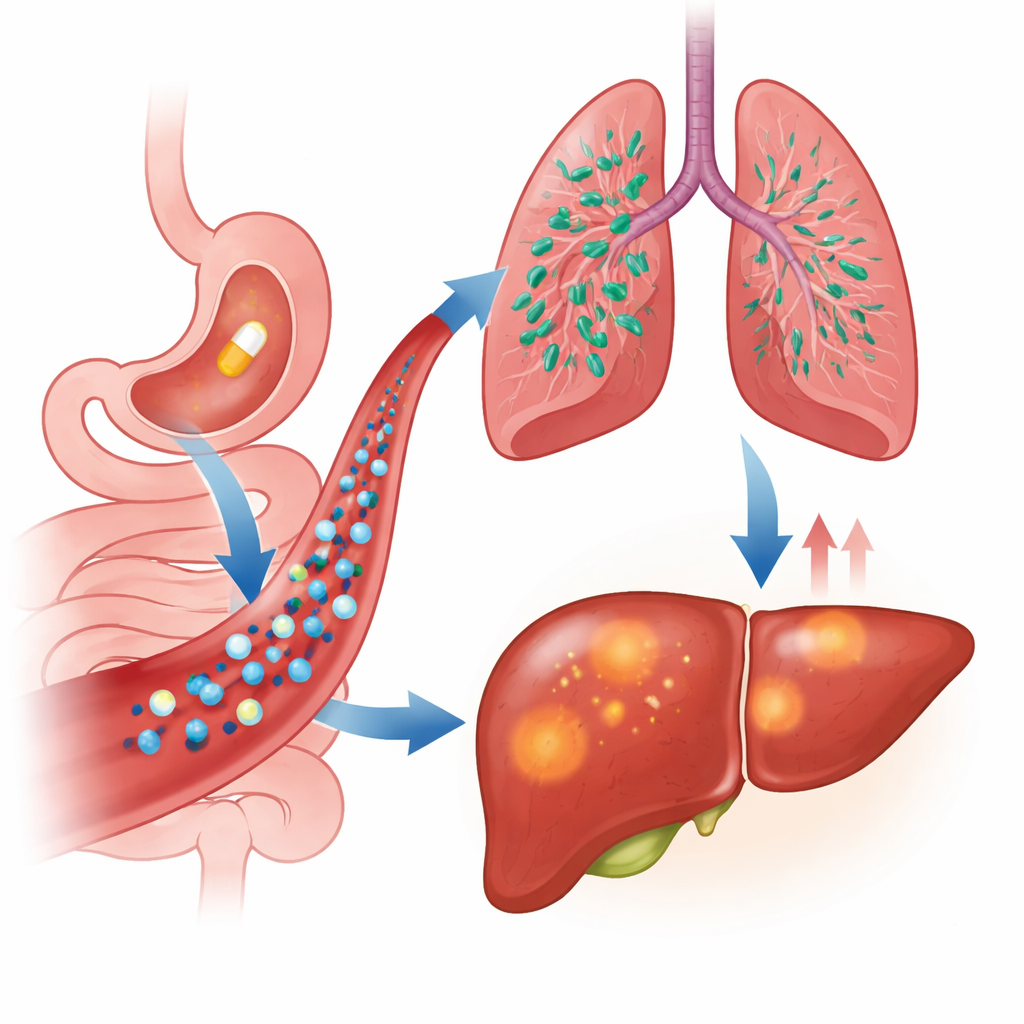
What the study found in the liver
While the antibacterial effects were modest, the safety signal in the liver was striking. About two-thirds of patients who took SPR720 developed increases in liver enzymes, chemical markers of liver stress, compared with none in the placebo group. These changes were more frequent and more pronounced at the higher dose, and three patients reached a level considered grade 3 toxicity, though all abnormalities improved after the drug was stopped. Patterns of the enzyme changes suggested a mixed type of drug-induced liver injury, affecting both liver cells and bile flow. No one developed the most dangerous form of liver damage, but the frequency and dose-dependence of the abnormalities raised serious concern, especially given that Mycobacterium avium complex usually requires many months of treatment.
What this means going forward
For people hoping for a simpler pill to treat this difficult lung infection, the findings are disappointing. In this carefully conducted trial, SPR720 showed only limited ability to hold the bacteria in check over two months of use and did not clearly improve symptoms, while causing reversible but common liver injury. Because treating this disease typically demands long courses of therapy, the risk–benefit balance was judged unfavorable. The sponsor has therefore stopped developing oral SPR720 for Mycobacterium avium complex lung disease. Even so, the study offers a detailed blueprint for how to test future drugs in this field, underscoring the need for treatments that are both more effective against the bacteria and gentler on the organs patients need to stay well.
Citation: Ussery, X.T., Bhatt, N., Critchley, I.A. et al. Randomized study of the efficacy, safety, and pharmacokinetics of SPR720 for the treatment of Mycobacterium avium complex pulmonary disease. Sci Rep 16, 10063 (2026). https://doi.org/10.1038/s41598-026-40505-7
Keywords: nontuberculous mycobacterial lung disease, Mycobacterium avium complex, SPR720, antibiotic safety, drug-induced liver injury