Clear Sky Science · en
Menstrual and reproductive factors and risk of Alzheimer’s disease in elderly women: a cohort study in Eastern China
Why women’s life stories may matter for brain health
As more people live into old age, Alzheimer’s disease is becoming a major concern for families worldwide. Women are affected more often than men, and scientists have long suspected that the hormones that shape women’s lives—from first period through pregnancies and menopause—might influence the brain’s long‑term health. This study followed thousands of older women in Eastern China to ask a simple but important question: do common milestones like age at first birth, number of children, breastfeeding, and type of menopause relate to the chances of developing Alzheimer’s later on?
Looking at many years of women’s health
Researchers drew on the Zhejiang Ageing and Health Cohort, a large community study of older adults in one Chinese province. They focused on 5,606 postmenopausal women who had normal thinking and memory at the start of the study and were at least 60 years old. Over nearly four years of follow‑up, each woman completed detailed interviews and standardized memory tests. Doctors evaluated those who showed cognitive problems and determined who developed Alzheimer’s disease according to established clinical criteria. The team collected rich information on each woman’s menstrual and reproductive history, including age at first period and menopause, number of births and pregnancy losses, breastfeeding duration, use of birth‑control pills, and whether menopause occurred naturally or after surgery. 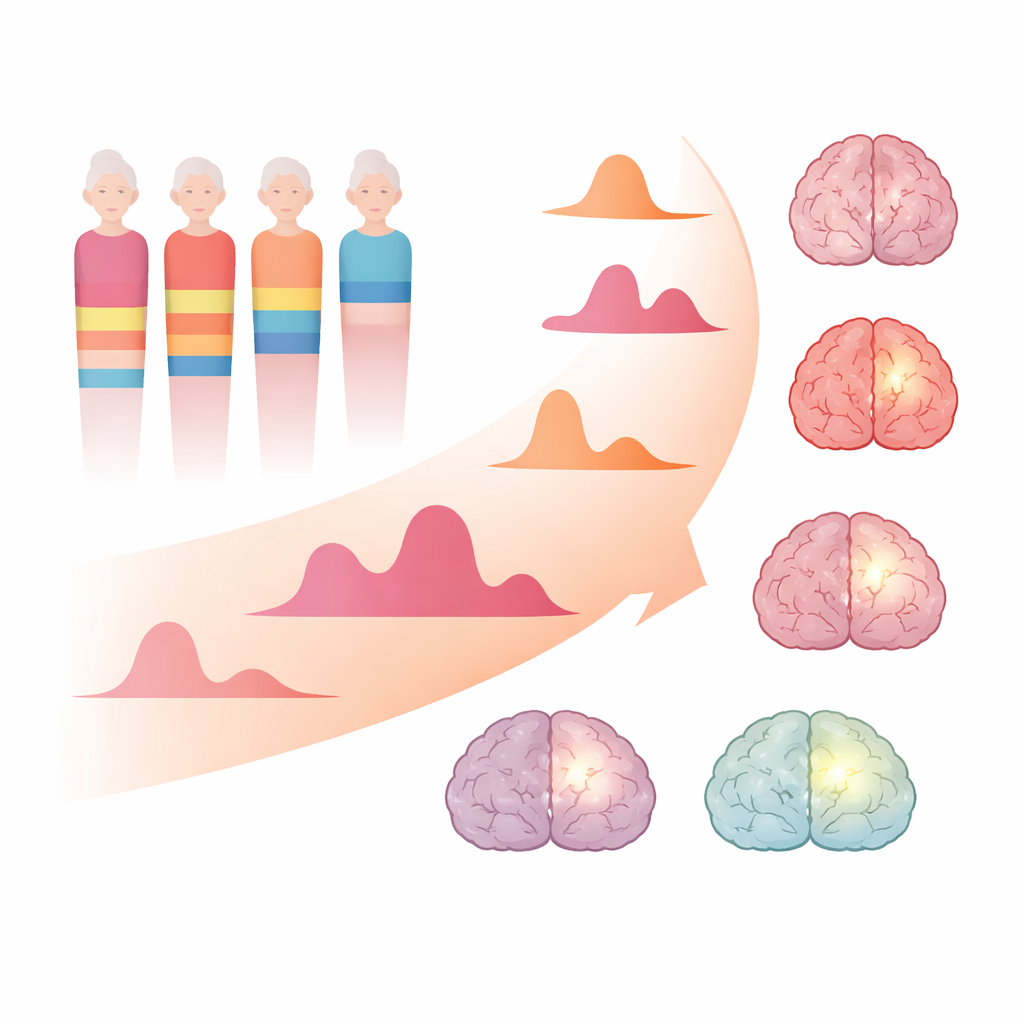
Clues from the length of the reproductive years
One key measure was the total span between first period and menopause, used as a rough indicator of how long a woman’s body produced female sex hormones. Women whose reproductive years lasted more than 34 years had a lower risk of Alzheimer’s than those with a moderate span of 32–34 years. In contrast, women whose periods stopped early because their ovaries were surgically removed had more than double the risk compared with women who reached menopause naturally. These patterns are consistent with the idea that a longer lifetime of the body’s own hormones may help protect the aging brain, whereas abruptly cutting off hormone production may be harmful.
Monthly cycles, births, and pregnancy losses
The study also examined finer details of women’s cycles and pregnancies. Among women with regular cycles, those whose cycles were relatively short (27 days or less) had a higher risk of Alzheimer’s, while those whose actual bleeding lasted three days or fewer had a lower risk than women with four to six‑day periods. Childbearing showed a complex pattern: compared with having one child, having two or more children was linked to a higher risk of Alzheimer’s. Yet women who had two or more miscarriages or abortions had a lower risk than those with just one such event, and women who had their first child after age 22 had a lower risk than women who gave birth at 21–22. These findings suggest that not only the number of pregnancies, but their timing and outcome, may be tied to long‑term brain health.
Breastfeeding and birth‑control pills
Breastfeeding brought another twist. When the researchers looked at a woman’s average breastfeeding duration per child, they found a U‑shaped curve: both very short and very long average breastfeeding were linked to higher Alzheimer’s risk, while breastfeeding for about 12 months per child was associated with the lowest risk. This suggests that an intermediate duration might be most favorable for the brain, though the authors caution that recall errors and other factors could blur this pattern. Women who had ever used oral contraceptive pills also showed a modestly higher risk of Alzheimer’s compared with women who had never used them, but the study lacked details on pill type and length of use, making it hard to interpret why this might be. 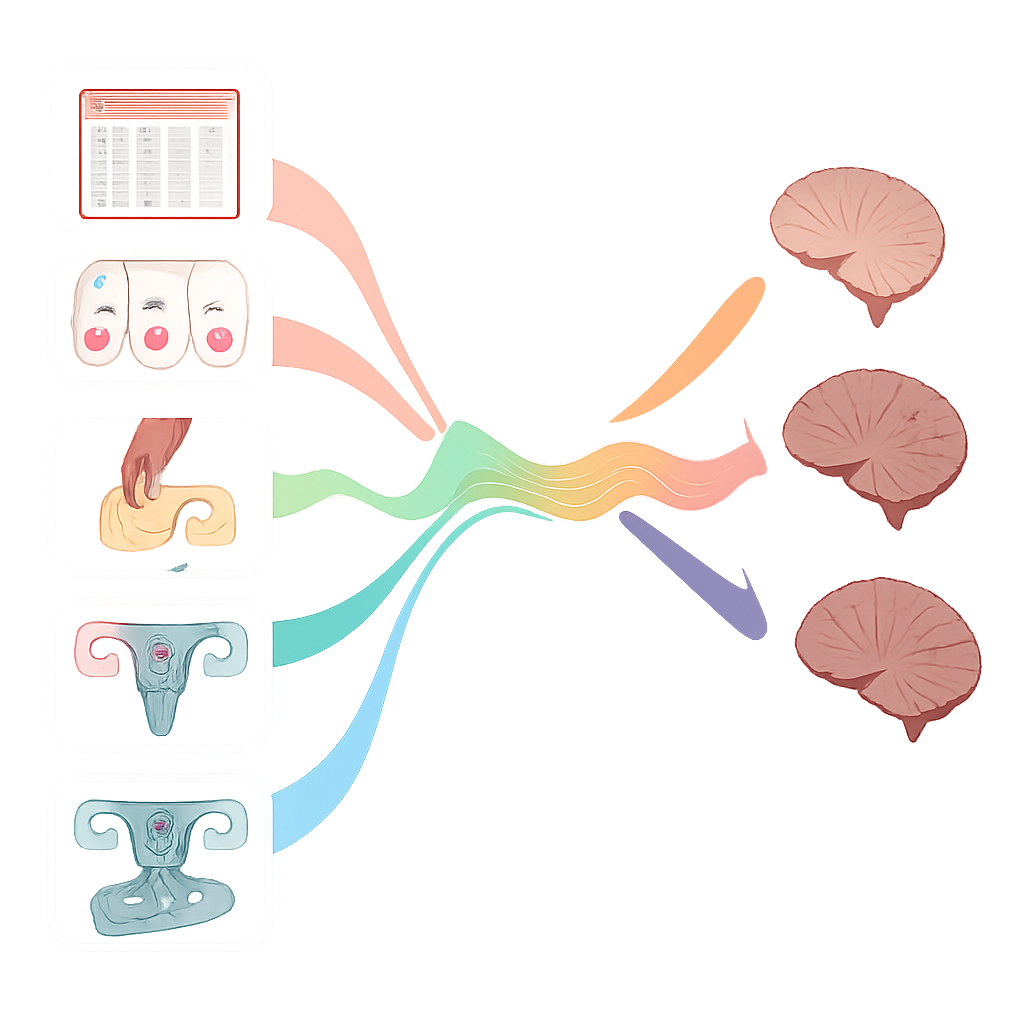
What this means for women and families
For lay readers, the main message is that ordinary events across a woman’s life—when periods begin and end, how many children she has, how long she breastfeeds, whether menopause is natural or surgical—may leave lasting traces on brain health in later years. The study does not prove that any single choice or event causes Alzheimer’s, and many other influences such as genes, education, lifestyle, and environment also play powerful roles. Still, the results strengthen the view that a steady, natural course of female hormones over many years may help shield the brain, while major disruptions or extremes in reproductive history could raise risk. As scientists continue to unravel these links, such insights may guide better counseling around gynecologic surgery, contraception, and support for women’s health across the entire life course.
Citation: Li, F., Chen, K., Zhang, T. et al. Menstrual and reproductive factors and risk of Alzheimer’s disease in elderly women: a cohort study in Eastern China. Sci Rep 16, 10415 (2026). https://doi.org/10.1038/s41598-026-40329-5
Keywords: Alzheimer’s disease, women’s health, reproductive history, menopause, breastfeeding