Clear Sky Science · en
Mental health and depression as mediators between social media use screen time and academic integrity among tertiary students in Ghana
Why our screens and minds are connected
For many university students, phones and laptops are constant companions for chatting, streaming, and studying. This study looks closely at what that always-on digital life means for teacher trainees in Ghana. It asks a simple but urgent question: when students spend long hours on social media and other screens, what happens to their mood, their honesty during tests, and their grades?
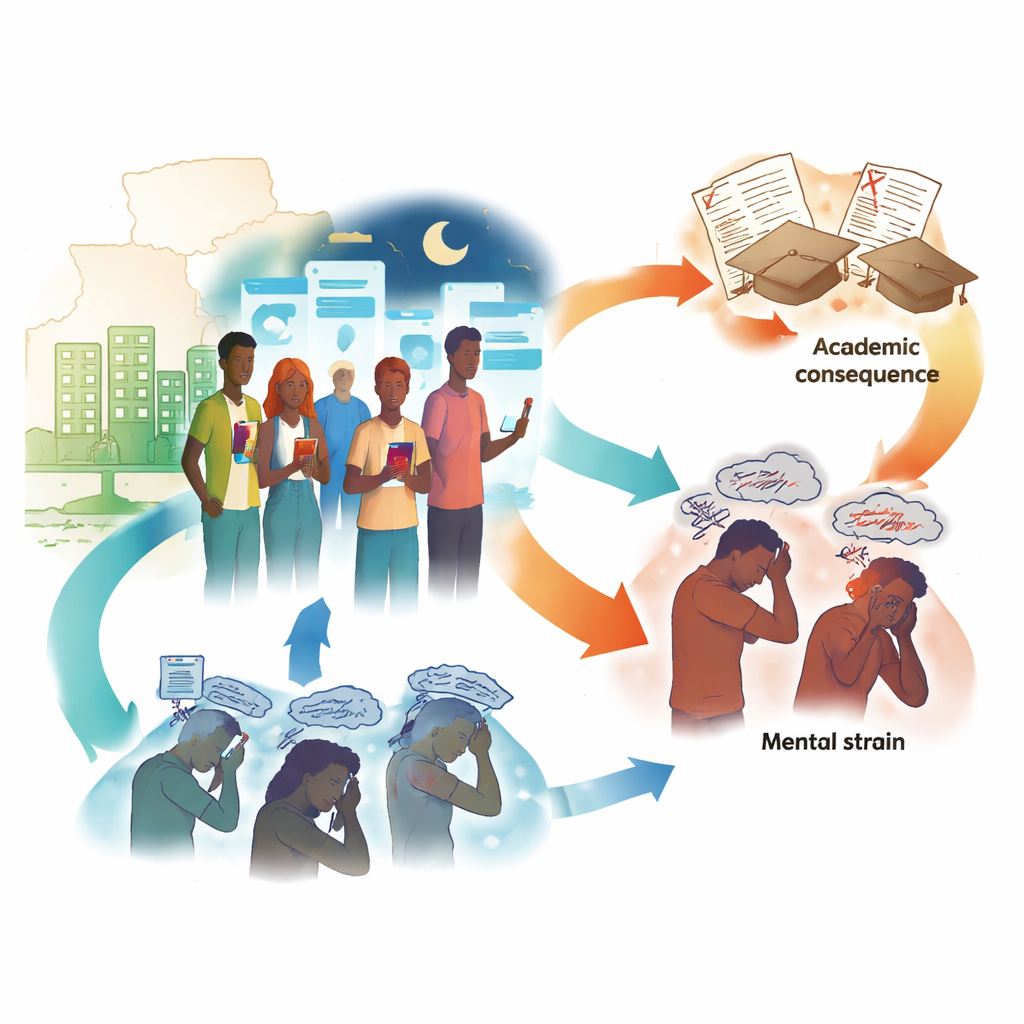
Life online for Ghanaian students
Across Ghana, college campuses are rapidly becoming digital spaces. Most students in public Colleges of Education go online every day, using messaging apps, video platforms, and learning systems on the same devices. This blending of schoolwork and leisure makes it hard to separate study time from screen time. The researchers surveyed 970 student-teachers from 29 public colleges in all regions of the country. Using standard questionnaires, they measured how often students used social media, how many hours they spent on screens for study and for fun, how many signs of depression they showed, how they were feeling in general, how honestly they behaved during assessments, and how well they were doing in continuous assessment scores.
Heavy screen use and how students feel
The study found a clear pattern: the more students used social media and screens, the worse they tended to feel. Frequent checking of apps, using social media to manage moods, long stretches of non-academic screen time, and especially late-night use were all linked with poorer mental health. Students who scrolled in bed after 11 p.m. and those who felt emotionally tied to their online feeds showed the strongest signs of distress. Even time spent on screens for schoolwork, such as online lectures and assignments, was linked with strain when it became excessive. Together, the different forms of screen use explained about a third of the differences in students’ mental health scores, suggesting that digital habits are a major part of their emotional landscape.
From low mood to lower marks and shaky honesty
Feeling low did not stop at mood alone; it also showed up in the classroom. Students with more signs of depression tended to earn lower internal assessment scores and were more likely to report cutting corners during tests and assignments. The analysis showed that social media use harmed grades in two ways. First, there was a direct link: heavier use was tied to lower performance. Second, part of this link ran through depression. More social media use went along with higher depression, which in turn went along with poorer scores. Depression explained a sizable share of the drop in performance but did not tell the whole story, meaning social media also affected grades through other paths, such as distraction or lost study time.
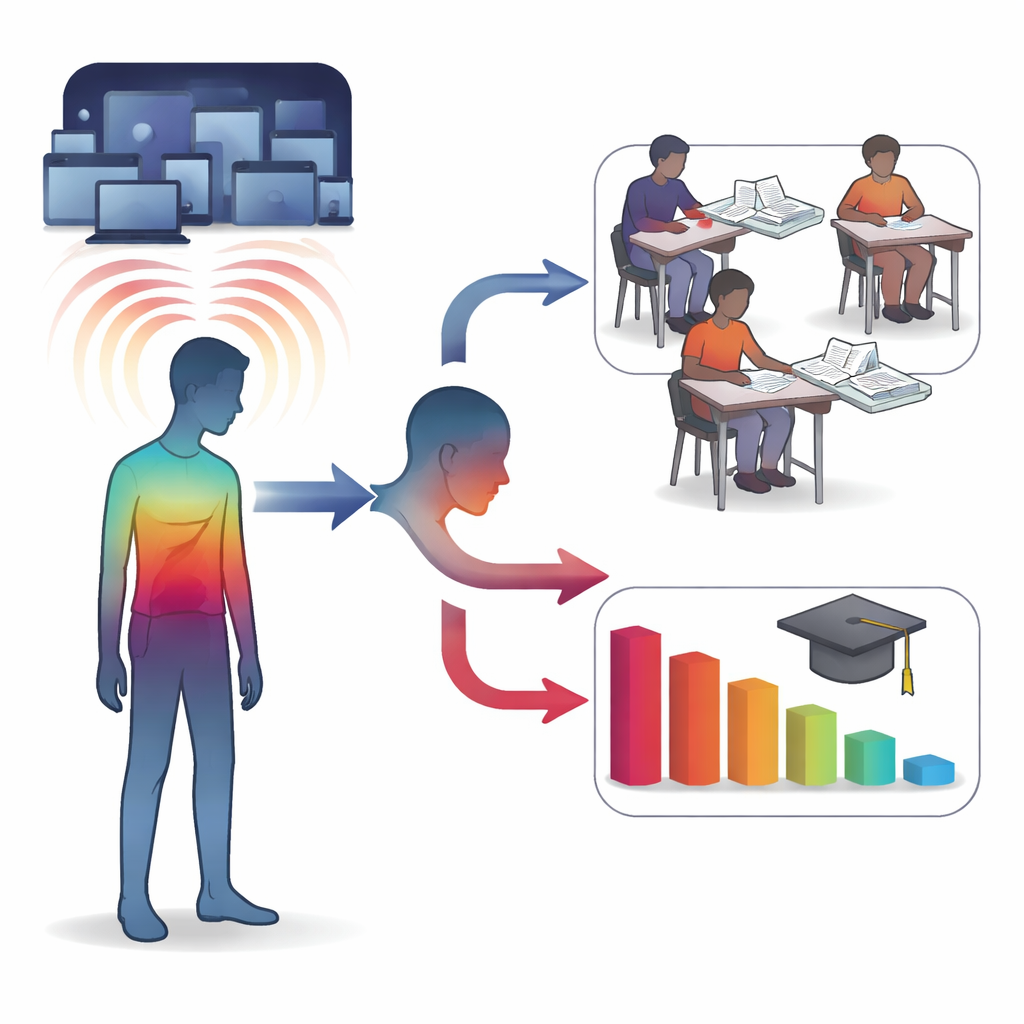
Screen time as a force multiplier
The study also discovered that screen time made the risks of depression worse. Depressed students were already more likely to admit to cheating or tolerating dishonest behavior. But when these students also spent many hours on screens, especially for non-academic reasons, their chances of assessment dishonesty rose even more. At low levels of screen time, depression still harmed mental health and integrity, but the effects were modest. At high levels of screen time, the negative impact on honesty, well-being, and grades grew sharply. This suggests that long hours on devices may drain students’ self-control and make it harder to resist shortcuts when they feel overwhelmed.
What this means for students and schools
In simple terms, the study concludes that how students use their phones and laptops is tightly bound up with how they feel, how fairly they act, and how well they perform in class. Constant and emotionally charged use of social media, late-night scrolling, and heavy non-academic screen time are linked to more depression, weaker mental health, more cheating, and lower assessment scores. The authors argue that tackling these problems will require more than banning phones in class. They call for balanced digital habits, better mental health support on campus, and assessment practices that encourage honesty. For Ghanaian colleges and similar settings worldwide, helping students build healthier relationships with their screens may be a key step toward protecting both their minds and their learning.
Citation: Ntumi, S., Nimo, D.G., Ammah, C. et al. Mental health and depression as mediators between social media use screen time and academic integrity among tertiary students in Ghana. Sci Rep 16, 10024 (2026). https://doi.org/10.1038/s41598-026-40285-0
Keywords: social media use, screen time, student mental health, academic integrity, Ghana tertiary education