Clear Sky Science · en
Aerobic exercise-induced irisin secretion is associated with improved endothelial function and reduced atherosclerosis in ApoE-deficient mice
Why Moving Matters for Your Arteries
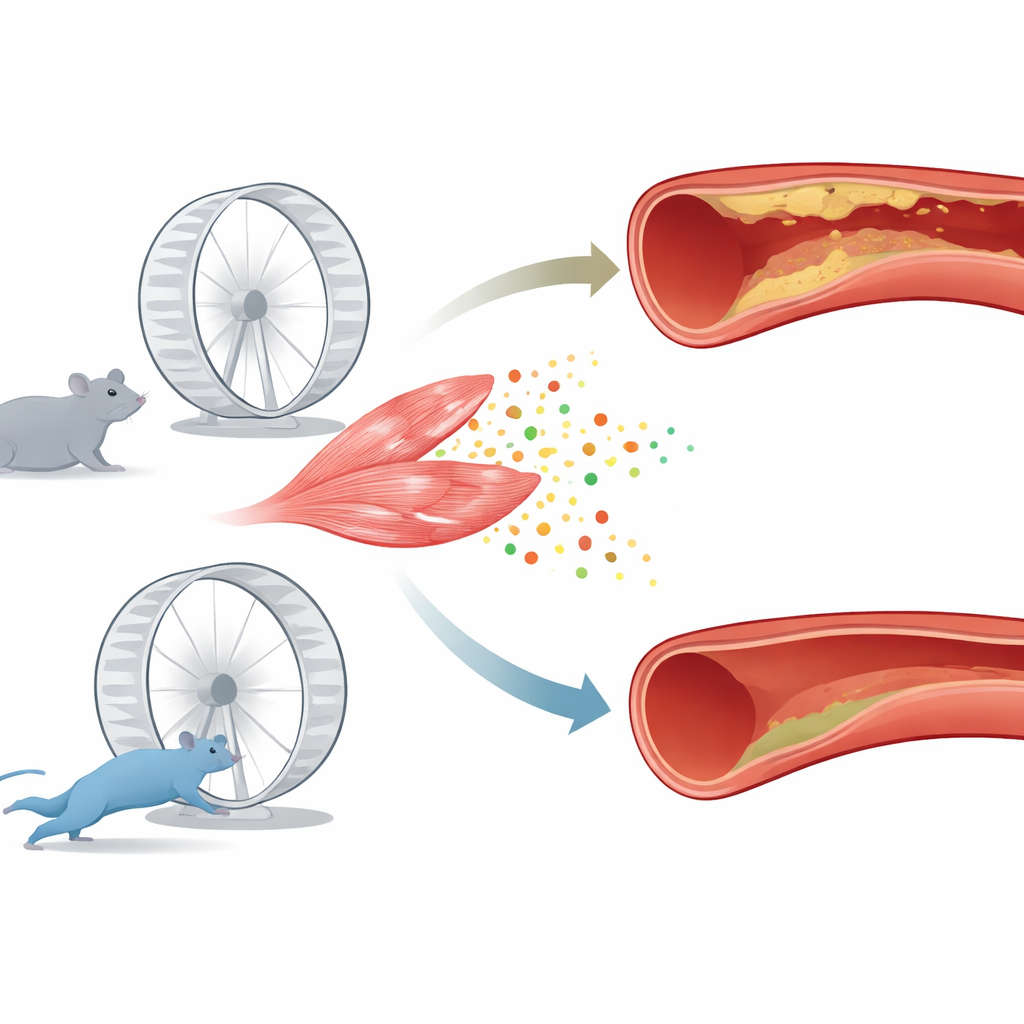
Aerobic exercise, like jogging or cycling, is widely promoted to protect the heart and blood vessels, but the body’s internal messengers that make this protection possible are still being uncovered. This study in mice focuses on one such messenger, a hormone-like molecule called irisin that is released by working muscles. The researchers asked whether irisin helps explain how regular aerobic activity keeps arteries flexible, calms inflammation, and slows the buildup of fatty plaques that can lead to heart attacks and strokes.
How Arteries Become Clogged
Atherosclerosis is a slow, long-term process in which fatty deposits and inflammatory cells accumulate in the walls of arteries, narrowing the channel through which blood flows. The inner surface of a healthy artery is lined with cells that control vessel widening, limit inflammation, and prevent excessive sticking of blood cells to the wall. When this lining becomes dysfunctional, the vessel loses its ability to relax properly and shifts into a more inflamed, plaque-prone state. In the mouse model used here, a genetic change combined with a high-fat diet rapidly drives this unhealthy remodeling, making it possible to test how exercise alters the course of disease.
A Muscle Signal with Protective Potential
Muscles do more than move the body; they also act as an endocrine organ, releasing small proteins known as myokines into the bloodstream during exercise. Irisin is one such myokine, produced when a muscle protein called FNDC5 is cut and released. Previous work suggested that giving extra irisin to animals can improve blood fats and blood vessel function, and that people who exercise regularly tend to have higher irisin levels. The key unanswered question was whether the irisin naturally boosted by aerobic training is actually linked to healthier arteries and less plaque in a body that is prone to vascular disease.
What the Researchers Did in Mice
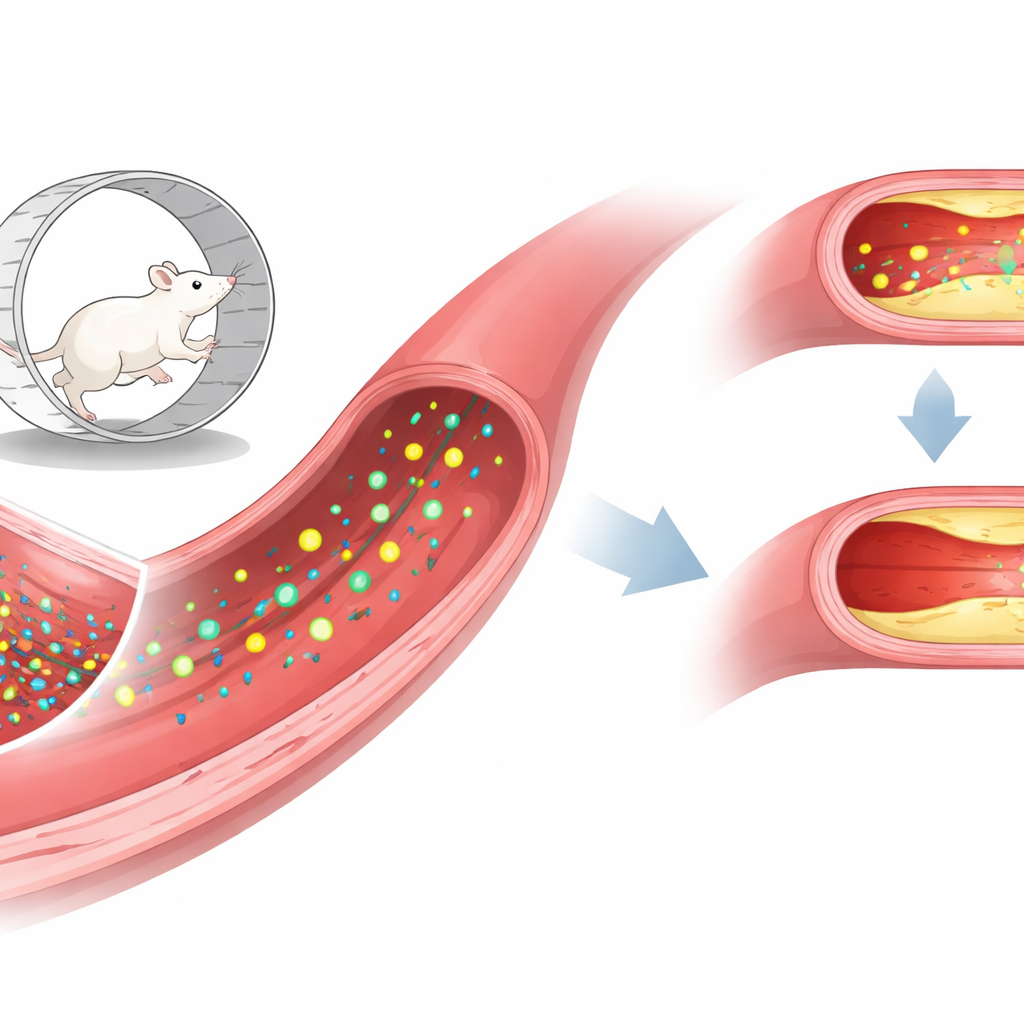
The team studied three groups of mice: healthy animals kept sedentary, plaque-prone animals kept sedentary, and plaque-prone animals given free access to a running wheel for 16 weeks. All plaque-prone mice ate a high-fat diet to accelerate artery damage. The scientists measured how far the mice ran, body weight, body fat, and blood cholesterol. They also examined the aorta—the main artery leaving the heart—for the amount of plaque, the presence of inflammatory molecules, and how well the vessel relaxed in response to signals. At the same time, they measured irisin levels in the blood, FNDC5 activity in leg muscles, and the level of a key enzyme in the arterial wall that makes nitric oxide, a gas that helps vessels widen and protects against inflammation.
Exercise, Irisin, and Calmer Arteries
Sedentary plaque-prone mice became heavier, accumulated more abdominal fat, and showed very high cholesterol levels and large plaque areas in their aortas. Their arteries relaxed poorly and displayed high levels of inflammatory markers and adhesion molecules that attract immune cells. These mice also had lower FNDC5 activity in muscle and reduced irisin in their blood. In contrast, mice that chose to run regularly were leaner, had lower harmful cholesterol, and developed smaller plaque areas despite the same high-fat diet. Their arteries relaxed more easily, carried less inflammation, and showed higher levels of the nitric oxide–producing enzyme. Importantly, exercising mice had higher FNDC5 activity and more irisin in their blood, and irisin levels tracked closely with better vessel function, lower blood fats, and fewer plaques.
What This Means for Everyday Health
Taken together, the findings suggest that when muscles contract during regular aerobic exercise, they release more irisin, and this rise is linked to arteries that are more flexible, less inflamed, and less clogged by fatty deposits. While these results come from mice and need confirmation in people, they support the idea that muscle-derived signals help translate physical activity into cardiovascular protection. In simple terms, keeping your muscles active may help your blood vessels stay younger for longer, not just by burning calories but also by sending protective chemical messages throughout the body.
Citation: Inoue, K., Fujie, S., Uchida, M. et al. Aerobic exercise-induced irisin secretion is associated with improved endothelial function and reduced atherosclerosis in ApoE-deficient mice. Sci Rep 16, 12614 (2026). https://doi.org/10.1038/s41598-026-39903-8
Keywords: aerobic exercise, irisin, atherosclerosis, endothelial function, nitric oxide