Clear Sky Science · en
Fecal microbiota succession in dairy calves is driven by age and modestly influenced by colostrum source
Why the First Milk Matters
For newborn dairy calves, the first meals after birth do much more than fill the stomach. This early “first milk,” called colostrum, is packed with immune defenses and living microbes that help seed the gut. Farmers often rely on frozen colostrum or powdered substitutes when fresh colostrum from the mother is not available. This study asked a practical but important question: does the source of that first milk leave a lasting mark on the calf’s gut bacteria, which are closely tied to health, growth, and disease resistance?
Three Ways to Start a Calf’s Life
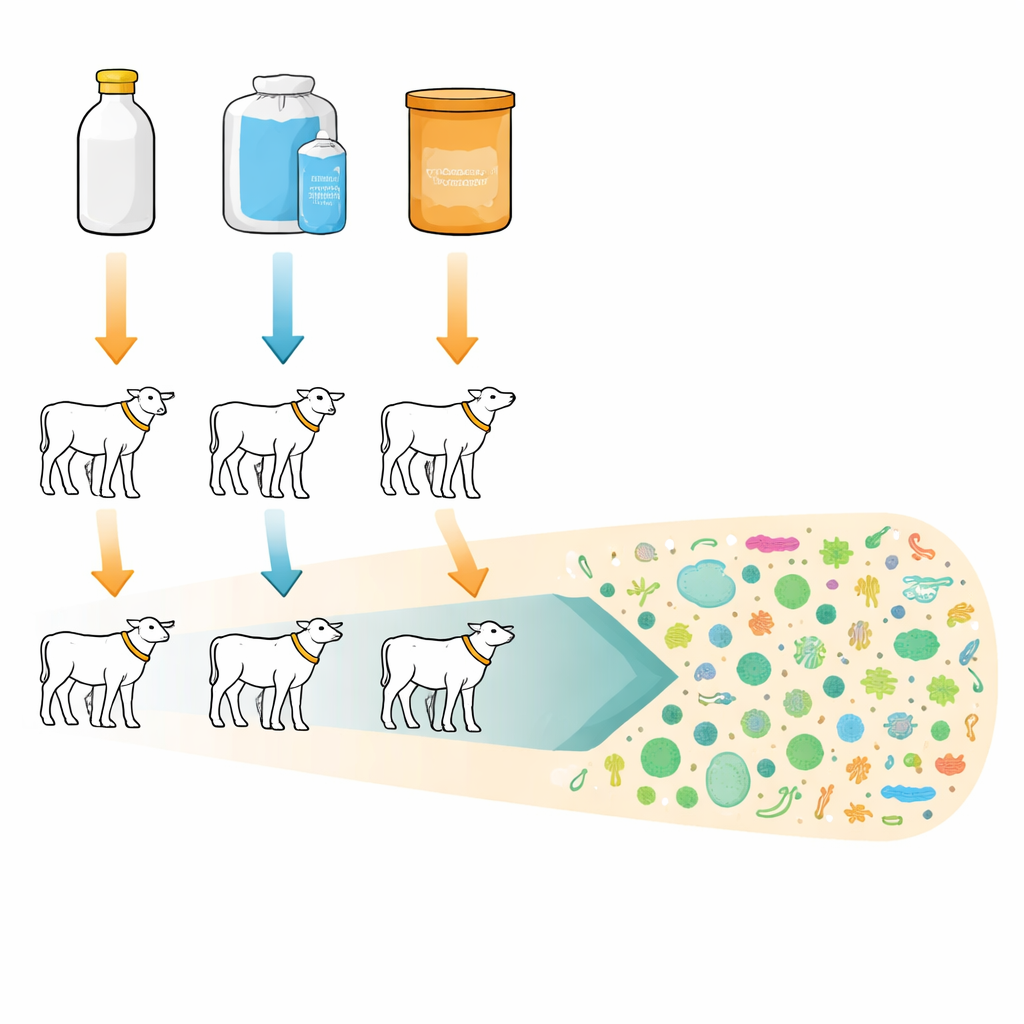
The researchers worked with Holstein calves on a Brazilian dairy farm and divided them into three groups. One group received fresh colostrum from its own mother soon after birth. A second group received high-quality colostrum that had been frozen and stored in a farm “colostrum bank.” The third group was fed a commercial colostrum replacer made from dried bovine colostrum and other ingredients. After the first feeding, all calves were raised in the same way: they drank whole milk, had access to the same starter feed, and were housed under similar, carefully controlled conditions.
Watching Gut Life Unfold
To track how gut bacteria developed, the team collected small fecal samples starting at birth and then repeatedly over the first ten weeks of life, spanning the milk-feeding period, weaning, and the early post-weaning phase. They used DNA sequencing to identify which bacteria were present and in what proportions, and to measure how diverse and complex each calf’s gut community was at different ages. This approach allowed them to see not only which microbes appeared first, but also how the community shifted as calves aged and their diet changed from mainly milk to more solid feed.
Age Runs the Show
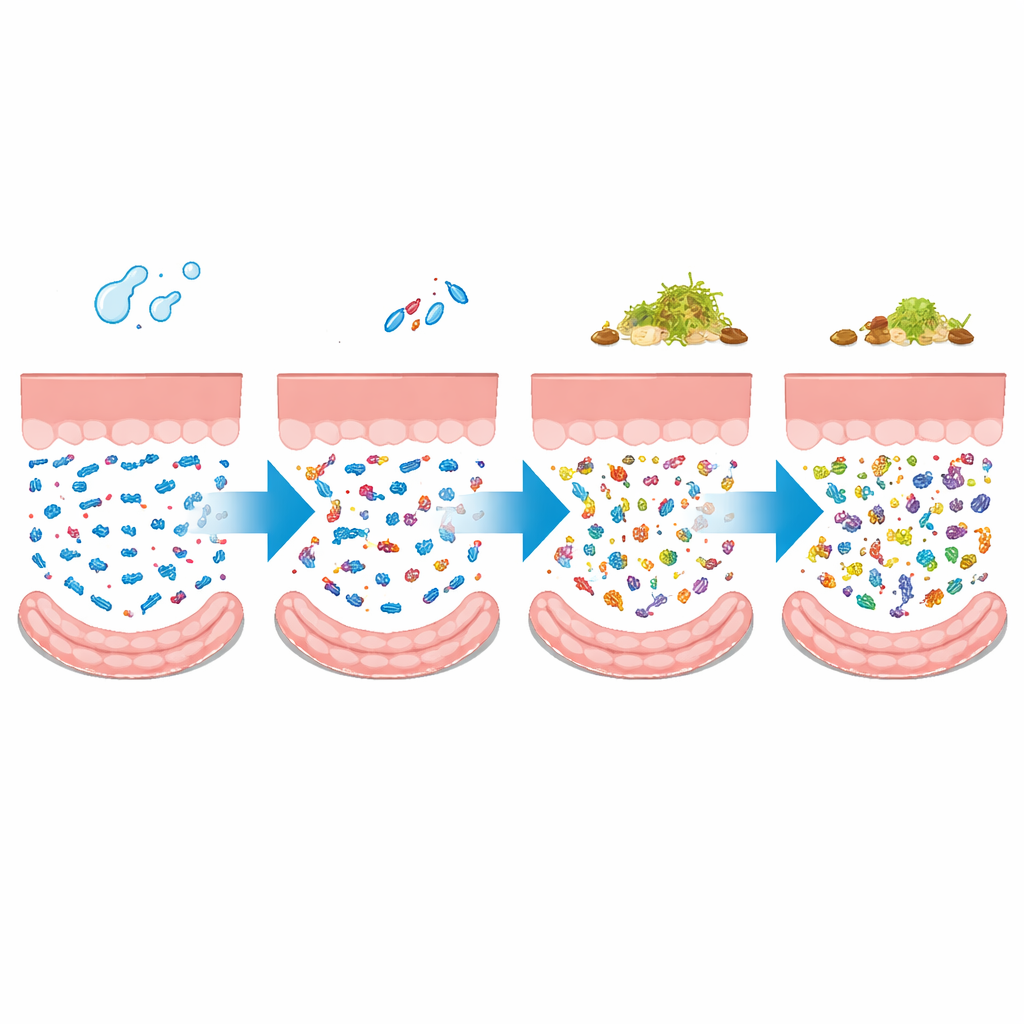
Across all calves, gut bacteria followed a similar story. In the first days after birth, bacteria from a group that includes Escherichia coli were especially abundant, taking advantage of the still-oxygenated gut. Within a week, these early arrivals declined as other groups—such as Lactobacillus, Bacteroides, and Faecalibacterium—gained ground, marking a shift toward a more stable, oxygen-free environment. Over the following weeks, as calves began eating more starter feed and were eventually weaned, bacteria known for breaking down complex carbohydrates and producing beneficial short-chain fatty acids became more prominent. Measures of diversity changed sharply during the first week, then climbed and stabilized as the calves matured, showing a clear age-driven succession.
Fresh Colostrum’s Early Edge
When the scientists compared the three colostrum sources, they found only modest and short-lived differences. Overall diversity—the number and balance of bacterial types—did not differ meaningfully among calves that drank fresh, frozen, or powdered colostrum. However, during the first three days of life, calves that received fresh colostrum from their own dams had a higher relative abundance of Lactobacillus in their feces than calves given frozen colostrum or replacer. Lactobacillus is often considered a “good” bacterium because it can help crowd out harmful microbes and support gut health. These early shifts faded with time: by weaning and afterward, gut communities from all three groups looked remarkably alike, suggesting that shared diet and environment gradually overrode the initial differences.
What This Means for Calves and Farms
In simple terms, the study shows that while the first milk source can give some beneficial bacteria, like Lactobacillus, a brief head start, the calf’s age and later feeding practices are the main drivers of how gut microbes settle in. Fresh colostrum may offer a small early advantage in “programming” the gut, which could help explain better growth and health seen in related work using the same animals. Yet, over ten weeks, the gut ecosystems of calves given fresh, frozen, or powdered colostrum ended up converging. For farmers, this suggests that ensuring timely, adequate colostrum of any good-quality source is crucial, but that ongoing nutrition, hygiene, and housing will ultimately shape the long-term balance of microbes living in a calf’s gut.
Citation: Virginio Júnior, G.F., Tomaluski, C.R., Dondé, S.C. et al. Fecal microbiota succession in dairy calves is driven by age and modestly influenced by colostrum source. Sci Rep 16, 10364 (2026). https://doi.org/10.1038/s41598-026-38526-3
Keywords: dairy calves, colostrum, gut microbiome, Lactobacillus, weaning