Clear Sky Science · en
A Nationwide Social Contact Survey Dataset for Public Health and Social Sciences Research in South Korea
Why Your Daily Interactions Matter
Every day, we chat with family, sit next to co‑workers, ride buses with strangers, and gather during holidays. These small, ordinary moments form invisible networks that shape how ideas spread, friendships grow, and infections move through a country. This study from South Korea turns those everyday encounters into a detailed national picture of who meets whom, where, and how often—creating a public dataset that can guide better health policies and social research in the years after COVID-19.
Taking the Pulse of a Nation’s Social Life
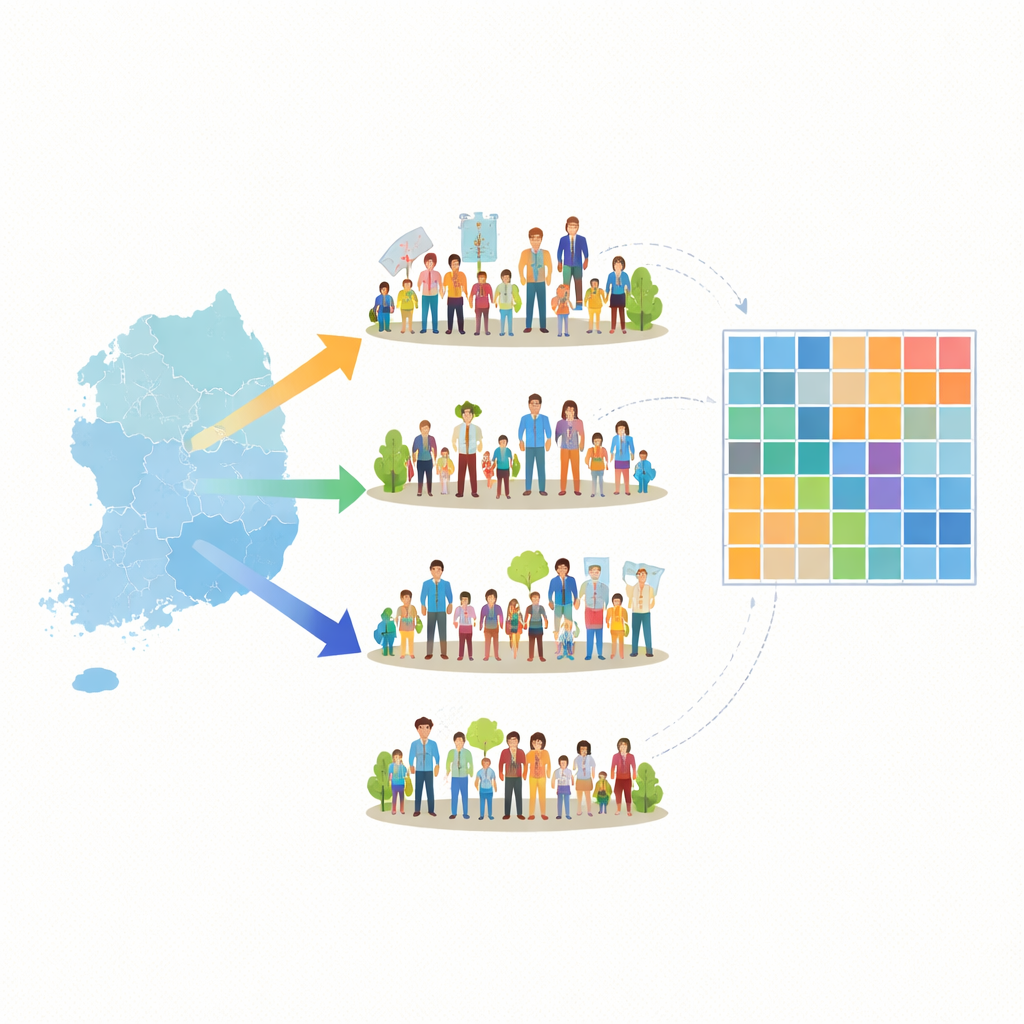
The researchers set out to fill a major gap: South Korea had no large, openly available survey of how people mix and meet in daily life. Earlier studies were small or hard to access, forcing scientists to borrow foreign data that did not reflect Korean culture, family structures, or holiday traditions. To change this, the team worked with a professional survey company to recruit 2,415 volunteers from across the country, spanning ages from infants to older adults and representing different regions. After careful screening and exclusions, 1,987 participants formed the final sample, together reporting more than 133,000 close contacts over two separate winter weeks in 2023 and 2024.
How the Survey Followed Everyday Encounters
Participants first answered a short background questionnaire covering age, sex, where they lived, what they did for work, and who lived in their household. They then kept a daily “contact diary” for 14 days, once in December and once in February, a period that included a major traditional holiday. A close contact was defined in simple, everyday terms: either physical touch like a handshake or hug, or a spoken exchange of at least three words. For each person they met closely, participants recorded the other person’s age and sex, how they knew each other (family, friend, colleague, and so on), where they met, how often they usually met, how long they spent together that day, and whether it was a one‑to‑one or group contact. To make the study accessible, most adults used an online diary, while children and many seniors used paper booklets, often filled out with help from parents or guardians.
Turning Messy Human Memory into Reliable Data
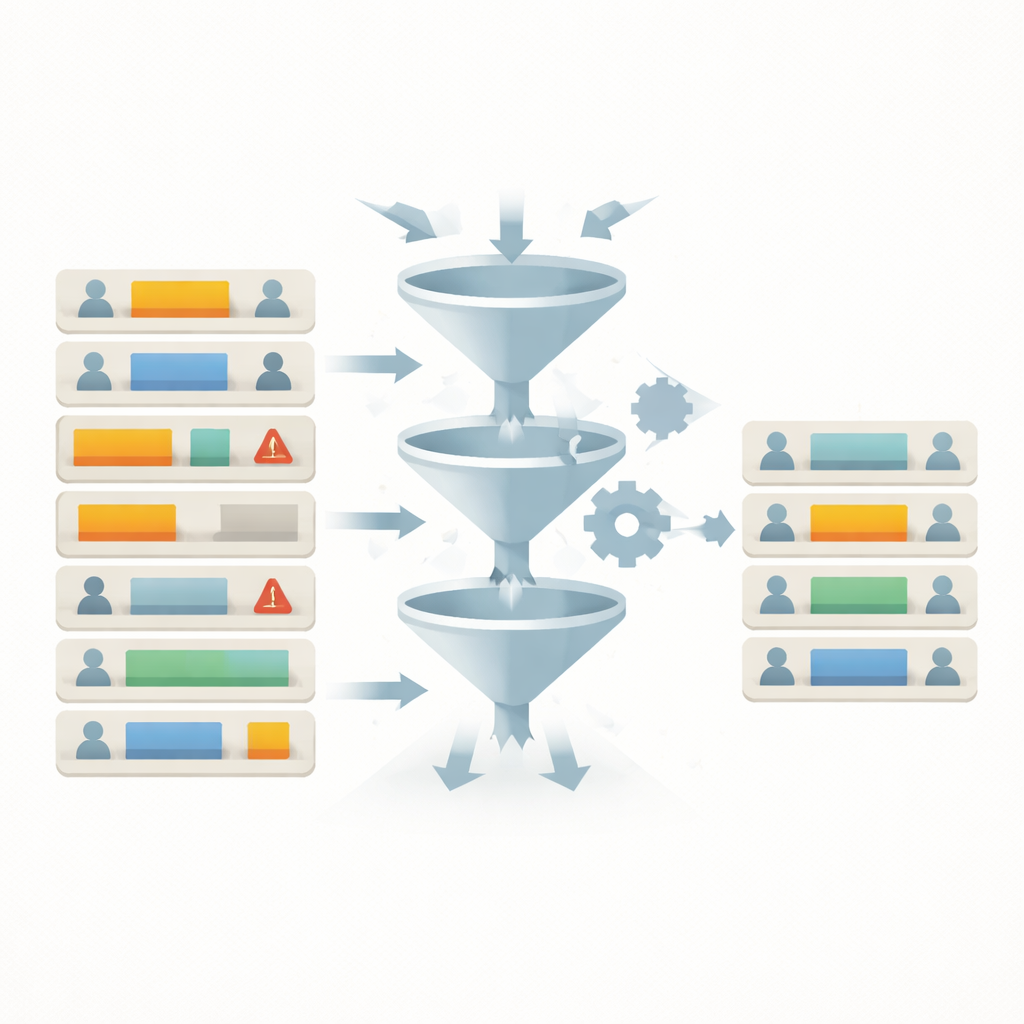
Because real‑world surveys are never perfect, the team devoted considerable effort to cleaning and checking the data. They looked for impossible patterns, like a person reporting more close contacts with household members than the number of people they said lived at home. They merged duplicate entries when the same family member appeared in multiple rows for the same day and standardized relationship and place categories when respondents used vague labels like “other” even though clearer choices existed. Free‑text answers in Korean were preserved but carefully recoded into broader categories when their meaning was obvious. When participants’ responses were inconsistent or unreadable, those records were removed. In total, 201 people were excluded for numeric, logical, or language problems, leaving a dataset that balances thorough cleaning with respect for the original answers.
What the Contacts Reveal About Modern Korea
An earlier analysis using this dataset has already uncovered distinctive patterns in how people in South Korea connect. Contacts with extended family rose sharply during holiday periods, reflecting strong family ties and travel traditions. People tended to interact most with others their own age, a pattern known as “assortative mixing,” and older adults in Korea reported more close contacts than their peers in many other countries. Because the dataset includes day type (weekday, weekend, school vacation, or holiday), relationship, and location, it can be used to build detailed maps of mixing in schools, workplaces, homes, and public spaces. These maps, in turn, help estimate how quickly respiratory infections might spread in different age groups and settings, and how changes in hygiene, vaccination, or gathering rules could slow an outbreak.
From Personal Moments to Public Benefit
For non‑specialists, the power of this work lies in its transformation of private, everyday meetings into anonymous information that can protect communities. By making the survey design, cleaning steps, and final anonymized files freely available, the authors provide a reusable foundation for disease modeling, social network studies, and policy evaluations in South Korea and beyond. In simple terms, the study shows that carefully counting who meets whom—and sharing that information responsibly—gives society a clearer lens on both health risks and the social bonds that define modern life.
Citation: Chae, MK., Son, WS., Nah, K. et al. A Nationwide Social Contact Survey Dataset for Public Health and Social Sciences Research in South Korea. Sci Data 13, 603 (2026). https://doi.org/10.1038/s41597-026-06896-y
Keywords: social contact survey, South Korea, infectious disease modeling, public health data, social networks