Clear Sky Science · en
Genetic predictors of GLP1 receptor agonist weight loss and side effects
Why some people respond differently to new weight loss drugs
Powerful weight loss drugs that act on gut hormones have captured public attention, helping many people lose substantial weight. Yet friends and family members quickly notice that these medicines do not work the same for everyone, and some people feel much sicker on them than others. This study asks a simple question with big implications: can our DNA help explain who sheds more pounds and who is more likely to feel queasy on these medications?
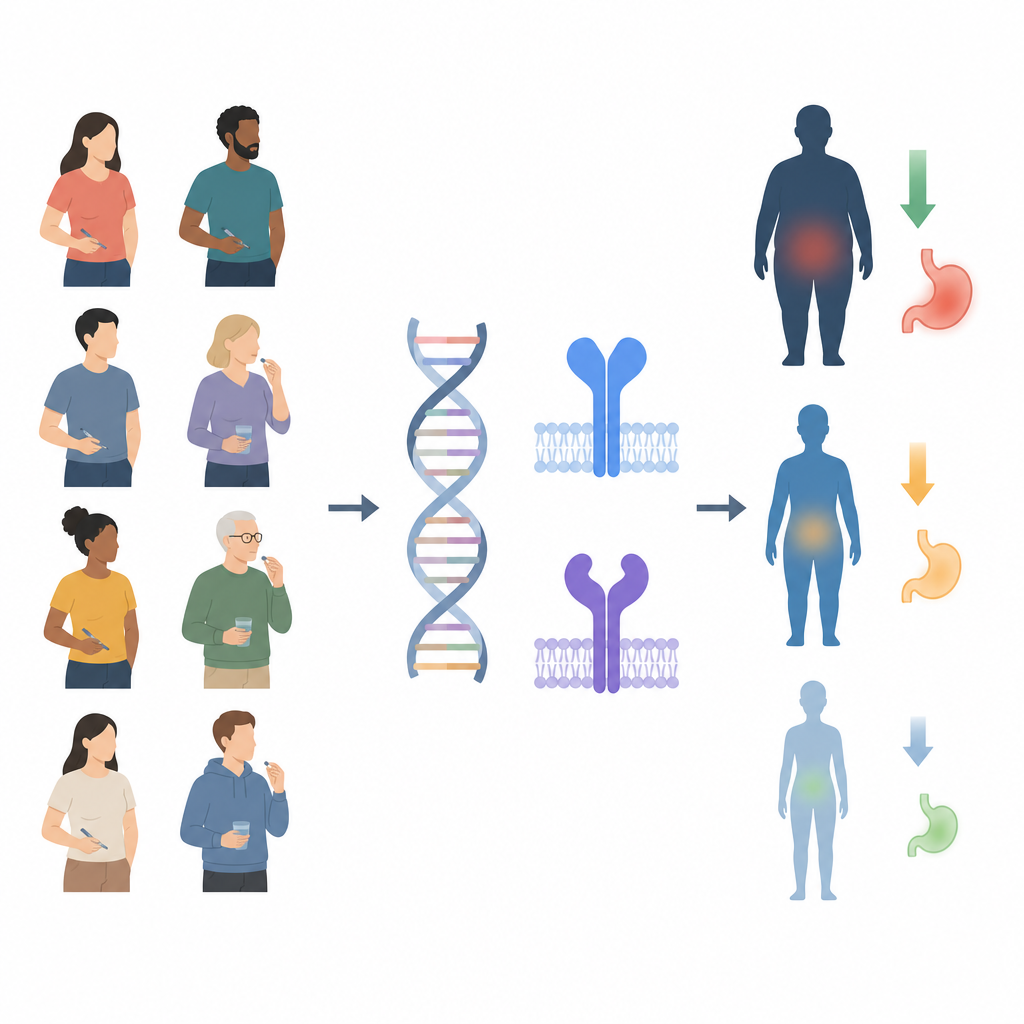
Modern weight loss medicines in everyday life
The research focuses on drugs that mimic natural gut hormones called GLP1 and GIP, including semaglutide and tirzepatide, now widely prescribed for obesity and blood sugar control. These drugs help the pancreas release insulin, slow stomach emptying and dampen appetite, leading to weight loss for many users. But real world experience shows huge variation: some people lose over a quarter of their body weight while others see little change or even gain weight. Understanding why could help doctors choose the right drug, dose and pace of dose increases for each patient.
What the researchers measured in thousands of users
Scientists at 23andMe surveyed more than 27,000 customers who reported using a GLP1 type medicine such as Ozempic, Wegovy, Mounjaro or Zepbound. Participants shared their starting weight and height, how long they used the medicine, which brand and dose they took, and any side effects such as nausea or vomiting. Typical respondents started with a body mass index in the obese range and reported using a GLP1 drug for about eight months, losing on average around 12 percent of their body weight. The team also compared these self reported numbers with electronic health records from a smaller group, finding broadly similar patterns even though the medical records tended to show somewhat smaller weight changes.
How genes shape both weight loss and side effects
Using genome wide analysis, the researchers scanned the DNA of more than 15,000 people of primarily European ancestry to look for genetic markers linked to how much weight they lost on treatment. One key change stood out in the gene that encodes the GLP1 receptor, the molecular doorway these drugs use on cells. People who carried the effect version of this variant lost about three quarters of a kilogram more per copy of the variant, even after accounting for age, sex, dose and treatment duration. The same region of DNA was also tied to higher chances of nausea and vomiting, and statistical tests suggested that the signals for better weight loss and stronger stomach upset likely come from the same underlying genetic change.
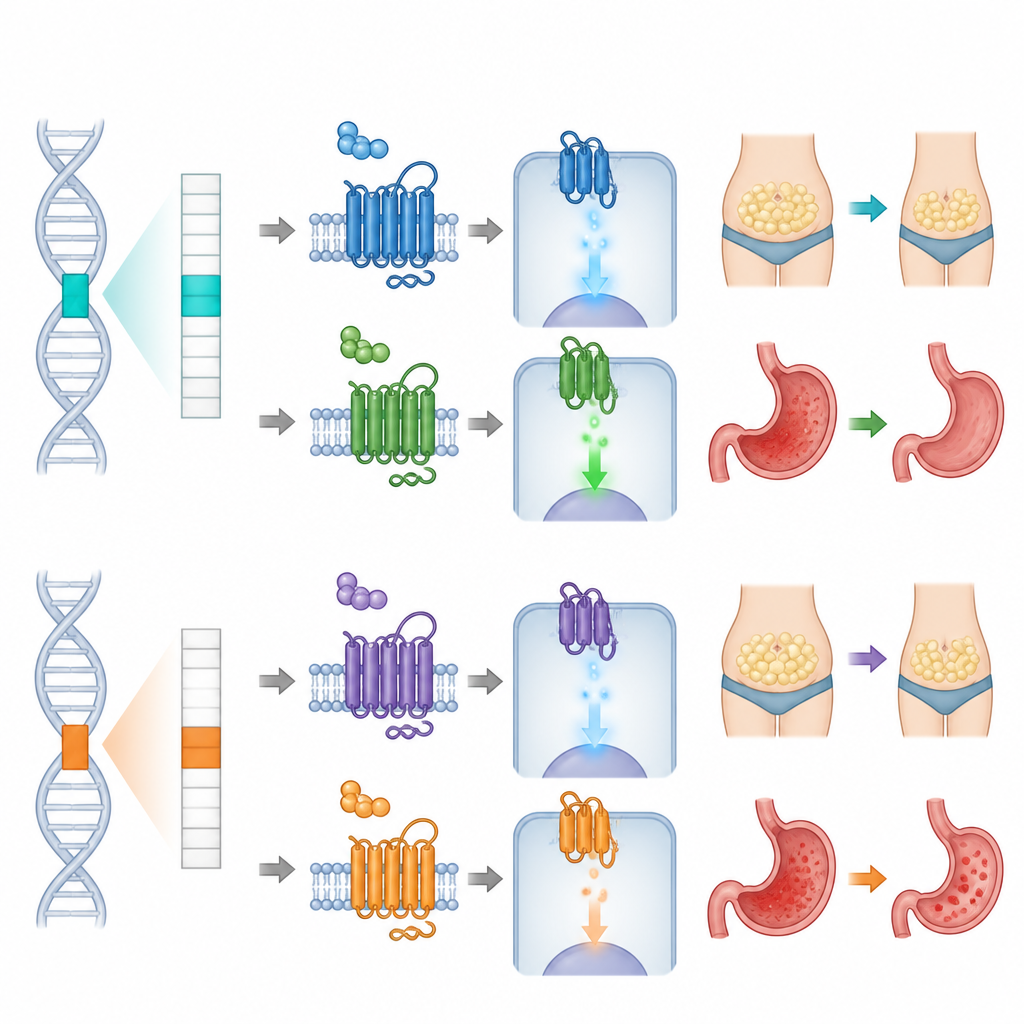
A second gene tied to stomach upset with a specific drug
The team then focused on people taking tirzepatide, which targets both GLP1 and a second gut hormone receptor called GIP. Among these users, they discovered another genetic variant in the GIP receptor gene that altered the risk of vomiting but did not change weight loss itself. People with the risk version of this variant were substantially more likely to report moderate or severe vomiting when on tirzepatide. When a person carried risk versions in both the GLP1 and GIP receptor genes, their odds of vomiting on tirzepatide rose sharply, showing how multiple genes can interact to shape side effects.
Building prediction tools that mix genes and life factors
Genes were only part of the story. The researchers built models that combined genetic information with non genetic factors such as sex, age, starting body mass index, drug type, dose, time on treatment and medical history. These models explained about a quarter of the differences in weight loss and showed moderate ability to flag who would experience notable nausea or vomiting. When tested in an independent set of medical records, people the model predicted would do well on treatment generally did lose more weight over time than those predicted to respond poorly.
What this means for future personalized treatment
For patients and clinicians, the study offers early but concrete evidence that small DNA differences in the very drug targets of GLP1 medicines can nudge both how much weight a person loses and how sick they feel along the way. Although each genetic effect is modest, combining them with everyday clinical information already allows some sorting of people into higher and lower benefit and risk groups. As more data accumulate, such genetic insights may help tailor which weight loss drug to use, at what dose and for whom, so that more people achieve meaningful weight loss with fewer unpleasant side effects.
Citation: Su, Q.J., Ashenhurst, J.R., Xu, W. et al. Genetic predictors of GLP1 receptor agonist weight loss and side effects. Nature 653, 770–775 (2026). https://doi.org/10.1038/s41586-026-10330-z
Keywords: GLP1 drugs, genetic variants, weight loss response, drug side effects, precision medicine