Clear Sky Science · en
Specific gut microbes are associated with the incidence of cardiometabolic disease in the HELIUS cohort
Why your gut may matter for your heart
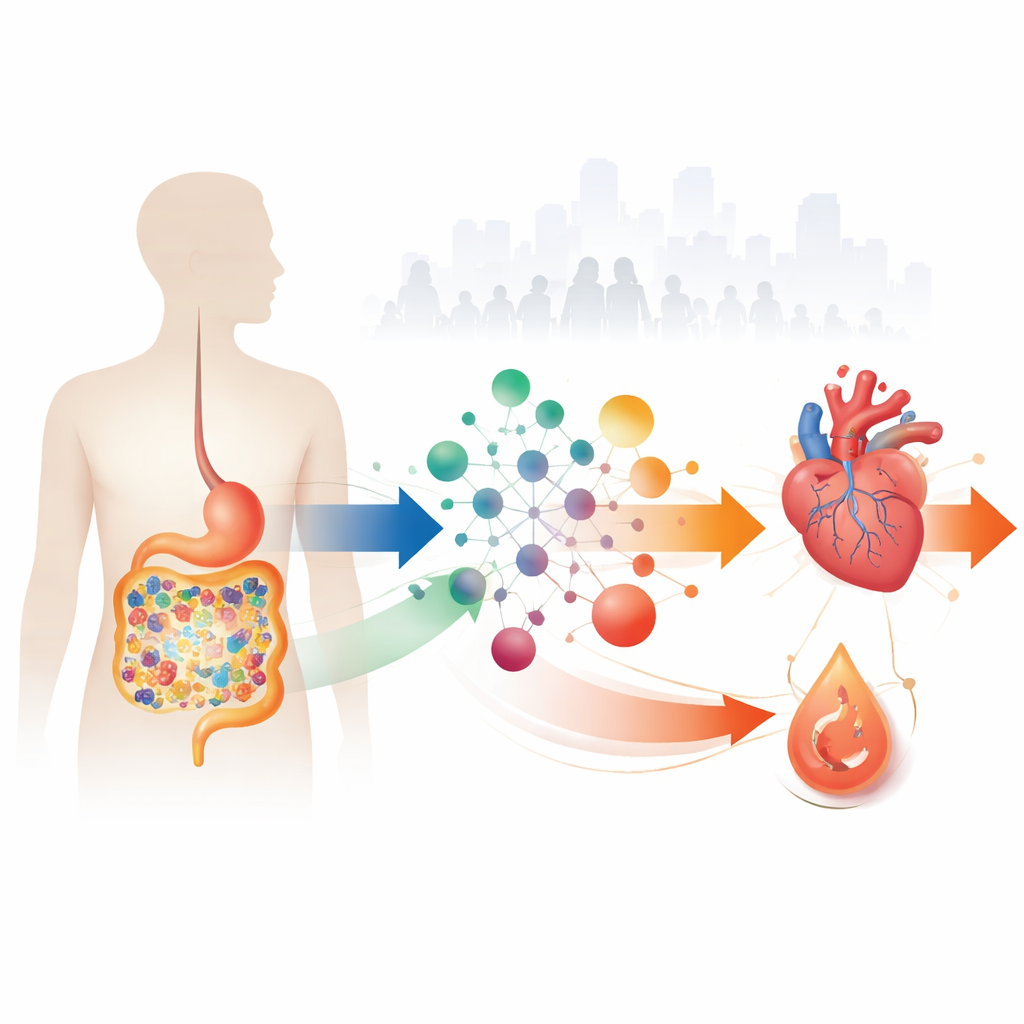
Most of us think of heart attacks, strokes, and diabetes as problems of clogged arteries, high blood pressure, or too much sugar in the blood. But this study suggests that another hidden organ may quietly shape these risks over many years: the trillions of microbes living in our gut. By following thousands of city dwellers in Amsterdam for almost a decade, the researchers asked a simple but powerful question: can the mix of bacteria in our intestines help predict who will go on to develop serious heart and metabolic disease?
A large and diverse city study
The work draws on the HELIUS study, a long-running project tracking the health of more than 20,000 adults from different ethnic backgrounds living in Amsterdam. For this analysis, the team focused on nearly 4,800 people who provided a stool sample at the start of the study and agreed to have their data linked to hospital and death records. Participants were, on average, about 50 years old and came from Dutch, Surinamese, Ghanaian, Turkish, Moroccan, and other communities. None had recently used antibiotics, which can disrupt gut microbes. Over roughly nine and a half years, the researchers recorded who suffered major cardiovascular events such as heart attack, stroke, or cardiovascular death, and who developed new diagnoses of diabetes, high blood pressure, or abnormal blood fats.
Gut communities and future heart events
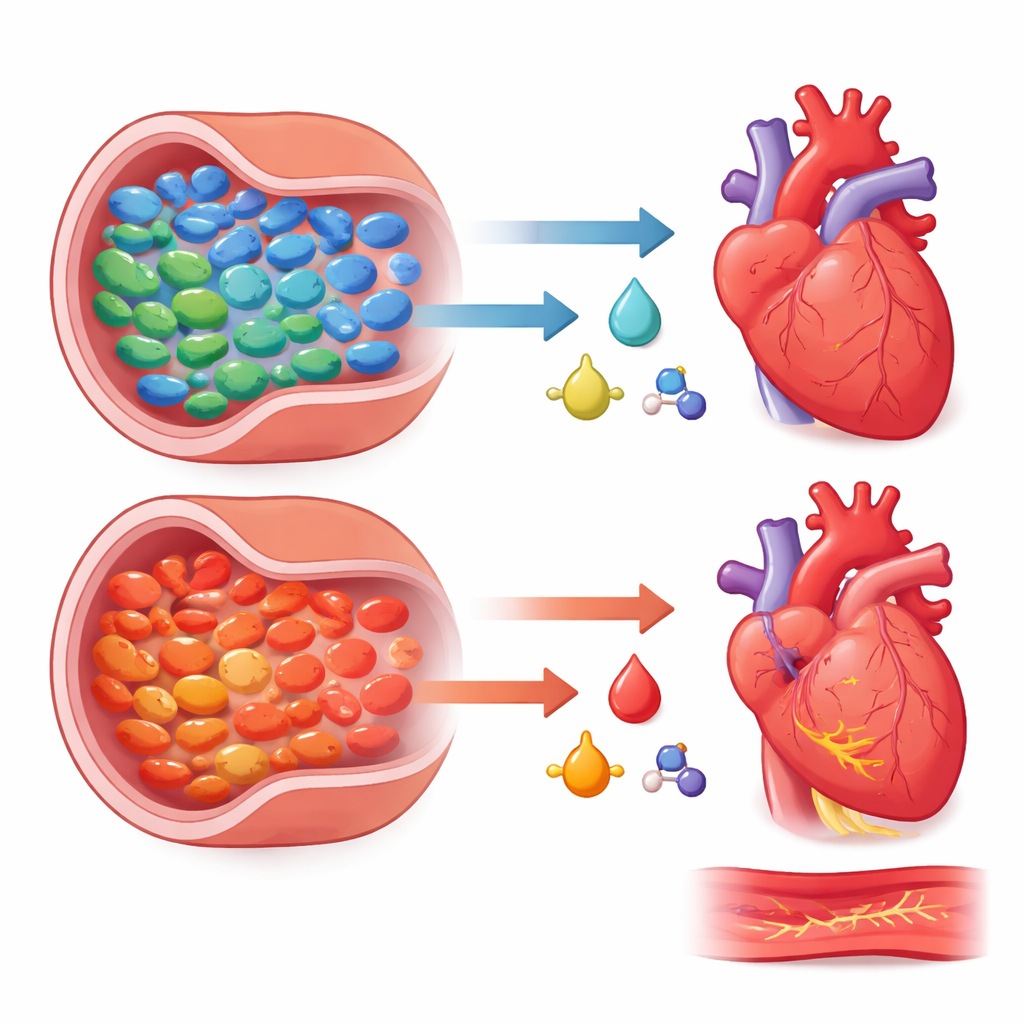
First, the team looked at the overall variety of microbes in each person’s gut. People who later experienced serious heart-related events tended to have slightly less diverse gut communities, but these differences became weaker after accounting for age, sex, body weight, smoking, and alcohol use. The researchers then zoomed in on specific bacterial groups. Certain microbes, including a group related to Eubacterium xylanophilum and the species Akkermansia muciniphila, were linked to a lower chance of heart events, while a group called Ruminococcus gnavus and another microbe that produces histamine were linked to a higher chance. After fully adjusting for lifestyle and health factors, only the protective signal from the Eubacterium xylanophilum group remained clearly associated with fewer serious cardiovascular problems.
Microbes tied to diabetes, cholesterol, and blood pressure
Among the 3,500 participants who returned for a follow-up visit about six years later, many had developed new metabolic problems: roughly one in five had high blood pressure, nearly one in five had abnormal blood fats, and about one in sixteen had diabetes. People who went on to develop any of these conditions started out with somewhat less varied gut communities. When the researchers examined specific bacterial groups, they found dozens that tracked with future disease. Several members of the Lachnospiraceae family and related groups were consistently linked with lower odds of developing diabetes, high cholesterol, or high blood pressure. In contrast, Ruminococcus gnavus and Flavonifractor plautii were linked with higher odds of all three conditions, and certain Streptococcus and Bifidobacterium groups were associated with a greater chance of developing high blood pressure.
Chemical clues in the bloodstream
To better understand how these microbes might influence disease, the team analyzed blood samples from a smaller subset of 105 participants. They measured over a thousand small molecules circulating in the blood and looked for patterns that tracked with heart-related microbes. The harmful Ruminococcus gnavus group was tied to higher levels of certain bile acids and acylcarnitines, chemical intermediates linked in past studies to disturbed fat burning and higher risk of heart disease and diabetes. In contrast, many of the seemingly protective microbes were associated with products of plant-rich diets, including compounds derived from whole grains, fruits, vegetables, and spices. These patterns suggest that gut bacteria may translate long-term eating habits into chemical signals that either harm or help the blood vessels.
Differences between sexes and ethnic groups
Because HELIUS includes several ethnic communities and both men and women, the researchers could probe whether the microbe–disease links looked the same in everyone. Overall, they did not find strong evidence that ethnicity changed which microbes mattered most, although some protective patterns were clearer in Dutch and African Surinamese participants than in South-Asian Surinamese participants. When they separated the data by sex, many associations with new-onset diabetes and high blood pressure appeared stronger in women than in men, hinting that interactions between gut microbes and hormones may shape risk in sex-specific ways. However, smaller numbers of events in some groups mean these results need confirmation.
What this means for everyday health
For a lay reader, the key message is that the bacteria in our gut are not just innocent bystanders—they echo our lifelong diet and lifestyle and are linked to who eventually develops diabetes, high blood pressure, and serious heart problems. The study does not prove that any one microbe directly causes disease, and many of the links weakened after taking into account other risk factors. Still, the patterns point toward a future in which nourishing “friendly” gut communities—likely through plant-rich eating and perhaps targeted microbial supplements—could become part of long-term strategies to keep blood vessels healthy. Your daily food choices, by feeding your microbes, may quietly influence your heart’s fate years down the line.
Citation: Verhaar, B.J.H., Bouwmeester, T.A., Galenkamp, H. et al. Specific gut microbes are associated with the incidence of cardiometabolic disease in the HELIUS cohort. npj Biofilms Microbiomes 12, 83 (2026). https://doi.org/10.1038/s41522-026-00952-6
Keywords: gut microbiome, cardiovascular disease, diabetes, blood pressure, metabolites