Clear Sky Science · en
Donor-derived regulatory dendritic cell infusion and early immunosuppressive drug withdrawal in living-donor liver transplantation: a phase I/IIa trial
Why this study matters for transplant patients
Liver transplants save lives, but most recipients must take powerful anti-rejection drugs for years, sometimes for life. These medicines protect the new organ, yet they raise the risk of infections, kidney damage, diabetes, cancer, and other serious problems. This study tests a new way to help the body accept a transplanted liver so that some patients may safely reduce or even stop these drugs much earlier than usual.
A helper cell infusion before surgery
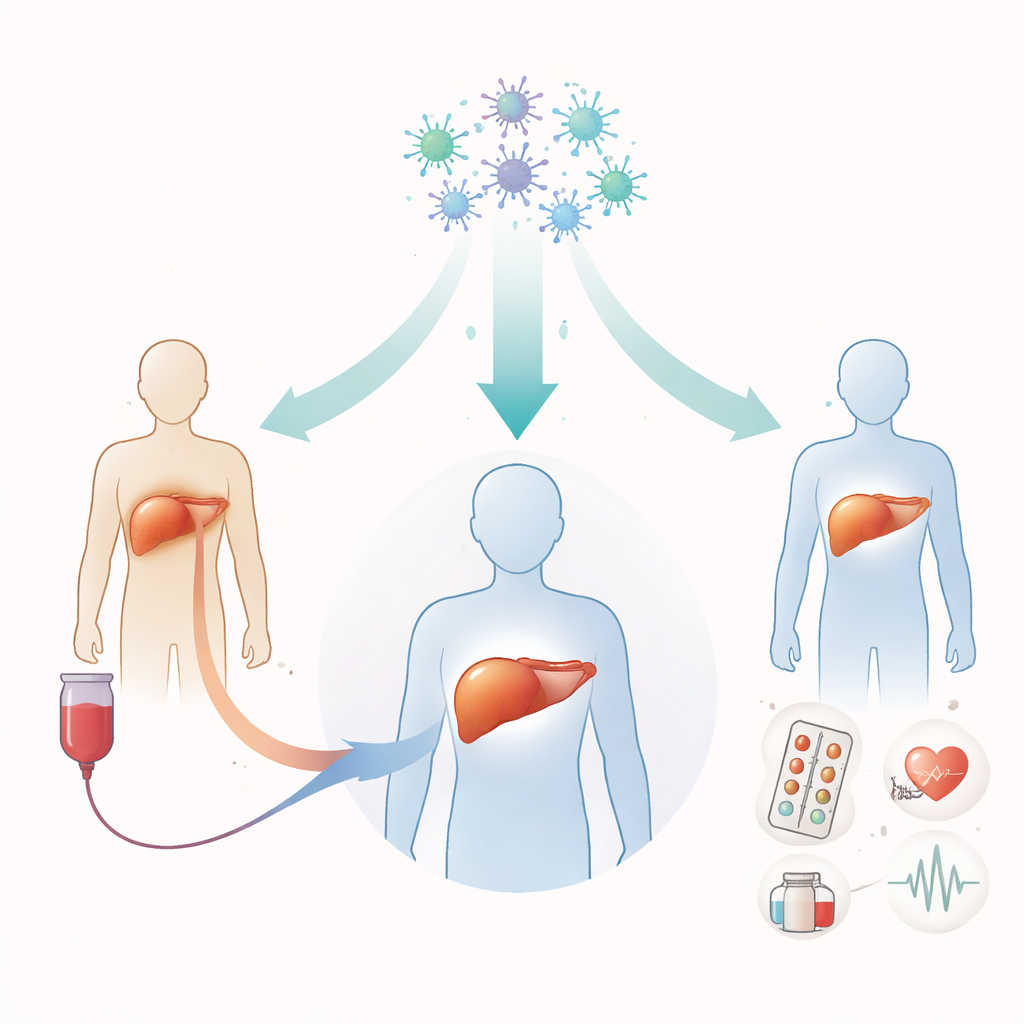
The research team focused on specialized immune cells called regulatory dendritic cells, which act as peacekeepers in the immune system. From each living donor, they collected blood and isolated precursor cells that were grown in the lab into donor-derived regulatory dendritic cells. These cells were designed to send calming signals to the recipient’s immune system, teaching it to see the donor liver as less of a threat. Each of 15 adult patients scheduled for a living-donor liver transplant received a single infusion of these donor peacekeeper cells one week before surgery, alongside standard anti-rejection medication.
Testing safety and a careful drug wean
The first question was whether this pre-surgery cell infusion was practical and safe. The team successfully manufactured the cell product for every donor and delivered the infusion without any serious reactions. Patients then underwent liver transplantation and received usual drug treatment for one year. At the 12-month mark, doctors examined liver tissue under a microscope to decide who looked stable enough to try easing off the drugs. Eight of the 13 patients who completed follow-up had calm, healthy-looking grafts and were allowed to begin a slow, stepwise withdrawal of their medications under close supervision.
Who could live without anti-rejection drugs?
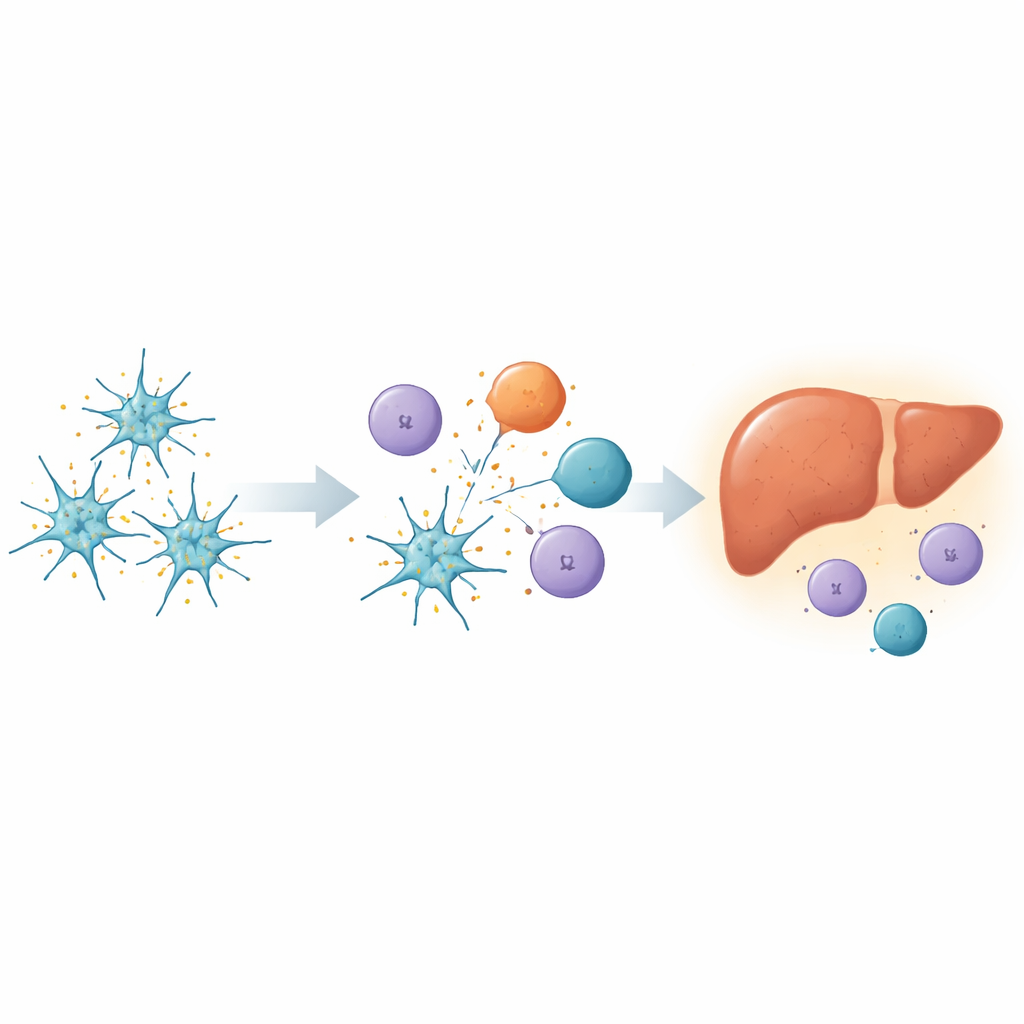
Among those eight stable patients, four were able to come off all anti-rejection drugs. Of these four, three remained completely drug-free for at least one year without signs of clinical rejection and stayed off medication for about three years by the end of the study. This state, where the transplanted liver continues to function well without ongoing drugs, is called “operational tolerance.” In earlier trials that did not use this cell therapy, only about 13–16% of carefully selected adult liver recipients reached such a state when drug withdrawal was attempted. In this small trial, 37.5% of eligible patients did so, suggesting that the cell infusion may improve the chances of long-term drug-free stability, although the numbers are too small for firm proof.
Clues inside the immune system
Beyond clinical outcomes, the researchers looked for signs that the immune system had been reshaped. Over several years of follow-up, blood tests showed lower levels of some inflammatory molecules and a weakening of aggressive responses directed specifically at the donor, while responses to unrelated cells stayed stronger. These patterns are consistent with a more tolerant, less attack-prone state toward the transplanted liver. Importantly, there was no surge in harmful antibodies against the donor organ, and overall rates of infections, surgical problems, and rejection episodes were similar to, or no worse than, those seen in comparable patients who did not receive the cell therapy.
What this means for the future
For people facing a liver transplant, the prospect of a shorter, safer course of anti-rejection drugs is highly attractive. This early-phase study shows that infusing donor-derived regulatory dendritic cells shortly before living-donor liver transplantation is feasible, appears safe, and may help a subset of patients come off medication completely while keeping their new liver healthy. However, because the study was small and lacked a randomized comparison group, the findings are exploratory. Larger, carefully controlled trials are now needed to confirm whether this approach truly raises the odds of long-term, drug-free transplant success and to determine which patients are most likely to benefit.
Citation: Humar, A., Hadjiyannis, Y., Macedo, C. et al. Donor-derived regulatory dendritic cell infusion and early immunosuppressive drug withdrawal in living-donor liver transplantation: a phase I/IIa trial. Nat Commun 17, 3226 (2026). https://doi.org/10.1038/s41467-026-71280-8
Keywords: liver transplantation, cell therapy, immunosuppression withdrawal, immune tolerance, regulatory dendritic cells