Clear Sky Science · en
Tumor-infiltrating immature innate lymphoid cells in colorectal cancer are biased toward ILC1/tissue-resident NK cell differentiation
Why Our Own Defenses Matter in Colon Cancer
Colorectal cancer is one of the world’s deadliest cancers, and when it spreads into the lining of the abdomen, called peritoneal metastasis, it becomes especially hard to treat. Surgery and chemotherapy help some patients, but many do not benefit from today’s immune-based drugs. This study looks beyond the well-known T cells and focuses on lesser-known immune cells called innate lymphoid cells and natural killer cells. By mapping how these cells behave inside tumors, the researchers uncover new ways the body may try—and sometimes fail—to fight colorectal cancer, pointing toward future therapies that could better harness our own defenses.
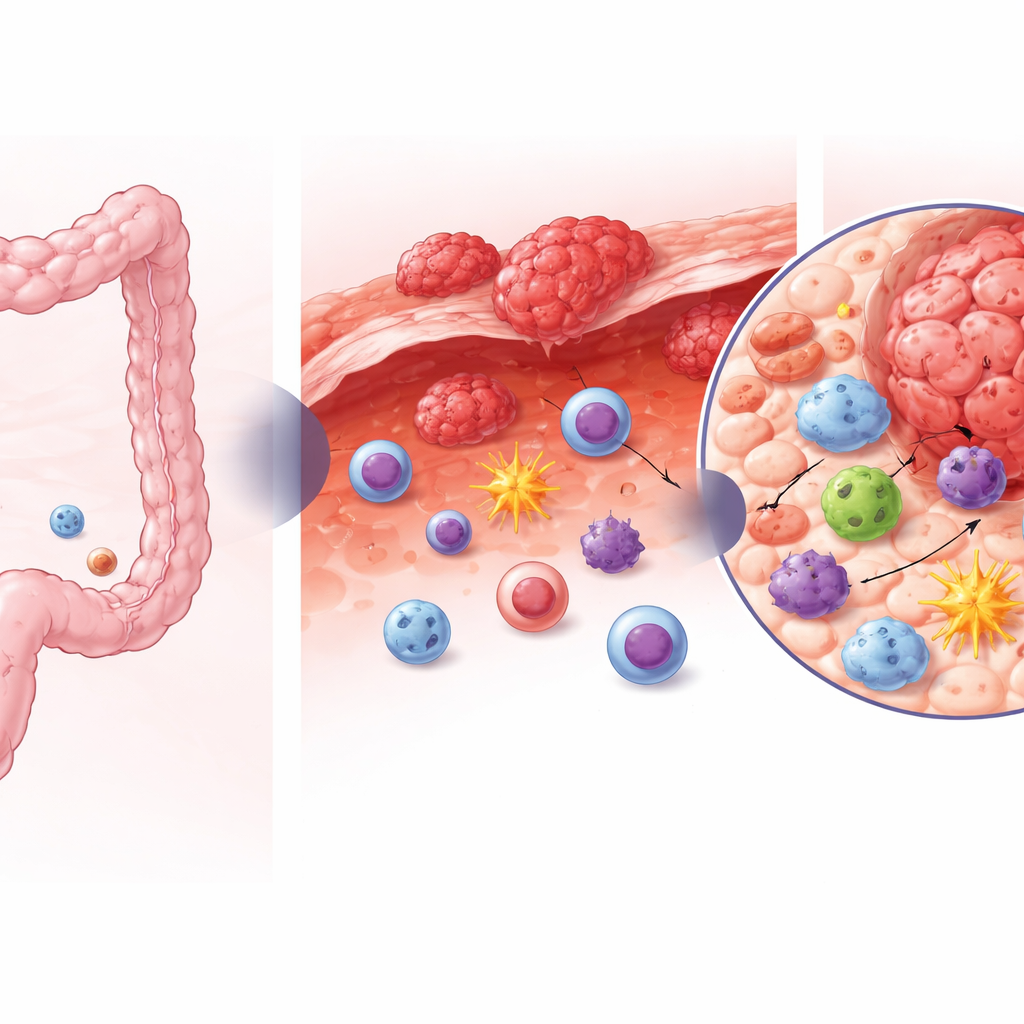
The Hidden Players in Tumor Defense
Inside a healthy colon, the lining is patrolled by a mix of innate lymphoid cells that help maintain balance with gut microbes and repair tissue. Among them, one group (often called ILC3) helps keep the intestinal wall healthy and may protect against cancer. The authors collected samples from healthy colon tissue, primary colorectal tumors, and peritoneal metastases from patients undergoing surgery. Using single-cell RNA sequencing and detailed cell profiling, they analyzed more than 23,000 innate lymphoid and killer cells, allowing them to see, cell by cell, which types were present and what genes they were turning on.
How Tumors Reshape the Immune Landscape
The team found that tumors, both in the colon and in the peritoneum, profoundly reshaped this immune landscape. Compared with healthy colon, tumors were depleted of the gut-protective ILC3 cells but packed with several kinds of killer-like cells: different flavors of innate lymphoid type 1 cells and both tissue-resident and conventional natural killer cells. These tumor-enriched cells showed mixtures of traits: some looked like typical blood-borne killer cells, while others carried markers of cells that settle into tissues long term. This shift suggests that as colorectal cancer develops and spreads, it favors immune cells that resemble resident killers, while losing those that normally support barrier health.
Immature Cells Poised to Become Local Killers
Amid this crowd, the scientists discovered two “immature” populations that appear to act as local precursors. One, called naive innate lymphoid cells, and another, dubbed early NK cells, shared gene signatures associated with young, flexible cells that can still choose their fate. By tracking gene expression changes over computational “pseudotime,” the authors showed that these immature cells sat at the start of developmental paths that ended in more specialized killer and tissue-resident cells. In tumors, naive cells were biased toward becoming ILC1-like and tissue-resident NK-like cells, rather than the gut-protective ILC3 type seen more often in healthy colon, suggesting that the tumor environment nudges them toward a killer-like identity.
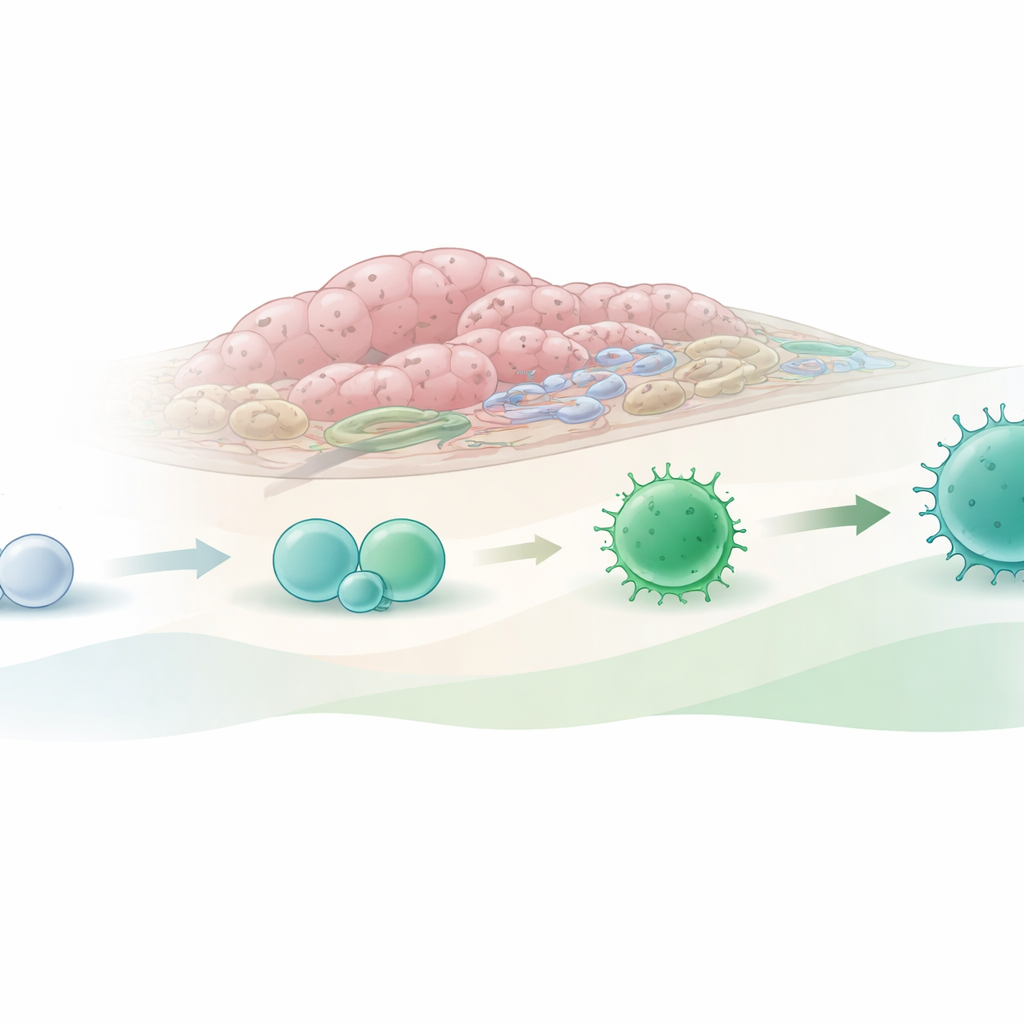
Testing How the Tumor Environment Guides Fate
To test this idea, the team isolated these immature cells from both healthy colon and tumors and grew them in the lab with supportive “nurse” cells and different mixes of signaling proteins. When naive cells from tumors were cultured under conditions that mimic signals present in cancer tissue, they more readily turned into cells bearing features of tissue-resident killer cells: they expressed more molecules linked to cytotoxic activity and to long-term lodging in tissues. In some settings, they also showed an increased tendency to generate cells resembling another innate lymphoid subset, ILC2, which has been implicated in both tumor growth and tumor control. When the researchers co-cultured the immature cells with a human colorectal cancer cell line, both colon- and tumor-derived precursors could become killer-like cells, underscoring how strongly the local tumor environment steers their development.
What This Means for Future Treatments
These findings reveal that colorectal tumors are not just passive targets; they actively reshape nearby innate immune cells, drawing in immature precursors and biasing them toward tissue-resident killer states. While these cells carry the machinery to attack cancer, the tumor environment may also dampen their effectiveness. Understanding how naive innate lymphoid and early NK cells are guided inside tumors opens several therapeutic possibilities: boosting signals that push them toward potent, long-lived tumor-killing cells, or even harvesting and reprogramming these local precursors for personalized cell therapies. For patients with advanced or spread colorectal cancer, especially those who do not respond to current immune drugs, this work offers a roadmap toward new strategies that work with, rather than against, the body’s own cellular sentinels.
Citation: Marchalot, A., Ljunggren, M., Stamper, C. et al. Tumor-infiltrating immature innate lymphoid cells in colorectal cancer are biased toward ILC1/tissue-resident NK cell differentiation. Nat Commun 17, 3035 (2026). https://doi.org/10.1038/s41467-026-71085-9
Keywords: colorectal cancer, innate lymphoid cells, natural killer cells, tumor microenvironment, immunotherapy