Clear Sky Science · en
Global literature review and survey of implementation constraints on natural climate solutions
Why nature-based climate action faces hidden hurdles
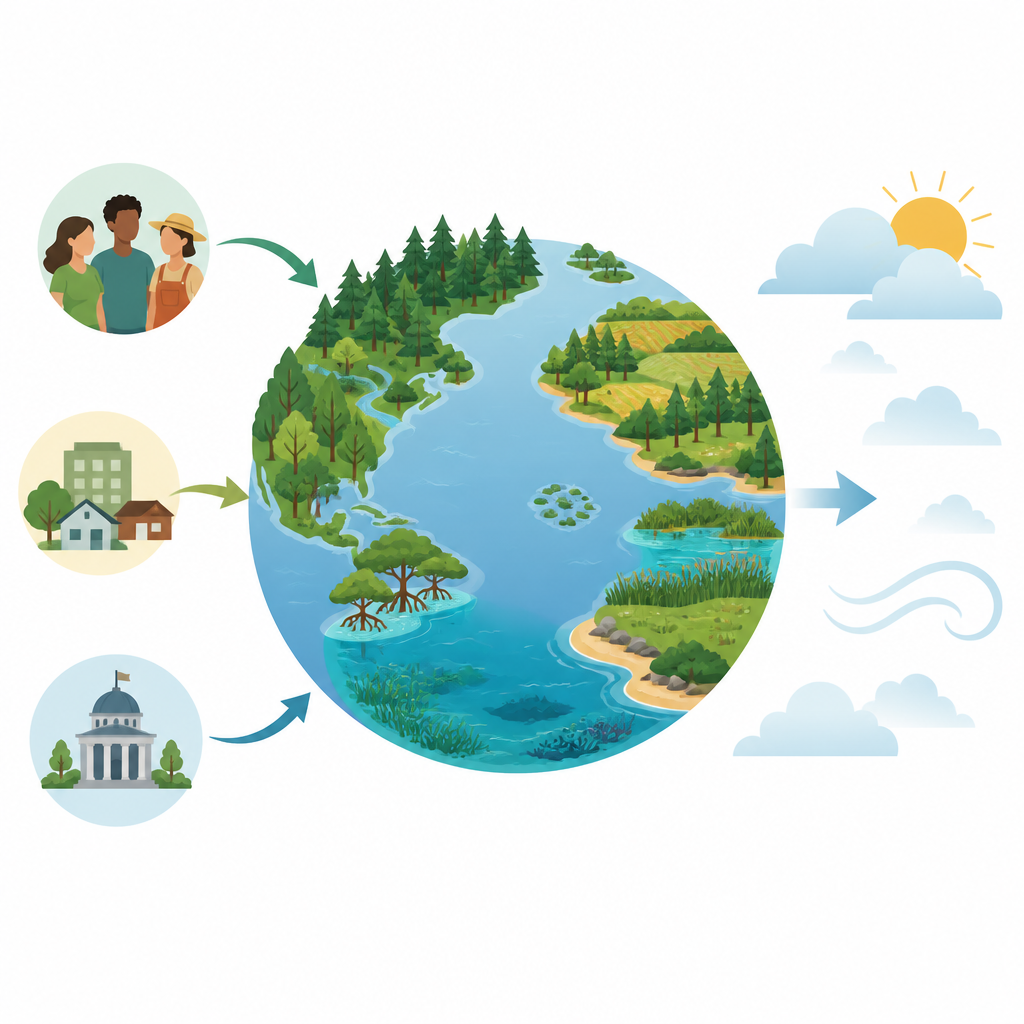
Planting trees, protecting wetlands, and restoring grasslands sound like straightforward ways to slow climate change. These "natural climate solutions" can pull carbon dioxide from the air while supporting wildlife and local livelihoods. Yet on the ground, many of these efforts advance more slowly than expected. This study asks a simple but crucial question: what is actually stopping nature-based climate projects from moving from idea to reality across the globe?
Taking a global look at real-world projects
The researchers combined two large sources of information: a systematic review of 347 scientific studies and a new survey of 154 on-the-ground projects. Together, these sources covered 501 separate efforts in 137 countries, from forest restoration in Brazil to agroforestry in East Africa and coastal wetland work in Asia. For each project or study, the team recorded which type of nature-based action was used and what kinds of obstacles it faced. They grouped 46 distinct obstacles into eight broad types, ranging from a lack of basic materials like seedlings to more complex issues such as weak laws or low public trust.
Many types of barriers, not just money
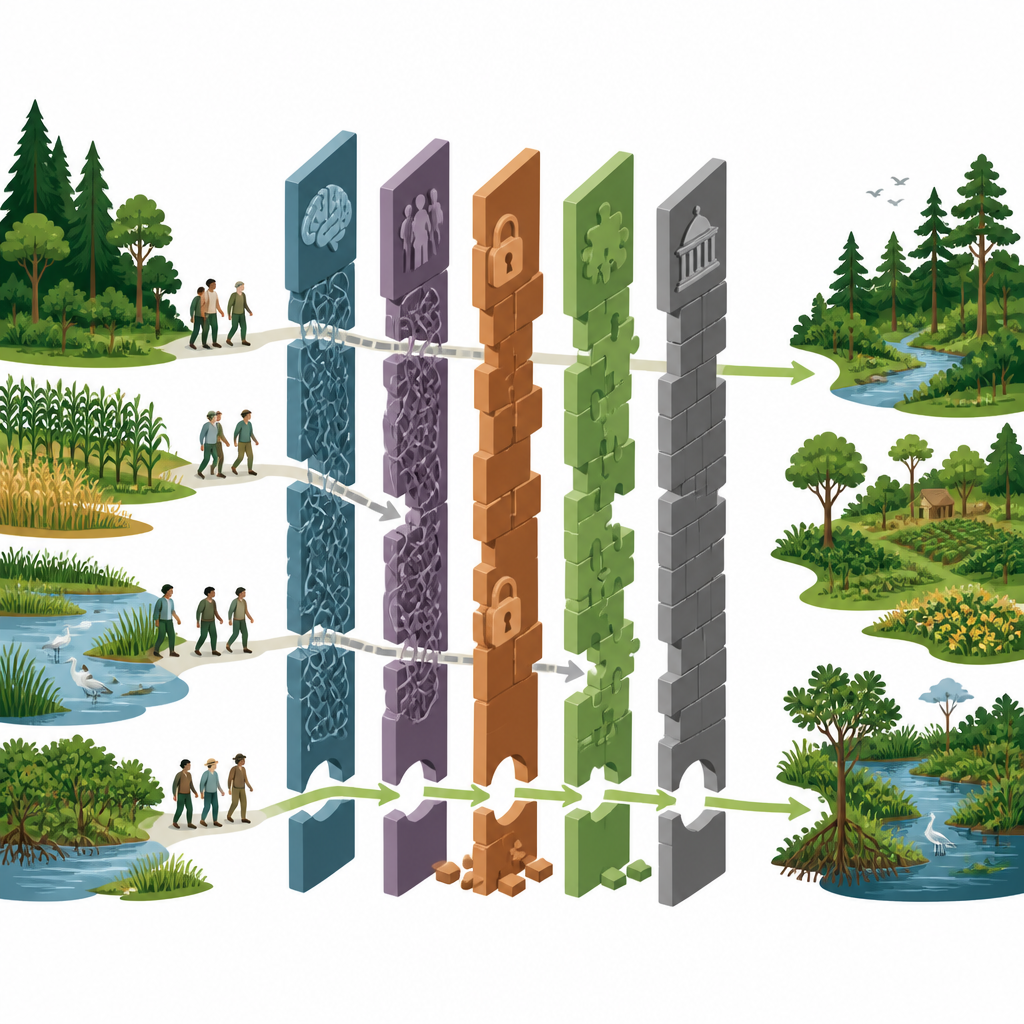
Contrary to popular belief, the main problems were not just about finding money or seedlings. Projects most often reported social and behavioral challenges, such as skepticism about the benefits of these solutions, worries about fairness, or difficulty getting different groups to cooperate. Close behind were knowledge gaps: land managers and communities frequently lacked practical information on how to design, start, or manage projects, or had limited access to technical advice. Government and organizational issues were also common, especially poor coordination across agencies and limited capacity to put policies into practice.
Patterns that repeat across places and project types
The study shows that projects rarely face a single hurdle. On average, each scientific paper or project encountered several different obstacles spread across multiple categories. Social and knowledge barriers were the most frequently reported across almost all kinds of nature-based actions, whether they focused on restoring forests, protecting peatlands, or improving farming practices. These same categories, along with market problems, also topped the list in most world regions. Still, there were regional twists: in many African subregions, lack of funding for both projects and land managers stood out, while in some parts of Europe and Asia, missing or weak markets for ecosystem services or nature-friendly products were more prominent.
Why local context and good design matter
Because the same broad types of barriers appear in many places, it might be tempting to look for one-size-fits-all fixes. The authors warn against this. The exact mix of obstacles, and how they interact, differs from place to place. For example, a community may resist a project because they do not trust its sponsors, but that distrust may stem from years of confusing rules, poor communication, or earlier projects that failed to share benefits fairly. The study argues that successful efforts need careful local diagnosis to distinguish surface problems from deeper causes, and then bundles of solutions that tackle several linked barriers at once.
What this means for climate and communities
Overall, the research suggests that the technical potential of natural climate solutions far exceeds what is currently feasible in the near term. Unless governments, funders, and practitioners invest in overcoming social, knowledge, and institutional constraints, many of the most promising opportunities will remain unrealized. At the same time, the actions needed to remove these barriers, such as strengthening land rights, improving extension services, building trust with local communities, and creating fair markets, can improve livelihoods even beyond climate benefits. The message is clear: nature-based solutions can play a meaningful role in tackling climate change, but only if we focus as much on people and institutions as on trees and wetlands.
Citation: Kroeger, T., Erbaugh, J.T., Luo, Z. et al. Global literature review and survey of implementation constraints on natural climate solutions. Nat Commun 17, 4580 (2026). https://doi.org/10.1038/s41467-026-70482-4
Keywords: natural climate solutions, climate mitigation, ecosystem restoration, environmental policy, sustainable land use