Clear Sky Science · en
Securitization as a means to pay for cell and gene therapies for orphan diseases: a simulation study
Why Paying for Breakthrough Cures Is So Hard
Imagine a one-time medical treatment that could dramatically improve or even save a child’s life, but comes with a price tag over a million dollars. That is the promise and the problem of today’s cell and gene therapies. This article explores a new way to pay for such treatments so that patients can get access, health systems can afford them, and drug developers still have strong reasons to keep innovating.
Big Cures, Bigger Bills
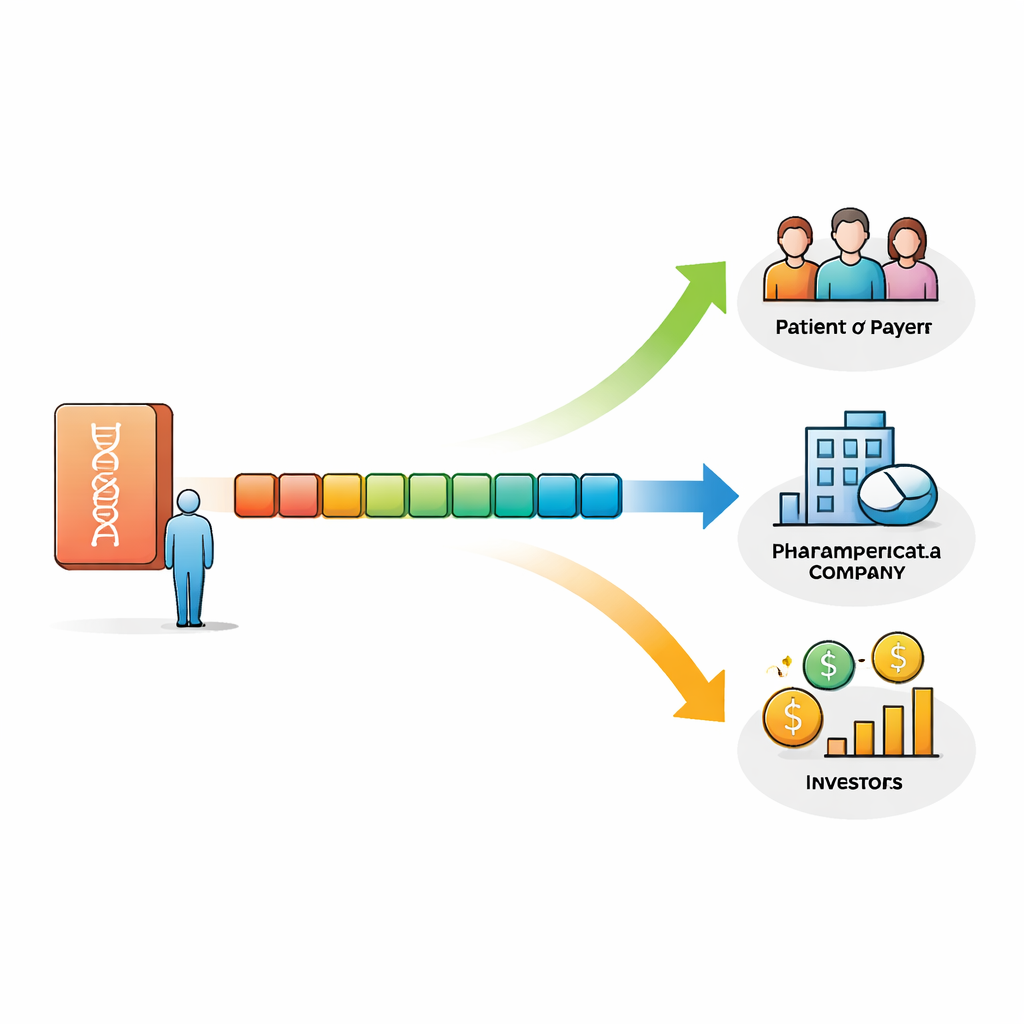
New gene and cell therapies for rare, often deadly diseases can offer decades of added healthy life compared with older medicines. Yet their cost is usually charged as a single, enormous upfront payment. That creates a mismatch: the money is spent all at once, while the health benefits unfold slowly over many years. Because long-term results are still uncertain—clinical trials often follow only small groups of patients for a few years—insurers risk overpaying if a therapy does not work as well as hoped. In countries where people frequently change insurance plans, the first insurer may pay the full cost while other insurers enjoy the long-term savings, giving plans a strong reason to refuse coverage.
Turning One Big Check into Many Small Ones
One partial solution already used in practice is the performance-based annuity, where the insurer pays the drug company in yearly installments, and only as long as the patient continues to meet agreed health goals. Current versions of these contracts typically last about five years, which helps spread costs but still leaves big questions about what happens after that period. The authors propose a much longer version: a 30-year, performance-based plan in which the insurer pays a modest annual amount only while the patient is alive and benefiting. In this setup, the timing of payments mirrors the timing of health gains, greatly reducing the chance that payers will end up paying a lot for a treatment that ultimately underperforms.
From Medical Bills to Tradable Assets
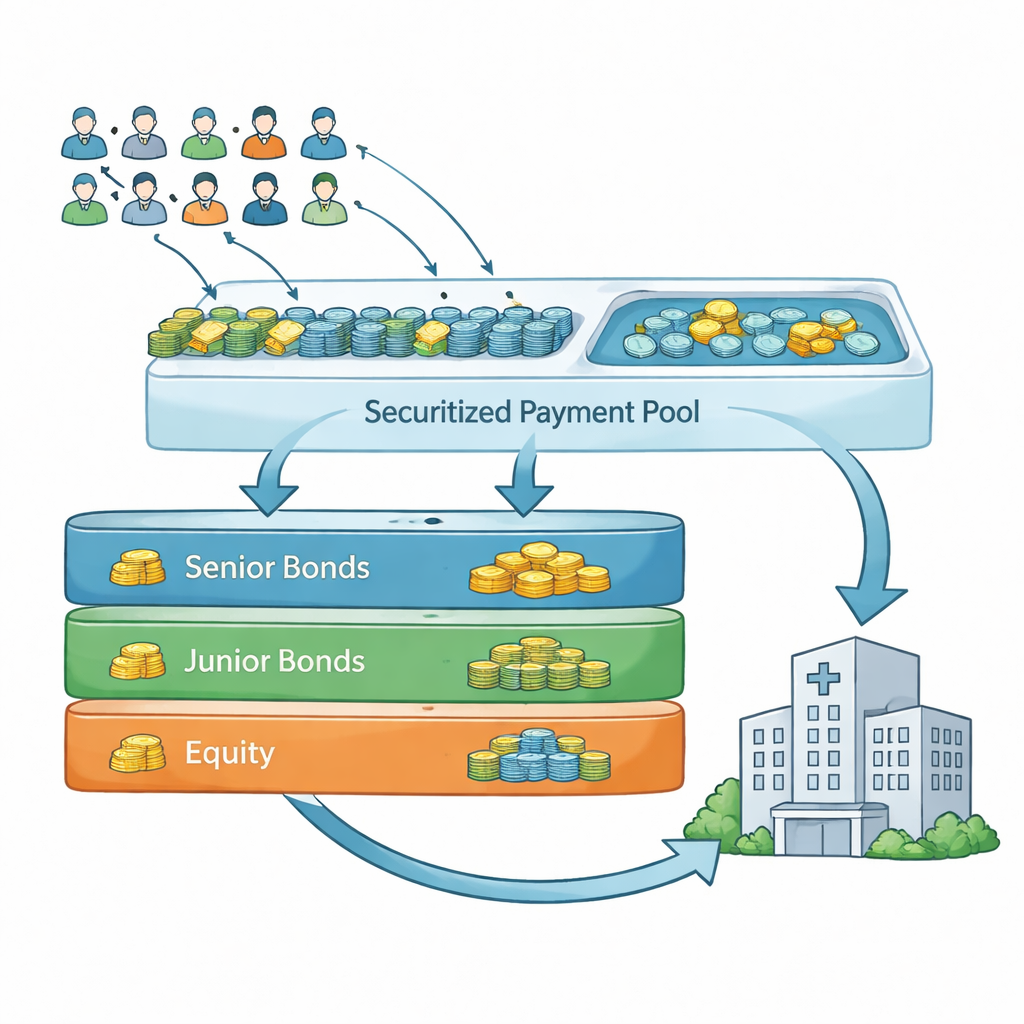
Long-term payment plans, however, pose a new problem for drug makers: they delay revenue over decades. To solve this, the authors borrow a tool from finance called securitization. Instead of holding the right to those long streams of small payments, the drug company would bundle many of these contracts together and sell most of the future payment rights to investors in the form of "cure-backed securities." Investors pay the company upfront, and then receive the patients’ annual installments over time. The payment pool is sliced into safer and riskier pieces: senior bonds that get paid first with lower returns, junior bonds with slightly higher risk and reward, and an equity slice that absorbs losses first but could gain the most if patients do better than expected.
Testing the Idea with a Real-World Gene Therapy
To see whether this structure could work, the authors simulate it using Zolgensma, a gene therapy for infants with spinal muscular atrophy. They model 500 treated children and run thousands of simulated futures under different assumptions about how long patients live after treatment. Under their 30-year plan, insurers pay about the same on average as today, but only as long as the therapy continues to help. When they add cure-backed securities, investors buying the safer bond slices face very low chances of loss, while the drug maker can receive 50% to more than 80% of its expected revenue upfront, depending on how the equity portion is priced. If outcomes are better than assumed, the company benefits through the equity slice; if outcomes are worse, investors in the safer tranches remain largely protected.
What This Means for Patients and Health Systems
For payers, especially public systems that cover people for many years, long-term performance-based payments sharply cut the risk of overpaying for disappointing therapies and make it easier to judge value. Even if a therapy works better than expected and total payments rise, they are tied to real, observed health benefits rather than optimistic promises. For drug developers, securitization restores much of the upfront revenue they would otherwise lose by stretching payments over decades, keeping incentives for research strong. For investors, pooled and structured payment streams can offer a new, diversified asset with predictable returns. The approach is especially suited to rare, single-gene diseases where competition from lower-priced follow-on drugs is unlikely.
Bringing Future Cures Within Reach
The article concludes that paying for gene and cell therapies solely with large upfront checks is not sustainable if society wants both broad access and ongoing innovation. By combining long-term, outcome-based payment plans with financial tools that convert those future payments into upfront funding, cure-backed securities could spread risk more fairly among patients, payers, drug makers, and investors. While this framework does not solve the separate question of how high prices should be, it offers a practical way to align money flows with real-world results, helping health systems afford life-changing therapies for people with rare diseases.
Citation: Lu, J.M., Cherla, A.J., Carter, A.W. et al. Securitization as a means to pay for cell and gene therapies for orphan diseases: a simulation study. Gene Ther 33, 138–143 (2026). https://doi.org/10.1038/s41434-026-00604-6
Keywords: gene therapy financing, orphan diseases, performance-based annuities, securitization, Zolgensma