Clear Sky Science · en
Therapeutic potential of BH3-mimetics and NK cell-mediated immunotherapy in T-ALL
New Ways to Help the Body Fight a Tough Blood Cancer
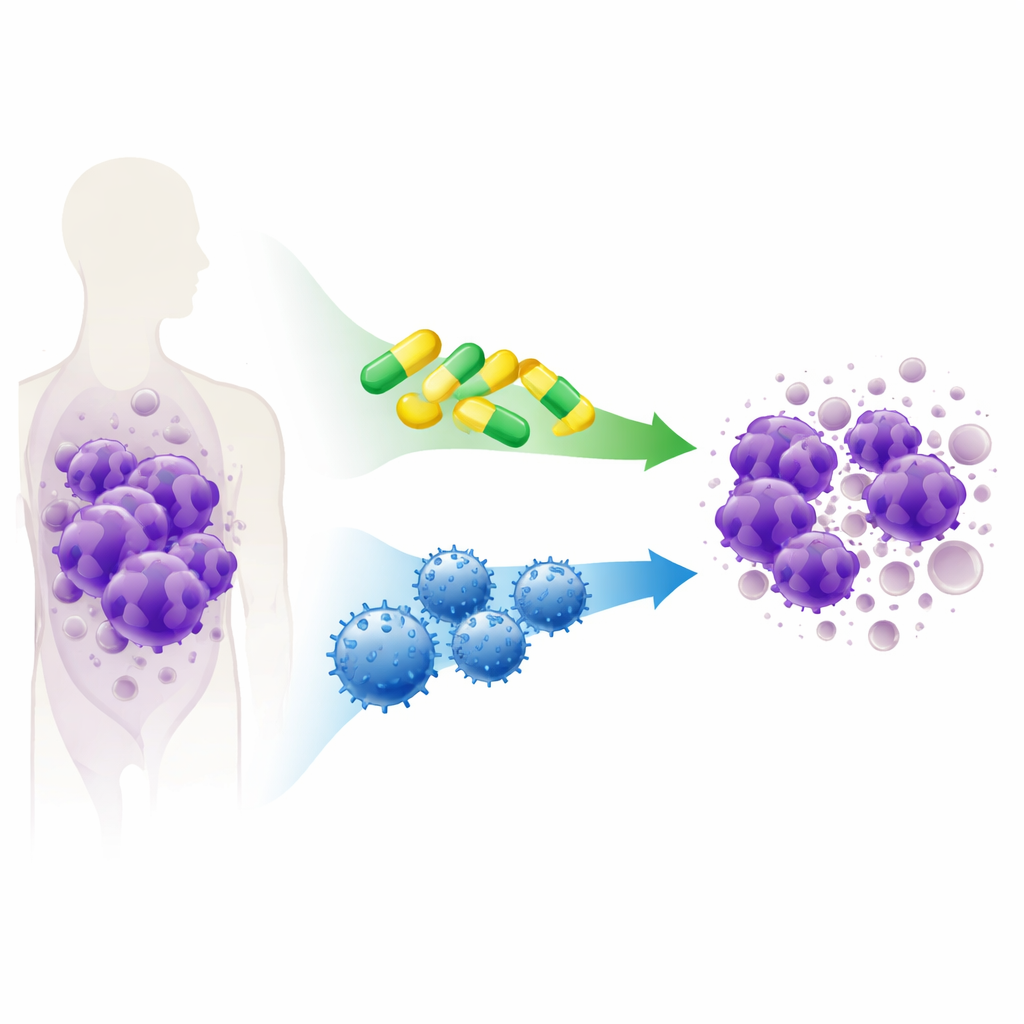
T‑cell acute lymphoblastic leukemia (T‑ALL) is an aggressive blood cancer that mostly affects children and young adults and is often treated with intense chemotherapy. While these treatments can cure many patients, they also cause serious side effects and do not work for everyone, especially after a relapse. This study explores two newer, more targeted strategies—smart drugs that push cancer cells to self‑destruct and immune cells that hunt tumors—to see whether they could offer safer and more effective options for people with T‑ALL.
Understanding the Cancer’s Survival Tricks
Cancer cells often avoid death by hijacking the cell’s built‑in “suicide” machinery, a safety system that normally removes damaged or dangerous cells. In T‑ALL, this escape relies on a group of proteins that act like bodyguards, preventing the cell from triggering self‑destruction. The researchers tested several experimental and approved drugs called BH3‑mimetics, which are designed to disarm these bodyguards and tip the balance back toward cell death. Using laboratory T‑ALL cell lines and leukemia samples grown in mice from real patients, they examined drugs that block different bodyguard proteins (BCL‑2, BCL‑XL, and MCL‑1) alone and in combination.
Which Smart Drugs Work Best?
The team found that not all T‑ALL cancers rely on the same survival protein, and this mattered greatly for drug response. A high‑risk subtype called early T‑cell precursor (ETP) ALL was particularly vulnerable to blocking BCL‑2, matching earlier hints that these cells depend heavily on this protein. In contrast, most typical T‑ALL samples were resistant to BCL‑2 and to the MCL‑1 blocker on its own, but many were quite sensitive to blocking BCL‑XL. A dual‑action drug that hits both BCL‑2 and BCL‑XL, AZD4320, showed strong activity in many cases, especially when the leukemia cells’ protein patterns suggested they leaned on those targets. The researchers used a functional test called BH3‑profiling, which measures how close cells are to triggering self‑destruction, and showed that this assay could predict which drug or drug mix was most likely to work.
Combining Death Signals to Overcome Resistance
When the scientists looked more closely at how the leukemia cells responded over time, they saw that blocking one survival protein often caused the cells to switch their dependence to another, a bit like changing bodyguards. For example, when the dual BCL‑2/BCL‑XL drug was used alone, the cells often shifted toward relying on MCL‑1, which could blunt the drug’s effect. By pairing AZD4320 with an MCL‑1 blocker, the researchers cut off this escape route. In both cell lines and patient‑derived samples that were otherwise resistant, the combination caused strong and often synergistic killing of leukemia cells at relatively low doses, suggesting that carefully designed combinations could be more powerful and perhaps safer than pushing single drugs to higher levels.
Boosting Immune Attack with Targeted Drugs
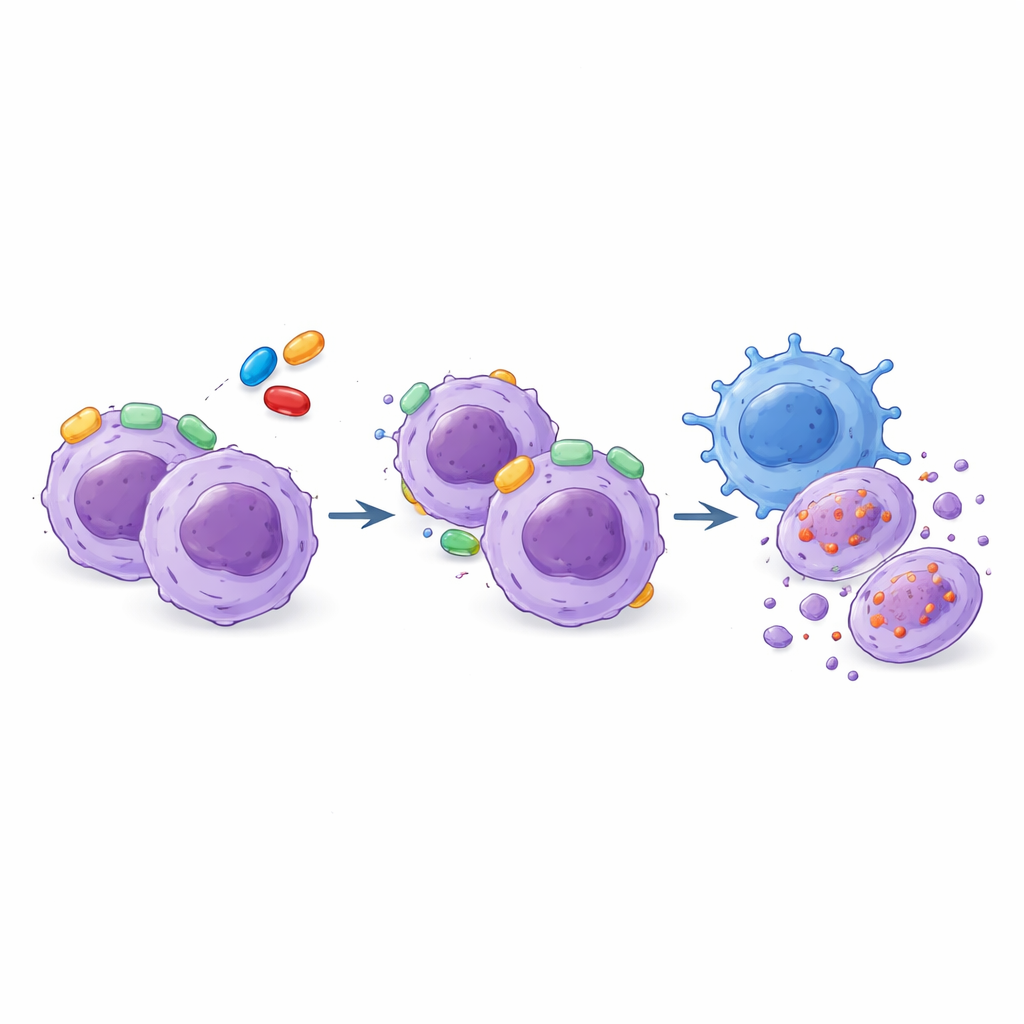
The study also explored a complementary strategy: using natural killer (NK) cells, a type of immune cell that can recognize and destroy cancer cells without prior training. T‑ALL samples showed a wide range of sensitivity to NK cells, but this pattern did not simply mirror their response to BH3‑mimetics, meaning immune attack offers an independent line of therapy. The researchers found that exposing leukemia cells to NK cells changed their internal death‑control wiring, often increasing their reliance on BCL‑XL. Importantly, NK cells themselves were largely unaffected by the BCL‑2/BCL‑XL drug AZD4320. When AZD4320 was combined with NK cells, leukemia cell killing was consistently greater than with either approach alone in both cell lines and patient‑derived samples, indicating at least additive benefits.
What This Could Mean for Future Patients
Altogether, the work shows that many T‑ALL cells can be forced into self‑destruction by precisely targeting their survival proteins, especially BCL‑XL, and that combining different BH3‑mimetic drugs can overcome resistance in otherwise stubborn samples. The findings also suggest that pairing these smart drugs with NK cell–based immunotherapy could further weaken the leukemia and improve killing without harming the immune cells needed for treatment. While these results come from laboratory and animal models rather than clinical trials, they provide a strong scientific basis for testing combined BH3‑mimetic and NK cell therapies in patients with high‑risk or relapsed T‑ALL, with the long‑term hope of more effective and less toxic treatment options.
Citation: Fortner, C., Niedermayer, A., Bäuerle, M.M. et al. Therapeutic potential of BH3-mimetics and NK cell-mediated immunotherapy in T-ALL. Cell Death Dis 17, 387 (2026). https://doi.org/10.1038/s41419-026-08698-x
Keywords: T-cell acute lymphoblastic leukemia, BH3-mimetic therapy, BCL-XL inhibition, natural killer cell immunotherapy, apoptosis-targeted treatment