Clear Sky Science · en
CDX2 confers ferroptosis resistance in stage II-III colon cancer via upregulation of NUPR1
Why this matters for people with colon cancer
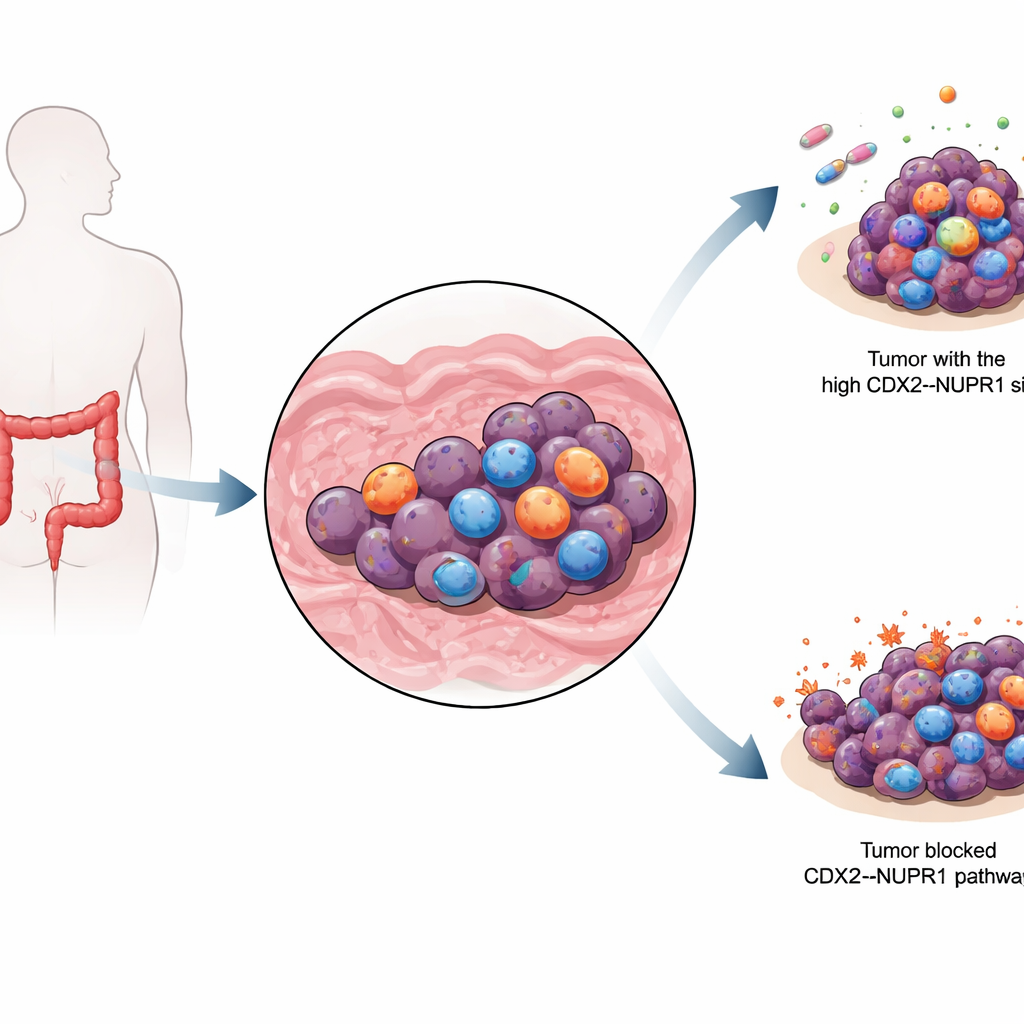
Many patients with stage II–III colon cancer face a difficult balance: chemotherapy can reduce the chance of the cancer coming back, but it also brings serious side effects. Doctors know that tumors with high levels of a protein called CDX2 often behave less aggressively, yet these same tumors tend to respond poorly to chemotherapy. This study explores why that paradox exists and reveals a hidden survival trick that some colon cancer cells use to dodge a newer, iron‑linked form of cell death.
A cancer cell’s iron weakness
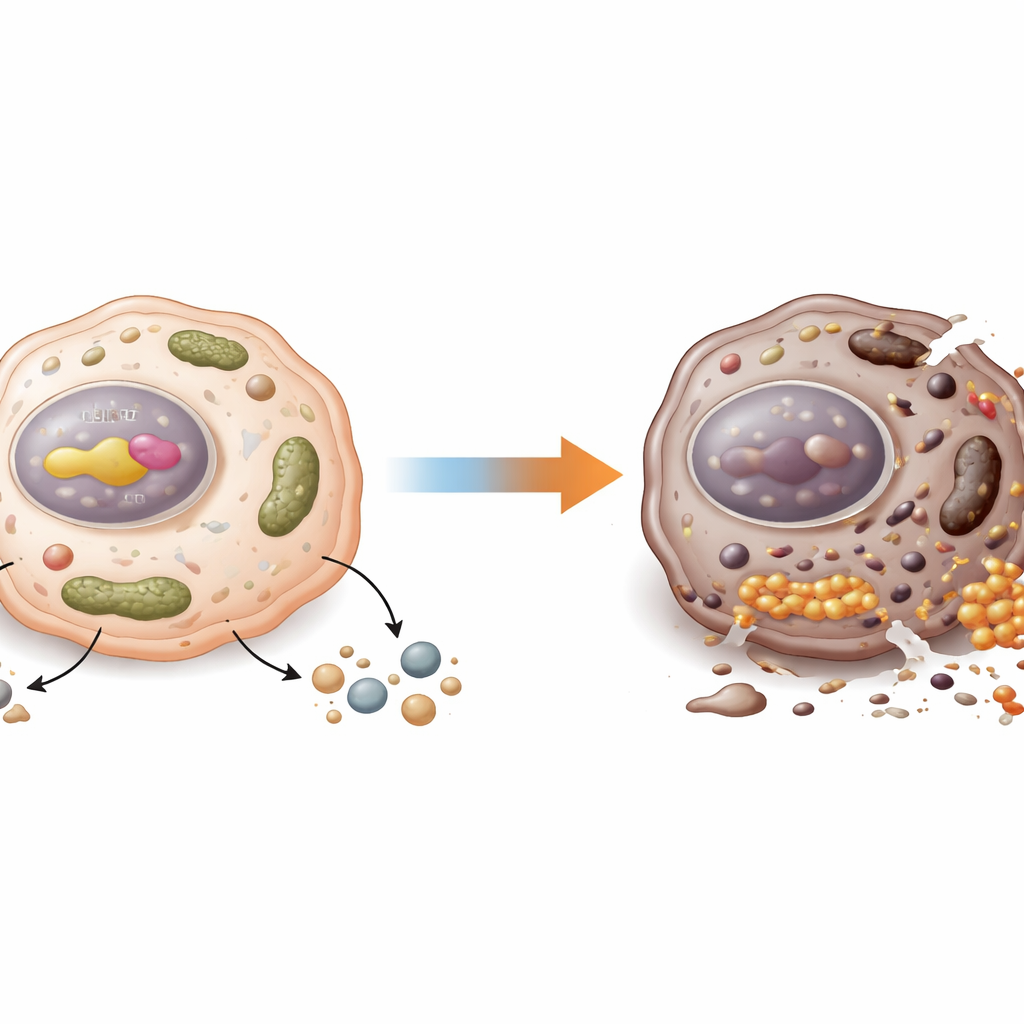
Cancer cells are unusually hungry for iron, a metal that helps them grow but can also destroy them if it builds up too much. When iron reacts with fats in cell membranes, it can trigger a type of cell death known as ferroptosis, which is different from the better‑known suicide program called apoptosis. Because many drug‑resistant cancer cells still rely on iron, researchers are excited about drugs that push them into ferroptosis. But tumors can evolve defenses against this process, blunting the effect of both standard chemotherapy and ferroptosis‑inducing drugs.
The double life of CDX2 in colon tumors
CDX2 is a protein that normally helps maintain the health and identity of cells lining the intestine. Loss of CDX2 in colon tumors is often linked with more aggressive disease and worse survival. Yet, puzzlingly, patients whose tumors keep CDX2 can gain less benefit from chemotherapy. To probe this contradiction, the authors manipulated CDX2 in several human colon cancer cell lines and in mouse tumor models. They found that increasing CDX2 made cancer cells harder to kill with common drugs like 5‑fluorouracil and oxaliplatin, while reducing CDX2 had the opposite effect: tumors became more sensitive and shrank more under treatment.
A stress‑response switch that blocks cell death
Digging deeper, the team used gene‑expression analyses and tissue samples from hundreds of patients to home in on another protein, NUPR1, which turned out to closely track with CDX2 levels in stage II–III colon cancers. NUPR1 is a stress‑response factor that helps cells cope with damage, including oxidative stress. The researchers showed that CDX2 directly binds to the control region of the NUPR1 gene and switches it on. When NUPR1 levels rose, cancer cells accumulated less iron, produced fewer damaging oxygen‑based molecules, and showed lower signs of lipid and DNA damage—all hallmarks of ferroptosis resistance. If NUPR1 was removed, CDX2 could no longer protect cells from ferroptosis; conversely, restoring NUPR1 in CDX2‑deficient cells brought back their resistance.
Turning the shield into an Achilles’ heel
These molecular insights were then tested in mice. Tumors lacking CDX2 or NUPR1 responded much better to a ferroptosis‑inducing compound called IKE, accumulating more iron and lipid damage and shrinking more than control tumors. The team also used patient‑derived tumor grafts to mimic real‑world colon cancers. In tumors with high CDX2 and NUPR1, adding a small‑molecule inhibitor of NUPR1 (ZZW‑115) made standard chemotherapy with 5‑fluorouracil far more effective and boosted ferroptosis‑like features inside the cancer cells. In tumors with low CDX2 and NUPR1, the same inhibitor added little benefit, suggesting that this strategy is most promising for a specific subgroup of patients.
What this could mean for future treatment
Put simply, the study shows that many CDX2‑positive colon cancers hide behind a built‑in shield against iron‑driven cell death, and that shield is largely powered by NUPR1. By flipping this shield off—genetically or with a drug like ZZW‑115—doctors may be able to re‑expose cancer cells to the lethal potential of both chemotherapy and ferroptosis‑inducing agents. While more work is needed in people, the findings suggest that testing tumors for CDX2 and NUPR1 could help identify those most likely to benefit from treatments that deliberately push cancer cells over the edge into ferroptosis rather than letting them quietly resist and return.
Citation: Yu, J., Mu, M., Zhao, C. et al. CDX2 confers ferroptosis resistance in stage II-III colon cancer via upregulation of NUPR1. Cell Death Dis 17, 308 (2026). https://doi.org/10.1038/s41419-026-08412-x
Keywords: colon cancer, CDX2, ferroptosis, NUPR1, chemotherapy resistance