Clear Sky Science · en
Irinotecan with trifluridine/tipiracil and bevacizumab for second-line metastatic colorectal cancer: a phase II multicenter study
Why This Matters for People with Advanced Bowel Cancer
When bowel cancer spreads to other parts of the body, called metastatic colorectal cancer, treatment often starts with a strong first round of chemotherapy. But many patients eventually find that this initial treatment stops working, leaving them and their doctors with limited options. This study tested a new three-drug combination as a second step in treatment, hoping to control the cancer for longer while keeping side effects manageable.
A New Three-Drug Team
The researchers focused on patients whose cancer had already resisted a common first-line approach using fluoropyrimidine and oxaliplatin, two standard chemotherapy drugs. They combined three medicines with different roles: irinotecan, an established chemotherapy; trifluridine/tipiracil (also called TAS-102), an oral drug that disrupts cancer cell DNA in a different way from older drugs; and bevacizumab, a targeted medicine that starves tumors by blocking the growth of new blood vessels. The idea was that this mix would attack cancer cells from several angles without creating overwhelming side effects. Patients took TAS-102 tablets for five days every two weeks and received irinotecan and bevacizumab by vein on the first day of each two-week cycle. 
Who Took Part in the Study
This phase II trial enrolled 60 adults with metastatic colorectal cancer at four hospitals in China. All had previously been treated with fluoropyrimidine and oxaliplatin, and none had received irinotecan before. Most had tumors on the left side of the colon or in the rectum, and many already had cancer spread to the liver or other organs. Over half had undergone surgery to remove the original bowel tumor at some point, either with curative intent or to relieve symptoms. The trial was “single-arm,” meaning everyone received the same new regimen, and results were compared with what is known from earlier studies of standard second-line treatments.
How Well the Treatment Worked
Patients were followed for a median of about 13 months. Tumor scans were done regularly to see whether the cancer shrank, stayed stable, or grew. About 18% of patients had their tumors shrink noticeably, including two whose visible disease disappeared on scans. When stable disease was included, 83% of patients experienced at least some control of their cancer. On average, the time before the cancer started growing again—called progression-free survival—was 6.6 months. Overall survival, meaning how long patients lived after starting the treatment, was a median of 17.3 months. These results are similar to what has been seen with other commonly used second-line regimens, but they did not reach the higher response rate the researchers had hoped for based on earlier, smaller studies.
Side Effects and Safety
Every patient experienced some treatment-related side effects, which is expected in intensive cancer therapy, but most were manageable. The most common problems were nausea, hair loss, anemia, and low white blood cell counts, especially neutrophils, which help fight infection. Roughly half of the patients developed severe neutropenia, and a small number had fever along with low white counts, requiring treatment with medications that boost white blood cells. A few patients needed dose reductions, and one patient stopped treatment due to severe vomiting. Importantly, no deaths were linked directly to the study drugs, and overall the side effect pattern looked similar to other irinotecan-based combinations used in this setting. 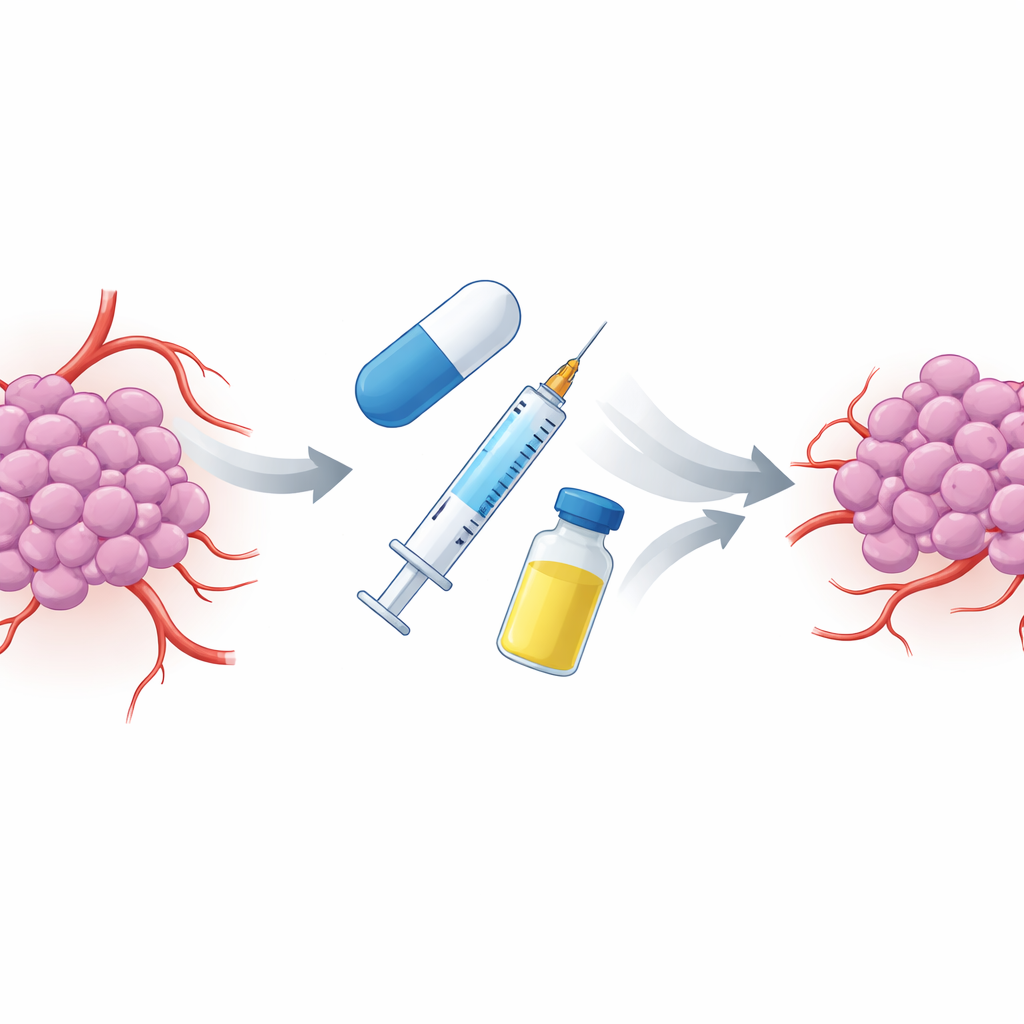
Who Seemed to Benefit Most
The team also looked for clues about which patients might do better on this regimen. Standard clinical features such as age, sex, tumor location, and common genetic changes in the cancer (like RAS or BRAF mutations) did not clearly separate good responders from others. However, patients who had previously had their original bowel tumor surgically removed tended to live longer and go longer without disease worsening than those who had not had surgery. While this link does not prove cause and effect, it suggests that overall disease burden and prior surgical management may influence how well patients fare on this type of therapy.
What This Means Going Forward
For people whose metastatic colorectal cancer has stopped responding to first-line chemotherapy with fluoropyrimidine and oxaliplatin, this three-drug combination of irinotecan, TAS-102, and bevacizumab appears to be a realistic second-line option. It controls the disease for several months on average and has a safety profile in line with other intensive regimens. However, it did not clearly outperform existing standards in this study, so it cannot yet be considered a new front-runner. The authors conclude that larger, randomized trials comparing this regimen directly with current second-line treatments are needed to find out whether it offers any true advantage in survival or quality of life for patients.
Citation: Yang, W., Zhang, J., Liang, P. et al. Irinotecan with trifluridine/tipiracil and bevacizumab for second-line metastatic colorectal cancer: a phase II multicenter study. Sig Transduct Target Ther 11, 127 (2026). https://doi.org/10.1038/s41392-026-02634-3
Keywords: metastatic colorectal cancer, second-line chemotherapy, irinotecan, trifluridine/tipiracil, bevacizumab