Clear Sky Science · en
Genetic determinants of BMI, diet, and fitness interact to partially explain anthropometric obesity traits but not the metabolic consequences of obesity in men and women
Why Some Bodies Handle Weight Differently
Many people know someone who seems to gain weight easily, while others stay lean despite similar diets and activity levels. This study asks a key question behind those everyday observations: how much of body weight and body fat is written in our genes, and how much can be shaped by lifestyle choices like diet and fitness? By looking closely at both genetic makeup and detailed measures of body composition and metabolism, the researchers explore why some bodies store fat differently and why weight alone does not fully predict health risks linked to obesity. 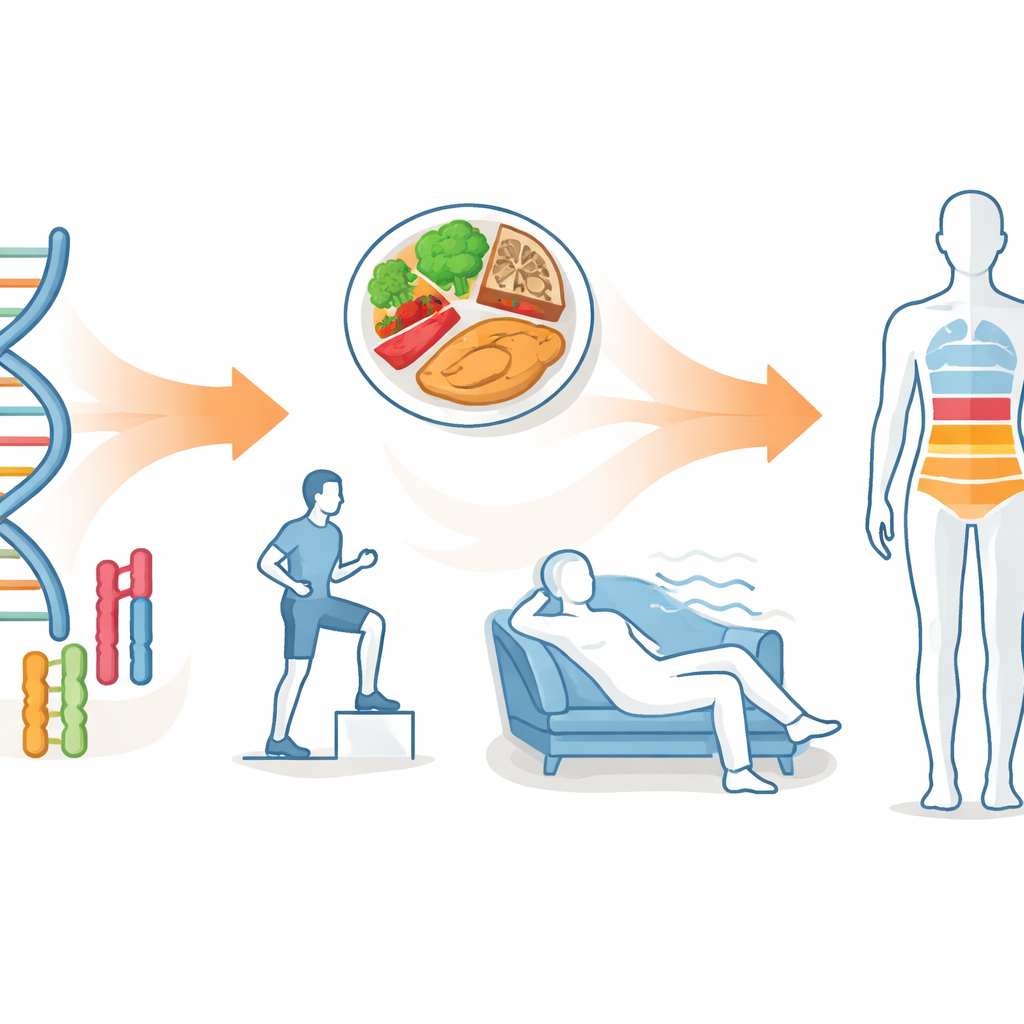
Looking Beyond the Bathroom Scale
Doctors often rely on body mass index (BMI) as a quick way to flag possible obesity-related health risks. But BMI is a blunt tool: it cannot distinguish muscle from fat, or tell where fat is stored in the body. This matters because fat that gathers deep in the abdomen is more strongly tied to heart disease and diabetes than fat stored around the hips or under the skin. To get a sharper picture, the researchers studied 211 generally healthy adults, measuring not just BMI but also detailed body fat and lean mass using full-body scans, waist size, blood pressure, blood fats, and blood sugar. They also recorded diet quality, cardiorespiratory fitness, and how many calories each person burned at rest.
Scoring Genetic Inclination to Higher Weight
Instead of searching for a single “obesity gene,” the team used a polygenic risk score, which sums tiny effects from over a million genetic markers known to be linked with higher BMI. This score assigns each person a number reflecting their inherited tendency toward higher body weight. The researchers confirmed that this genetic score worked reasonably well in their group: people with higher scores tended to have higher BMI, and the score could moderately distinguish those with obesity from those without. Even after adjusting for age, sex, and broad genetic background, the score still explained a notable share of BMI differences across participants.
Genes Say Size, Lifestyle Shapes the Details
When the scientists zoomed in on more precise traits, a more nuanced picture emerged. Higher genetic scores were linked to higher waist size, more total body fat, greater fat around the trunk, and more lean mass, but the share of variation explained by genes alone was modest for these traits. In contrast, how many calories a person burned at rest and their fitness level often explained as much or more of the differences in body fat and waist size. Diet quality showed clear but smaller associations, especially with fat stored in the trunk region. When the researchers built “best fit” models that combined genes, age, sex, diet, resting metabolism, and fitness, genetic risk still mattered but was only one piece of a larger puzzle. 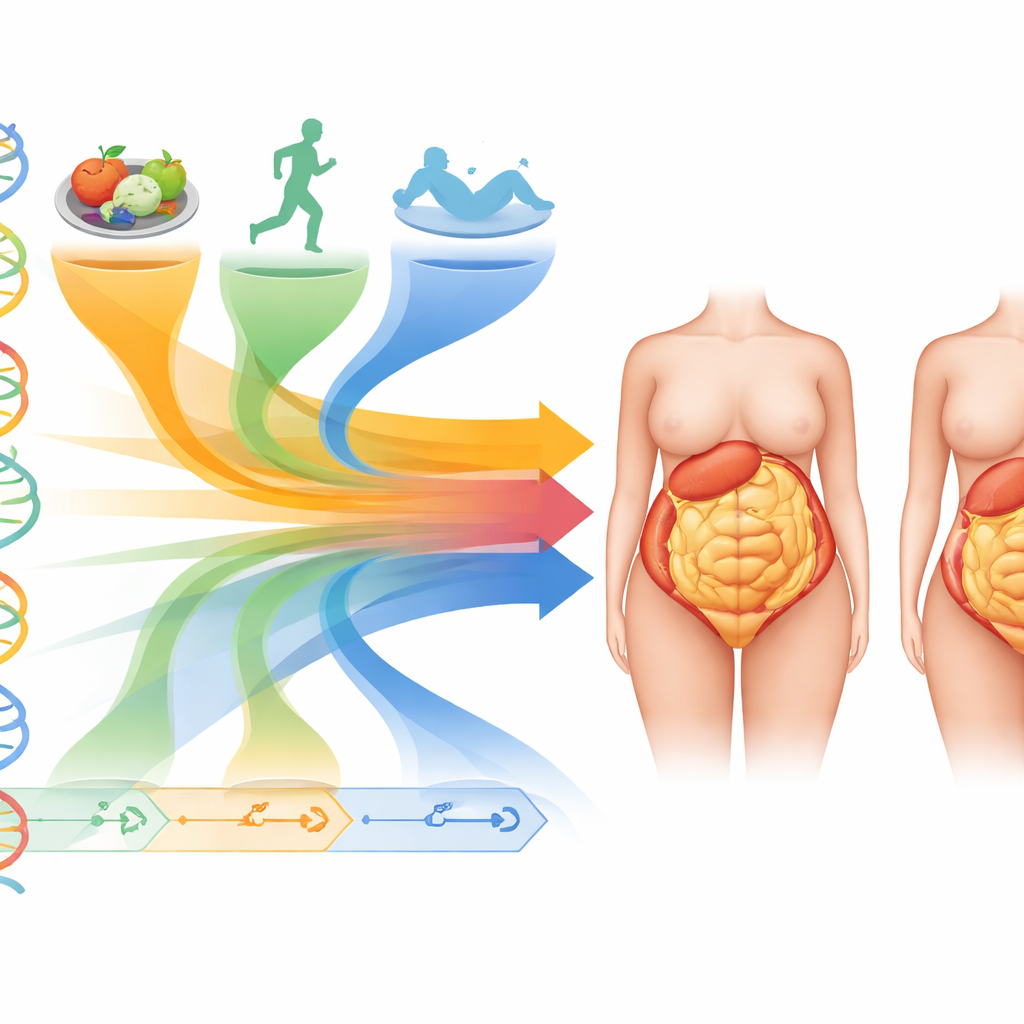
Body Shape and Health Risk Are Not the Same Thing
Most strikingly, the genetic score for BMI was only weakly connected to the metabolic side effects often blamed on obesity. While higher scores were related to larger waistlines and slightly higher fasting blood sugar, they were not meaningfully tied to blood pressure, blood fats, or levels of protective HDL cholesterol in this healthy sample. This suggests that the genes that nudge people toward a higher BMI are not necessarily the same genes that drive the harmful metabolic changes linked to heart disease and diabetes. It also underscores the important roles of sex, fitness, and resting metabolism in shaping how and where the body stores fat.
What This Means for Personal Health
To a layperson, the take-home message is that genes do influence how big our bodies tend to be, but they do not seal our metabolic fate. A polygenic score built from BMI captures an inherited push toward higher weight and larger waistlines, yet it does not reliably predict who will go on to develop unhealthy blood sugar or cholesterol levels. In this study, everyday factors—especially physical fitness and how much energy bodies burn at rest—emerged as stronger levers for body fatness and metabolic health than genetic BMI risk alone. As medicine moves toward more personalized care, the authors argue that future genetic tools should target specific unhealthy fat patterns and metabolic problems, rather than BMI in general, while keeping lifestyle change at the center of obesity prevention and treatment.
Citation: Arrington, C.E., Tacad, D.K.M., Allayee, H. et al. Genetic determinants of BMI, diet, and fitness interact to partially explain anthropometric obesity traits but not the metabolic consequences of obesity in men and women. Int J Obes 50, 938–946 (2026). https://doi.org/10.1038/s41366-026-02027-0
Keywords: polygenic risk score, body composition, diet and fitness, metabolic health, obesity genetics