Clear Sky Science · en
Timber species identification and selection principles of wooden components in the Sunjialou Cultural Relic Building, Nanyang City
Why old wooden buildings still matter
The Sunjialou Cultural Relic Building in Nanyang, China, is more than a picturesque old courtyard. Its beams, columns, and carved doors are a record of how past builders understood wood, weather, and limited local resources. This study looks closely—down to the cellular structure of the timber—to figure out exactly which tree species were used, why they were chosen, and how that knowledge can guide faithful restoration today.
A house that tells local history
Sunjialou sits at the meeting point between northern and southern China, where cultures and climates blend. Built in the late Qing dynasty, it combines a “shop in front, residence in back” layout with narrow alley-style courtyards. One courtyard once housed a key local merchant; the other later served as a revolutionary base, so the building carries both commercial and political memories. Its structure relies on a wooden frame tied together with blue bricks and gray tiles, designed to cope with hot, wet summers and cold, dry winters. After more than a century of exposure, however, the most important wooden parts—especially roof edges and column bases—have suffered serious decay and insect damage, threatening the building’s stability.
Looking inside the wood
To restore such a structure responsibly, conservators must replace damaged pieces with wood that behaves like the original. That means knowing not just that a beam is “hardwood” or “softwood,” but which tree species it came from. The researchers followed strict “minimum intervention” rules, removing only small core samples from places already weakened. Severely decayed fragments were gently reinforced with a stabilizing chemical so they would not crumble. Thin slices were then cut and examined under a microscope, and their tiny features—cell shapes, growth rings, and pore patterns—were compared to detailed wood atlases and international identification standards.
Different woods for different jobs
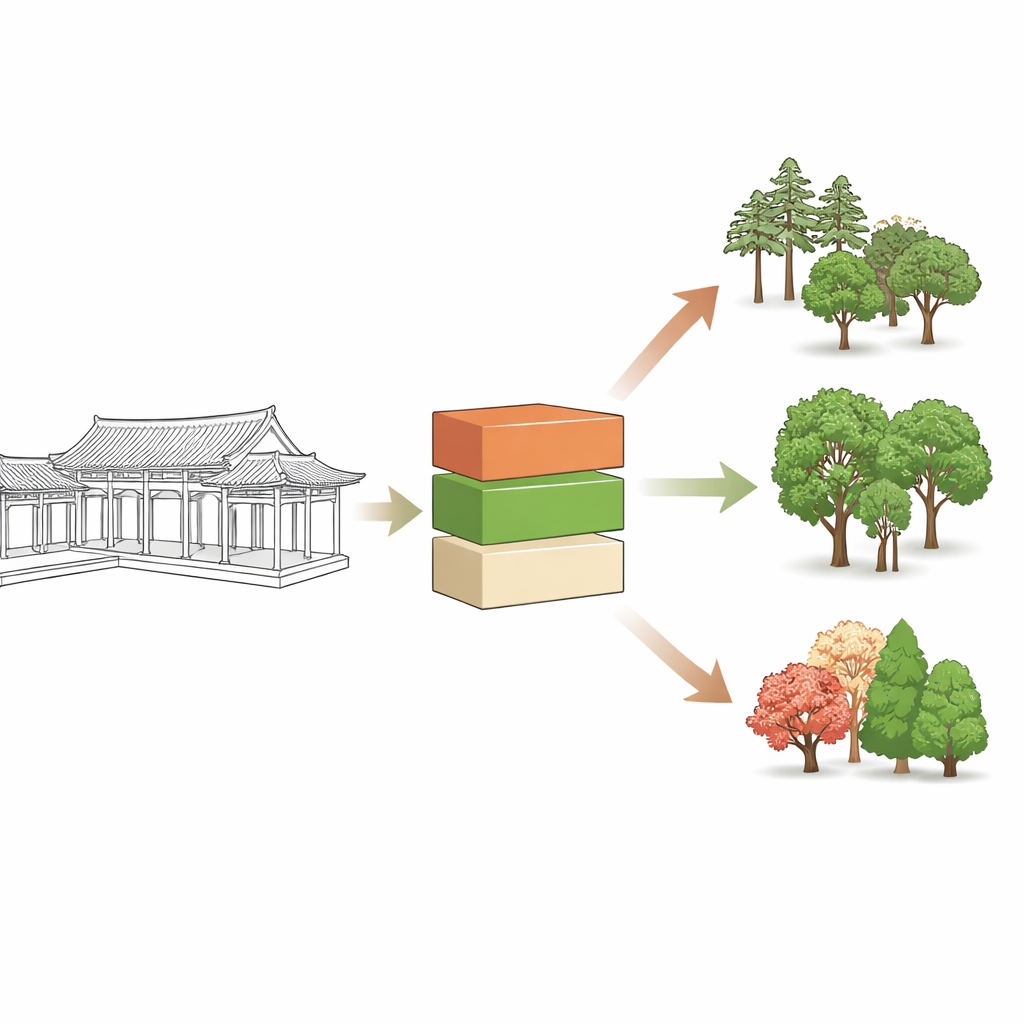
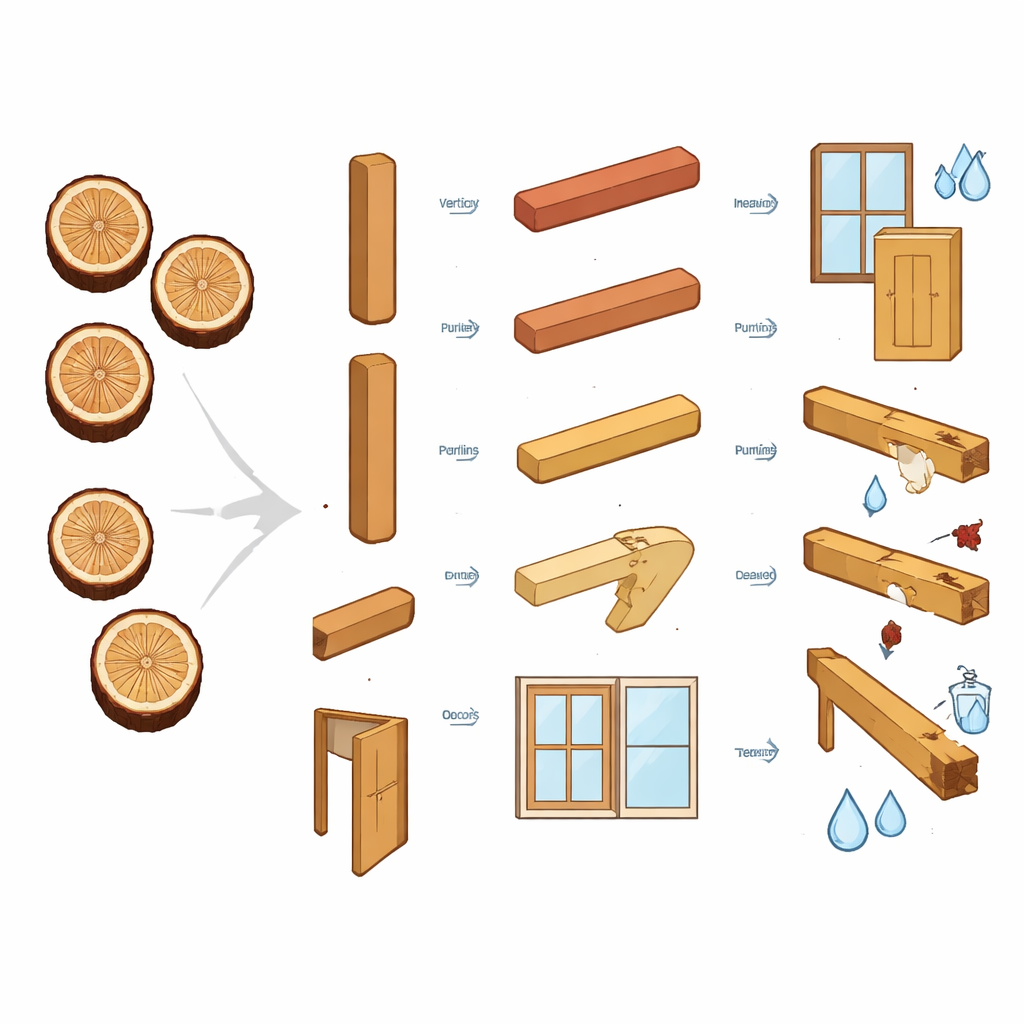
The team found that Sunjialou’s carpenters used five main types of wood from four botanical families. For the heaviest jobs—columns and major beams that carry the building’s weight—they chose very strong hardwoods from oak and elm groups. These woods are dense, hard, and naturally long-lasting, making them ideal for standing up to decades of stress. For secondary roof supports such as purlins and rafters, builders turned to lighter, straighter softwoods like larch and Chinese fir. These reduce the load on the frame while resisting rot, a valuable quality in a humid climate. Finally, easily carved pine was used for doors and windows, where fine detail matters more than brute strength. Together, this pattern shows a careful matching of each wood’s strengths to its role in the house.
Using the forest next door
The study also reveals how closely the builders worked with the forests around them. Many of the identified species grow naturally in Nanyang and the surrounding mountains, or just over the nearby Qinling range. Using timber from close by cut transport time and cost, and fit the realities of roads and trade routes a century ago. When local softwood supplies were limited, builders reached to the nearest highland forests rather than far-off sources. In this way, the building becomes a snapshot of historical supply chains and the practical limits of traditional construction.
Guiding careful repairs today
By linking each component of Sunjialou’s frame to specific tree species, the researchers provide a clear roadmap for restoration. They recommend using the original species whenever possible, backed up by moisture barriers and gentle insect treatments tailored to each wood’s weaknesses. When those species are scarce, close relatives with similar strength and durability can be chosen instead. In plain terms, the study shows that the building’s longevity has always depended on smart wood choices. Recovering that old wisdom, and applying it with modern science, offers the best chance to keep Sunjialou standing safely as a living piece of local history.
Citation: Qu, X., Zhang, W., Fan, M. et al. Timber species identification and selection principles of wooden components in the Sunjialou Cultural Relic Building, Nanyang City. npj Herit. Sci. 14, 203 (2026). https://doi.org/10.1038/s40494-026-02477-9
Keywords: heritage conservation, historic timber, traditional Chinese architecture, wood species identification, building restoration