Clear Sky Science · en
African Labour in Early Modern English Drama and England’s Anxiety over the Governance of Foreigners (1580–1620)
Why these old plays still matter today
What can four-hundred-year-old plays tell us about work, belonging, and who gets to call a place home? This article looks at how English drama from around 1580 to 1620 imagined African servants, soldiers, and household workers. On stage, these characters are welcomed, used, feared, and often violently removed. By following their journeys, the article uncovers how early modern England wrestled with questions that still feel familiar today: who is needed for their labour yet never fully accepted as part of society? 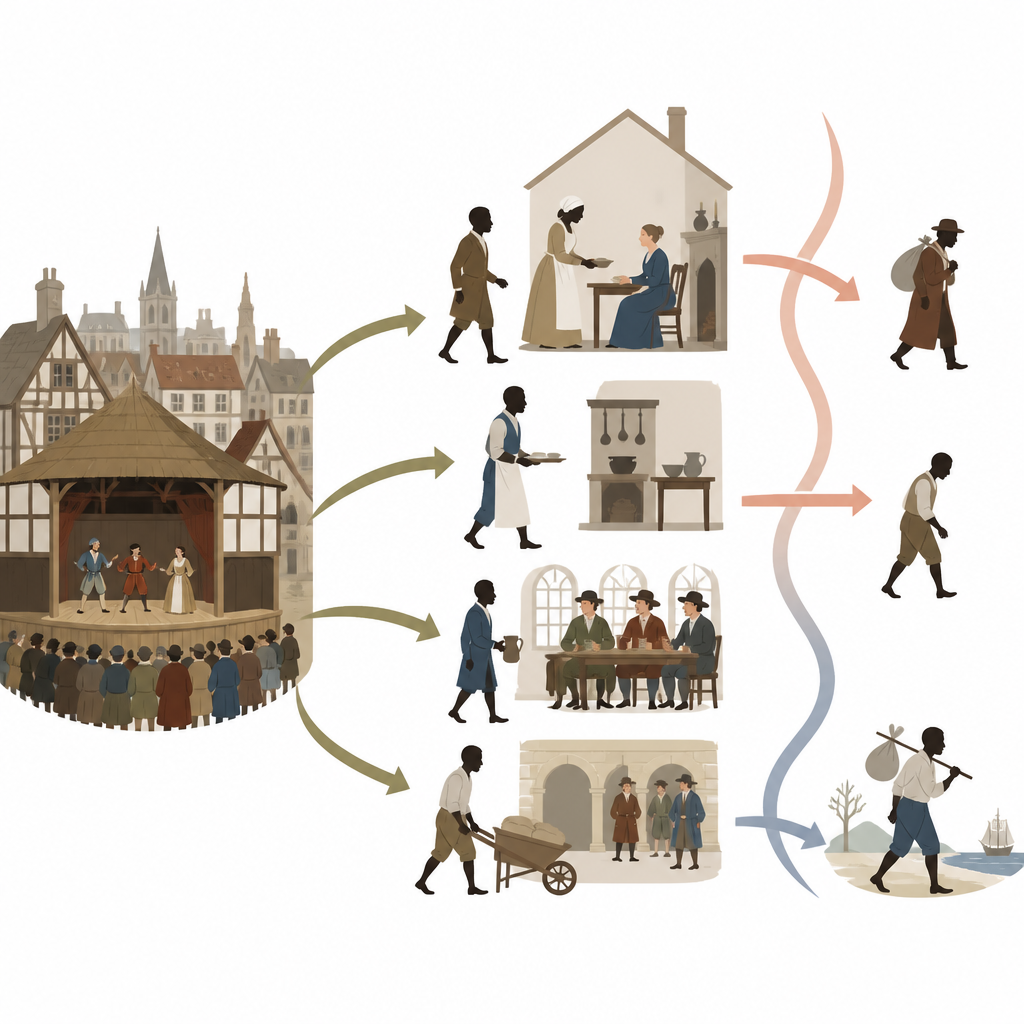
Life and work for Africans in early modern England
The study first sets the scene in a rapidly changing England. The population was rising, poverty and vagrancy worried authorities, and overseas trade was expanding. In this world, labour began to be treated as something that could be counted, placed, and controlled. African workers arrived as sailors, interpreters, court musicians, and domestic servants. Some earned wages, others lived in conditions close to slavery. Official language labelled them with terms that marked them out as visibly different and easy to police. At the same time, wealthy households sometimes treated black servants as fashionable symbols of status, even as they remained dependent and expendable.
Law, policy, and the urge to expel
Royal orders under Elizabeth I tried to reduce the number of Black people in England by deporting them. These moves were linked to worries about unemployment and the cost of poor relief. Yet the article shows that such policies were weak in practice. Many African men and women were already woven into local life, serving in households, forming relationships, being baptised, marrying, and raising children who were entered into parish records. Employers often refused to give up servants they relied on, and some Black people lived with a degree of independence. This gap between grand declarations and everyday realities created a tension: the state spoke of removal, while society continued to absorb African labour.
The stage as a mirror of worry and control
It is within this tension that the theatre took up African characters. London playhouses drew large and mixed audiences, turning them into powerful spaces for thinking in public. The article argues that drama worked like a testing ground where fears about foreigners and workers could be played out. In plays such as Lust’s Dominion, Othello, The White Devil, and Titus Andronicus, African figures start out as servants, soldiers, or prisoners of war. Through courage, intimacy, or cunning, they move closer to the centres of power: they marry into noble families, share beds with queens, manage secrets, and influence political decisions. Each time, this crossing of boundaries prompts outrage and anxiety about lineage, inheritance, and household authority, and the plot turns toward punishment.
From useful worker to feared outsider
By tracking these stories, the article identifies a recurring pattern. First, African characters are admitted as “important labour”: they are needed in war, in domestic service, or in court life. Next, they move beyond narrow work roles, entering intimate and political spaces that English society preferred to keep closed. Finally, once judged to have crossed an invisible line, they are removed through death, execution, or banishment. Eleazar’s rise and fall in Lust’s Dominion, Othello’s tragic marriage, Aaron’s brutal punishment in Titus Andronicus, and Zanche’s swift killing in The White Devil all follow this arc from conditional welcome to violent rejection. Drama turns abstract questions about foreign labour into vivid scenes in which order seems to be restored only when the outsider is expelled. 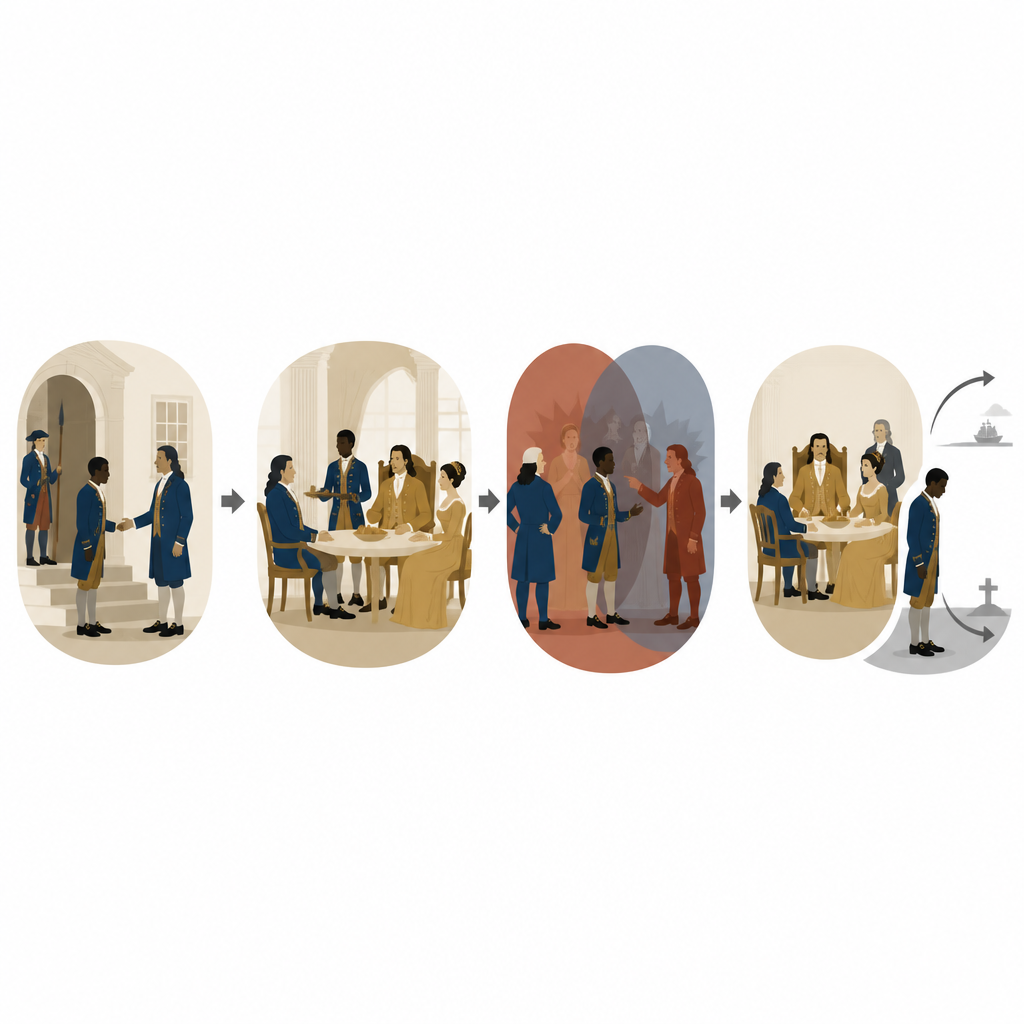
What these plays reveal about belonging
In closing, the article suggests that these tragedies do not simply reflect the daily lives of Africans in England, which were more varied and less uniformly bleak than the stage implies. Instead, they capture a specific way of imagining how to govern foreigners: rely on their work, keep them under watch, and insist they stay outside the deepest forms of kinship and authority. By showing how service leads to closeness, closeness to fear, and fear to exclusion, these plays offer a historical lens on lasting tensions between economic dependence on migrant workers and reluctance to embrace them as full members of society.
Citation: Li, G., Liu, L. African Labour in Early Modern English Drama and England’s Anxiety over the Governance of Foreigners (1580–1620). Humanit Soc Sci Commun 13, 701 (2026). https://doi.org/10.1057/s41599-026-07305-w
Keywords: early modern drama, African servants, foreign labour, race in England, theatre and society