Clear Sky Science · en
A bibliographic mapping analysis unraveling the progression of pro-environmental behavior in tourism research
Why greener travel habits matter
Vacations are meant to be relaxing, but the flights we take, the hotels we choose, and even the way we handle our trash add up to serious pressure on the planet. Tourism is already among the most polluting industries, and plastic waste from trips can linger for centuries. This article looks at what scientists have learned about how tourists act toward the environment, and how that knowledge can help turn everyday trips into part of the climate and pollution solution rather than the problem.
Looking across years of research
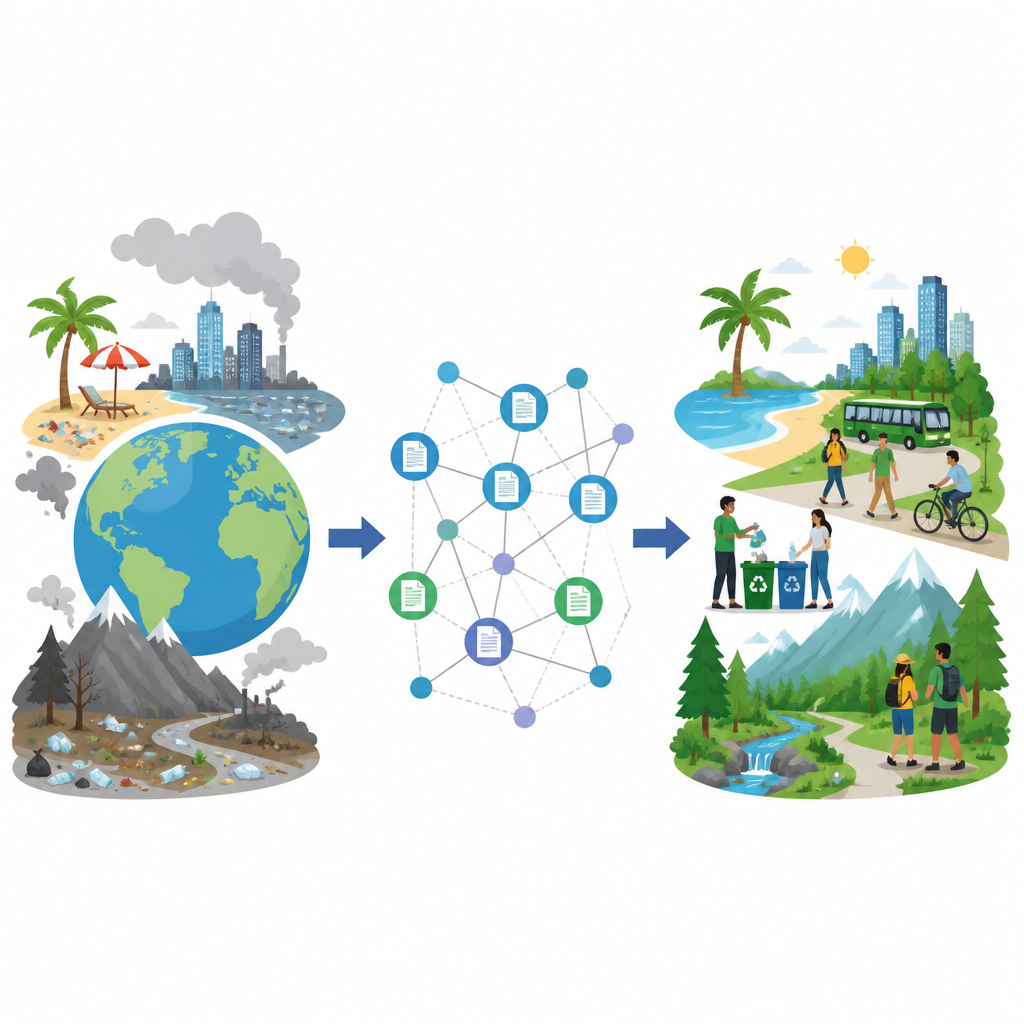
To see the big picture, the authors did not run a new survey in one place. Instead, they sifted through 528 studies on tourists’ environmentally friendly behavior published between 2010 and 2024 in leading tourism and hospitality journals. Using specialized mapping software, they tracked which scholars collaborate, which ideas are most often cited, and how hot topics have changed over time. This bird’s eye view reveals how thinking about green behavior on holiday has moved from simple questions about attitudes to richer debates about social pressure, personal values, and the role of places and organizations.
What drives tourists to act green
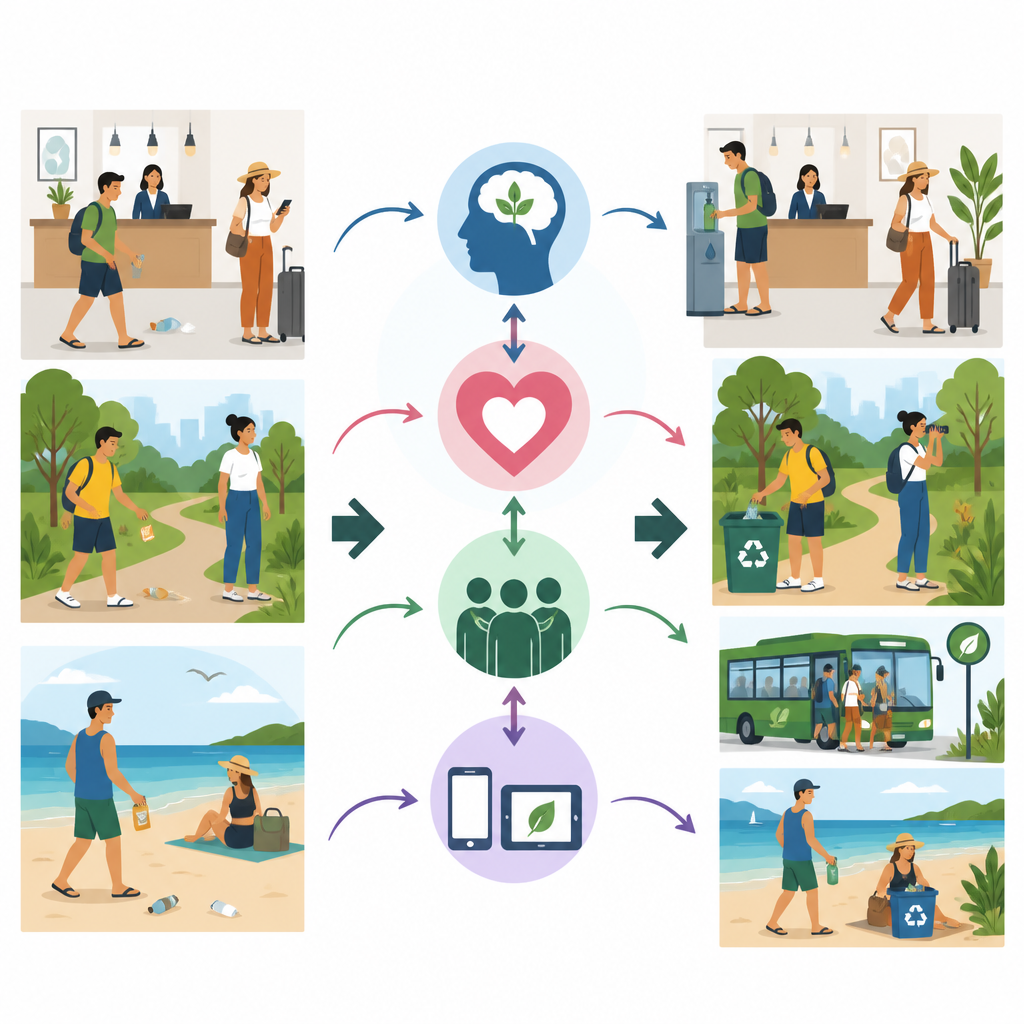
The review shows that most work so far has focused on what goes on inside individual tourists. Researchers have explored how concern for nature, feelings like pride or guilt, and a sense of moral duty shape choices such as reusing towels, paying a bit more for a green hotel, or sorting waste in a national park. They find that social cues also matter: people are more likely to save water or recycle when they believe that others like them are doing so. At the same time, these studies highlight trade-offs. Many travelers happily recommend a green hotel or return to it, but are less willing to accept extra costs or effort, especially when money is tight.
Beyond the individual: places and organizations
The article stresses that tourists do not act in a vacuum. Hotels, parks, cities, and tour operators all shape how easy or hard it is to behave in an eco-friendly way. Research clusters reveal that strong emotional ties to a place, such as a favorite national park, can inspire visitors to pick up litter or stay on marked trails. Yet this care is often limited to specific spots, while damage is shifted elsewhere. At the organizational level, many businesses adopt green measures mainly to save on bills or polish their image, and one-off certifications do not always reflect lasting practice. Studies now point to the importance of staff behavior, leadership, design of buildings, and clear signals to visitors in nudging daily choices.
New tools: data, nudges, and smart tech
Despite decades of theory, the review notes a stubborn gap between what people say they intend to do and what they actually do on holiday. Classic behavior models assume that we act rationally, but trips often loosen our usual habits and moral rules. The authors suggest borrowing ideas from behavioral economics and goal-setting research to better understand how to shift harmful routines toward greener ones. They also point to experiments showing that gentle prompts, enjoyable activities, and well-designed options can be more effective than lectures or punishment. Digital tools such as chatbots, sensors, and smart energy systems in hotels and destinations can visualize waste and savings in real time, quietly steering tourists toward lighter footprints.
Building systems that support better choices
The review argues that lasting change requires more than motivated tourists and willing businesses. Cities and governments can provide financial support and clear policies that make clean energy, efficient buildings, and easy recycling the default, not the exception. Examples from energy upgrades in homes and offices show how loans repaid through utility savings can lower the barrier to greener infrastructure. Applied to tourism, similar schemes could help spread smart equipment and clean technologies across hotels and attractions. When destination rules, physical design, technology, and social norms work together, it becomes far simpler for visitors to enjoy their trips while quietly doing less harm to the places they have come to see.
Citation: Ruan, W.J., Zhong, S. A bibliographic mapping analysis unraveling the progression of pro-environmental behavior in tourism research. Humanit Soc Sci Commun 13, 700 (2026). https://doi.org/10.1057/s41599-026-07059-5
Keywords: sustainable tourism, pro-environmental behavior, green hotels, eco-friendly travel, behavioral science