Clear Sky Science · en
Behind the green veil: board characteristics, greenwashing, and the fraud triangle
Why this study matters to everyday readers
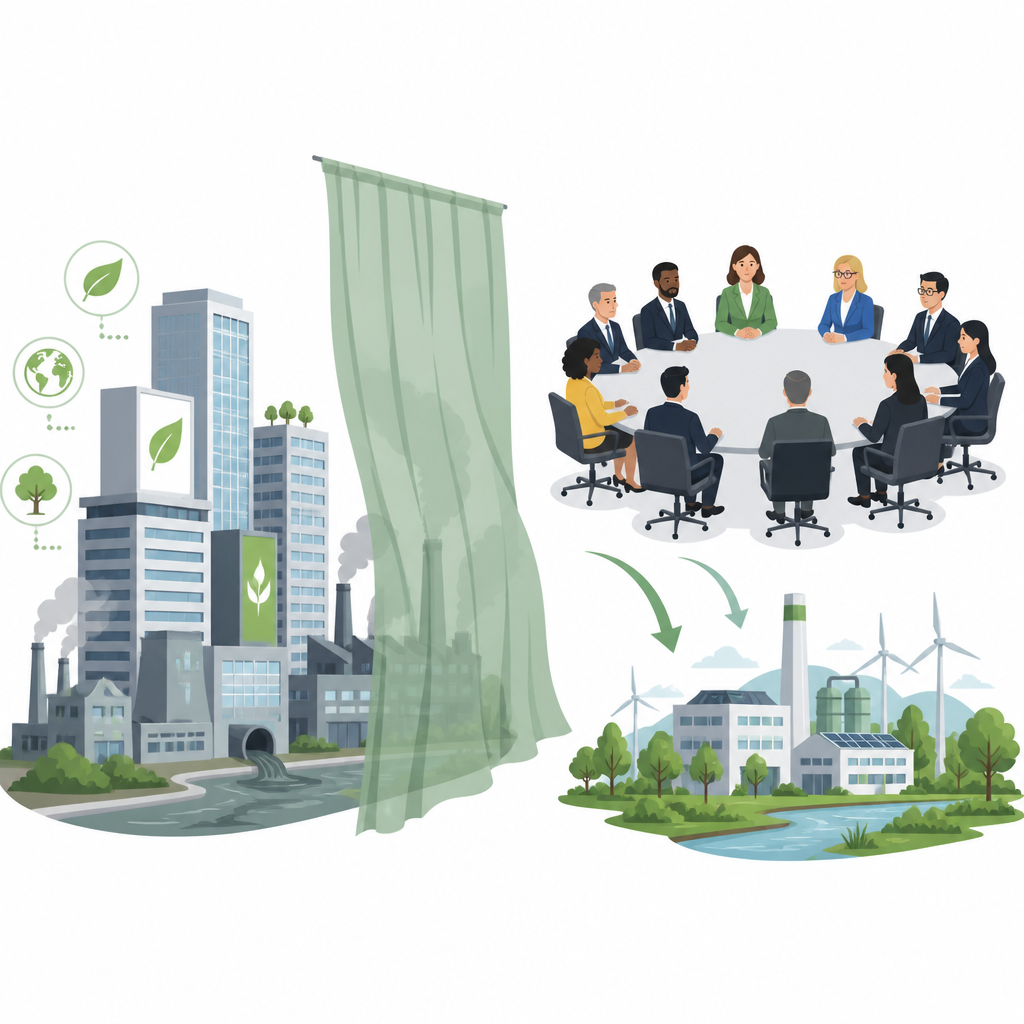
Companies around the world increasingly talk about being responsible and eco friendly, but it is not always clear whether those words match their actions. This article looks behind that polished image for thousands of Chinese listed firms and asks a simple question that matters to investors, employees, and citizens alike: what kind of company boards are more likely to allow greenwashing, and which ones help keep environmental and social claims honest?
What greenwashing looks like in practice
Greenwashing happens when a firm’s public statements about environmental, social, and governance (ESG) performance sound better than what it actually does. The authors measure this “talk–action gap” by comparing two large data sources. One tracks how much ESG information companies choose to disclose. The other rates how well they truly perform on ESG issues, using independent assessments tailored to China’s markets. If a company’s disclosure score is much higher than its performance score, it signals a high risk of greenwashing. Using this yardstick, the study examines over thirteen thousand yearly observations from Chinese A share companies between 2009 and 2023.
Who sits in the boardroom and why it counts
The heart of the study is the boardroom, where key strategic choices are made and company leaders are supposed to oversee management. The authors focus on six simple features of boards: how many women are present, how many directors are independent from management, how long directors have served, how often the board meets, how large it is, and whether the chief executive also chairs the board. Drawing on a classic “fraud triangle” idea, they argue that wrongdoing tends to flourish when pressure is high, chances to cheat are easy, and people can justify cutting corners to themselves. Certain board features can reduce those conditions, while others might accidentally make them worse.
Boards that tend to curb greenwashing
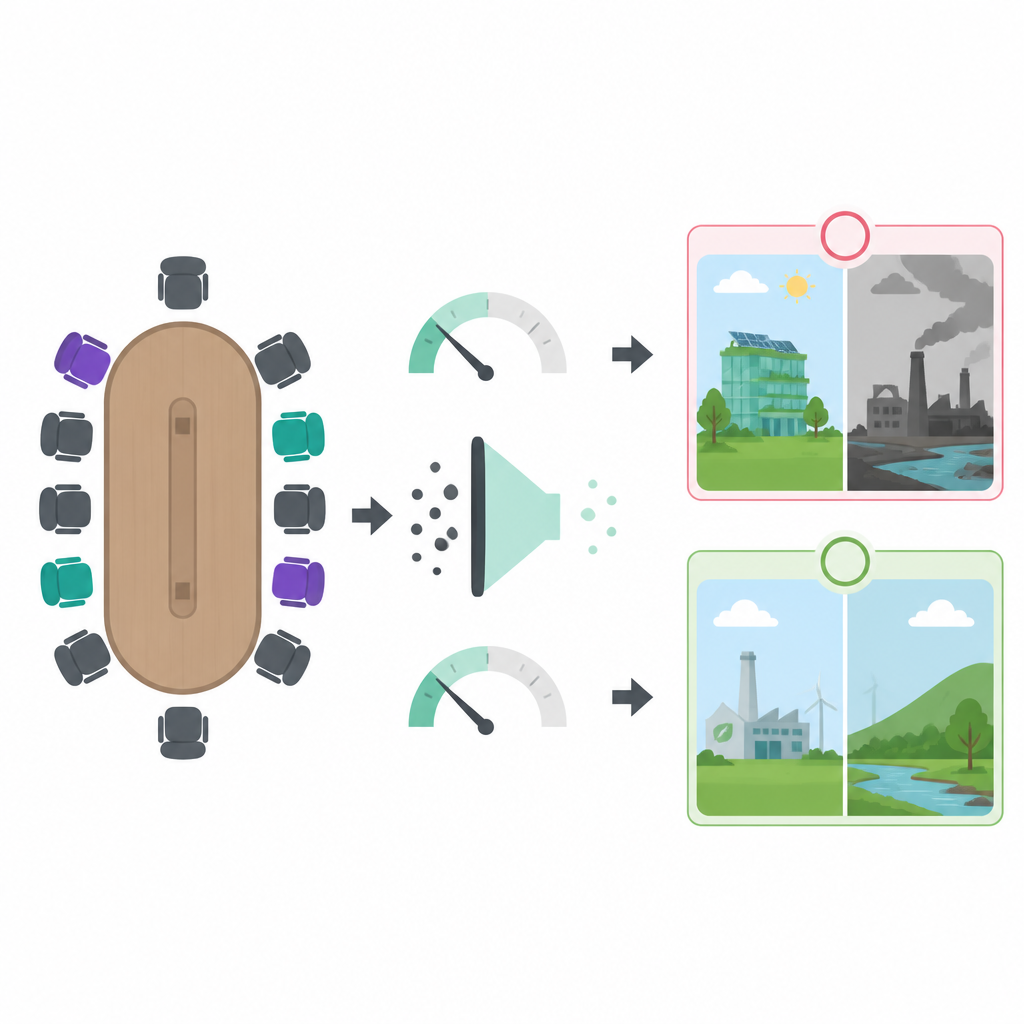
The data show clear patterns. Firms with a higher share of women on their boards are less likely to exaggerate their ESG achievements. Female directors are described as more attuned to ethical concerns, more diligent in meetings, and more conscious of reputation risks. Boards with more independent directors also show smaller gaps between talk and action, suggesting that outside voices help push companies toward genuine improvements rather than window dressing. Longer average time in the boardroom matters as well. Directors who have served for more years seem better able to understand the business, ask sharper questions, and spot attempts to gloss over weak performance. Together, independence and experience emerge as the strongest forces associated with lower greenwashing.
When more meetings and concentrated power backfire
Some findings are less intuitive. Companies whose boards meet more often are actually more prone to greenwashing. The authors suggest that frequent meetings can become a show of concern rather than a path to better decisions. They may fuel paperwork, long agendas, and symbolic gestures that create the feeling of strong oversight without much real change. Similarly, when the chief executive also serves as chair of the board, greenwashing tends to rise. Combining these two roles concentrates power, weakens checks and balances, and may make it easier to present a greener image than reality would justify. Board size itself, however, does not show a clear link: the positive and negative effects of large boards appear to cancel one another out.
How media attention changes the picture
The outside world, especially news coverage, also shapes how these board features play out. Under strong media attention, having more women and independent directors is even more effective at holding back greenwashing, perhaps because these directors are especially sensitive to public scrutiny and reputational damage. Yet the same spotlight can have the opposite effect on meeting frequency and combined CEO–chair roles. In highly watched firms with many meetings or a powerful chief executive, rising pressure to look good may tempt leaders to polish their ESG image rather than fix underlying problems, widening the gap between words and deeds.
What the study means in simple terms
For a lay reader, the takeaway is straightforward. Not all green claims are equal, and who sits around the boardroom table helps determine whether ESG promises are credible or mostly for show. Boards that include more women and truly independent voices, and that give directors time to learn the business, are linked with more honest reporting. In contrast, boards that meet constantly without changing how they work, or that give one person too much control, are linked with a higher risk of greenwashing. Combined with watchful media, these insights offer a practical roadmap: strengthen board diversity and independence, avoid over concentrated power, and focus on real improvements rather than cosmetic disclosure to make sustainability efforts more trustworthy.
Citation: Yu, J., Hwang, YS. Behind the green veil: board characteristics, greenwashing, and the fraud triangle. Humanit Soc Sci Commun 13, 632 (2026). https://doi.org/10.1057/s41599-026-06977-8
Keywords: greenwashing, corporate boards, ESG reporting, China stock market, corporate governance