Clear Sky Science · en
How science careers are made: apartment rentals and transit vouchers
Why Internships Can Make or Break a Science Career
For many college students who dream of becoming scientists or engineers, internships are supposed to be golden tickets: a chance to work in real labs, meet mentors, and launch a career. But for students who do not come from wealthy, well-connected backgrounds, the first question is often not "What will I learn?" but "Where will I sleep, how will I get there, and can I afford to eat?" This study looks closely at how everyday needs like rent and bus fare quietly decide who gets to build a future in science, and who is pushed out before they even begin.
Everyday Life Needs Shape Big Career Choices
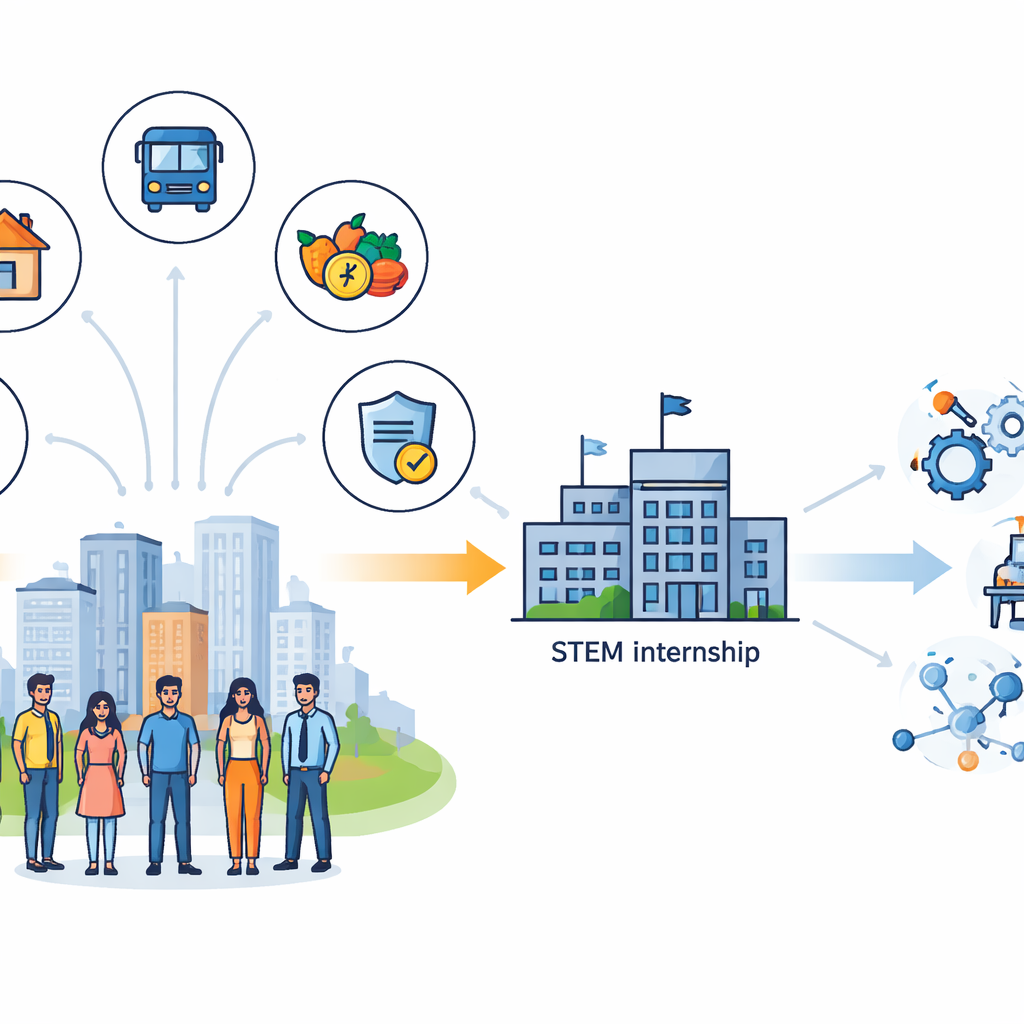
The researchers interviewed 45 current and recent STEM undergraduates from across the United States, all of whom held identities historically pushed to the margins in science—such as being first-generation college students, from low-income families, or from racial and gender groups underrepresented in STEM. Through 12 in-depth online group conversations, students described what it actually takes to apply for, accept, and complete a STEM internship. A clear pattern emerged: decisions about internships were driven less by scientific content and more by whether students could secure housing, transportation, food, personal safety, and fair pay. If these basics did not line up, many simply ruled out an internship, no matter how exciting the research sounded.
Housing, Transit, Food, Safety, and Pay Are All Tied Together
Students talked about housing first and most urgently. Some employers supplied dorm rooms or vetted apartments; others offered a housing stipend that sounded generous on paper but still required students to front large sums in expensive rental markets. For those without family money or savings, that meant they could not even accept an offer. Transportation added another layer: an apartment might be affordable but far from the work site, with spotty public transit or commutes through unfamiliar neighborhoods at night. Access to food hinged on these same factors—no car often meant no easy trip to a grocery store, and cooking after long workdays was exhausting without support such as meal plans or kitchen supplies. Safety concerns, especially for women and other marginalized interns, ran through all of this: late-night lab hours, poorly lit bus stops, and landlords or ride services who did not feel safe turned simple logistics into sources of constant stress.
When Help Looks Helpful but Isn’t
On the surface, many programs seemed supportive—offering stipends, travel reimbursements, or suggestions about neighborhoods. But students often described this as an "illusion of support." A one-time housing stipend that arrived at the end of the summer, for example, did nothing to help pay deposits and first month’s rent up front. Advice to "just Google" safe areas in a new city did not replace local knowledge or protection. Some university-based internships did better because campuses already had dorms, dining halls, and transit systems; yet even there, support could be uneven. The study shows that these partial measures sometimes shifted responsibility back onto students who had the least power and fewest resources, making them feel both unseen and blamed for struggling.
A New Way to Picture Student Needs
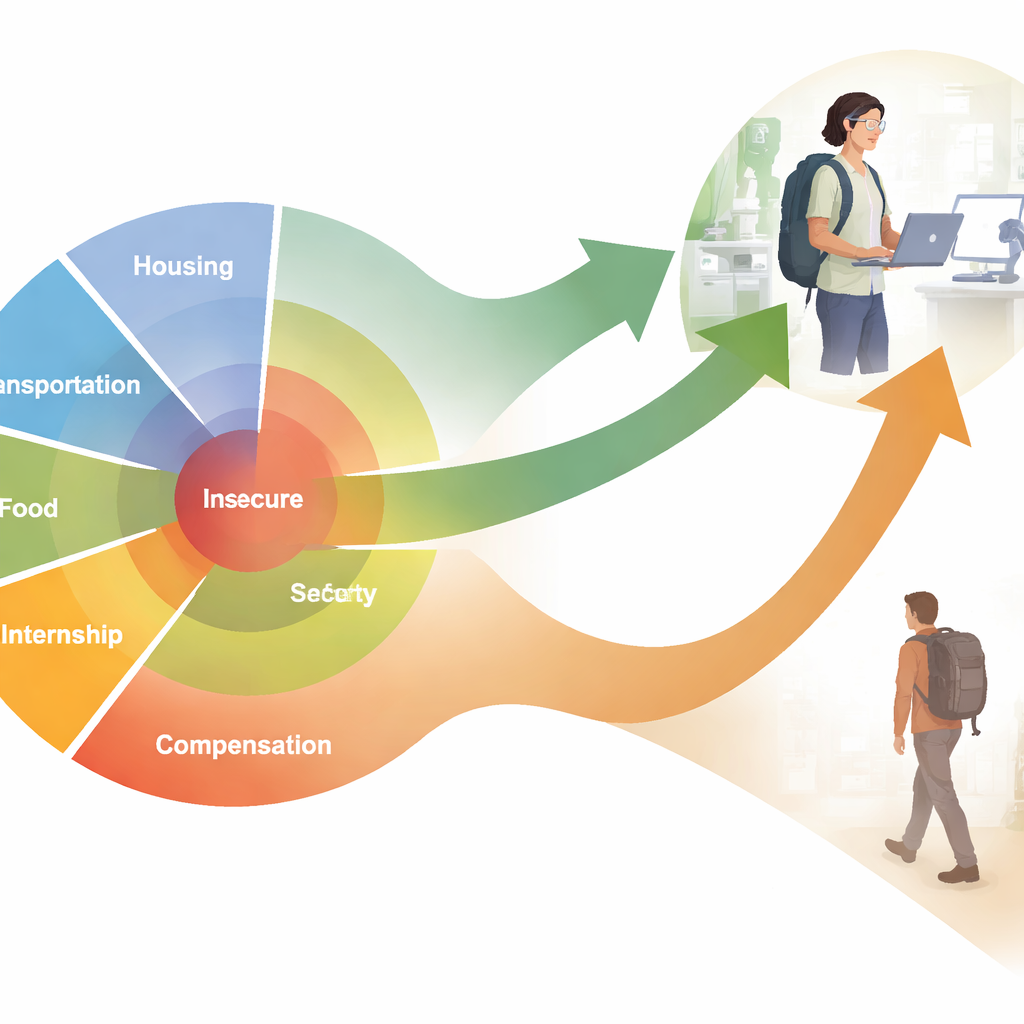
Instead of treating needs as a ladder—first food and shelter, then higher goals like confidence and belonging—the authors propose a "constellation" model. In this picture, housing, transportation, food, safety, and pay sit side by side, all equally important. For any given student and internship, each point can move from insecure to secure depending on what the employer, the local environment, and the student’s own network can provide. A furnished apartment near a bus line might raise both housing and transit security; a low wage in a costly city might drag down food and safety. The overall experience depends on how these pieces combine, not on one need being perfectly met before another matters. When too many points sit in the insecure zone, students feel they do not belong and are more likely to leave STEM altogether.
What It All Means for the Future of STEM
To a layperson, the study’s message is straightforward: you cannot build a diverse, thriving science workforce if interns cannot afford rent, a bus pass, or groceries. The authors argue that logistics are not background details but a core part of what makes an internship truly accessible. Organizations that cannot offer strong logistical support should at least be honest about limits and consider drawing from local students who already have housing, while still paying them fairly. Those with more resources can rethink their programs using the constellation framework, systematically checking housing, food, transit, safety, and pay for gaps. Ultimately, the study shows that apartment rentals and transit vouchers are not side issues—they are quiet gatekeepers that determine who gets to imagine themselves as a scientist and who is forced to step away.
Citation: Flinner, K., Keena, K. & Stromberg, E. How science careers are made: apartment rentals and transit vouchers. Humanit Soc Sci Commun 13, 403 (2026). https://doi.org/10.1057/s41599-026-06958-x
Keywords: STEM internships, student basic needs, science career access, workforce diversity, higher education equity