Clear Sky Science · en
Green innovation efficiency of polluting industries in China: the role of external technological sourcing
Why Cleaner Industry Matters Now
Factories that power modern life also produce much of the world’s air and water pollution. In China, heavy polluting industries such as coal, steel, textiles, and power generation sit at the heart of economic growth but also strain the environment. This study asks a simple question with big consequences: how efficiently are these industries turning new ideas into cleaner production, and does it help more to buy technology at home or import it from abroad?
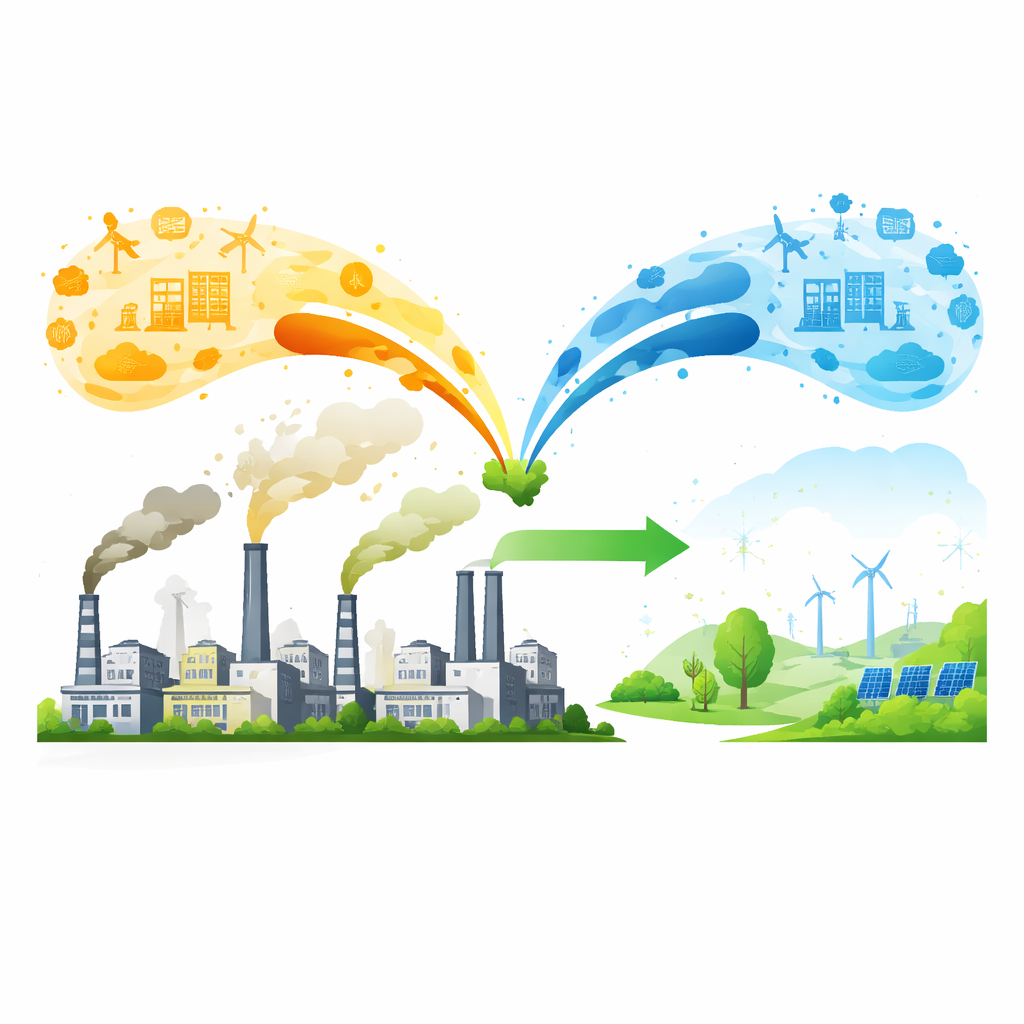
Turning Big Factories into Smart Factories
The authors focus on “green innovation efficiency,” which, in plain terms, measures how well industries turn research money, skilled people, and equipment into both economic value and lower pollution. Rather than treating innovation as a mysterious black box, they split it into two stages. The first is research and development (R&D), where ideas and patents are created. The second is commercialization, where those ideas are scaled up into real products and cleaner processes on factory floors. Using detailed data from 33 highly polluting industries across China between 2012 and 2020, they track how well each stage performs and how it changes over time.
Measuring Progress behind the Smokestacks
To gauge performance, the study uses a network-style efficiency model that accounts for many inputs and outputs at once: R&D staff, research spending, equipment, energy use, new products, revenues, and key pollutants such as solid waste and sulfur dioxide. The results show a mixed picture. Overall green innovation efficiency rose from about one-half to somewhat above three-fifths over the eight-year period, indicating gradual improvement. Commercialization — turning ideas into marketable green products — performs relatively better, with average efficiency around two-thirds. R&D lags behind at under one-half, marking it as the main bottleneck. In essence, Chinese polluting industries are getting better at selling cleaner products once they exist, but they are still not very effective at generating those green technologies in the first place.
Buying Ideas: Homegrown versus Imported
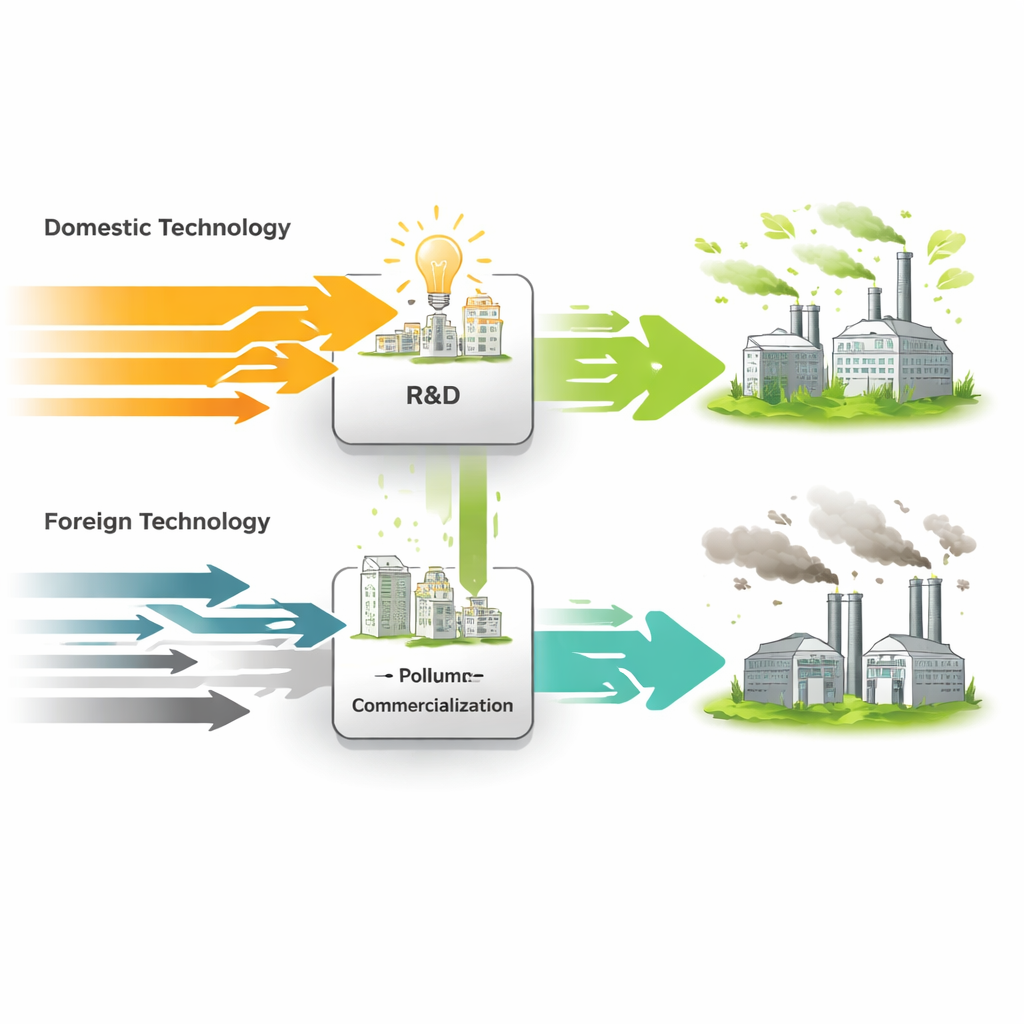
A central question in the paper is how outside technology feeds into this process. The researchers distinguish two main channels: domestic technology procurement (buying know‑how and solutions from universities, labs, and firms inside China) and foreign technology importation (purchasing advanced technology from abroad). By combining several statistical models tailored to the data, they find a clear pattern. Spending on domestic technology strongly improves overall green innovation efficiency, mainly by lifting R&D performance. Industries that buy more homegrown technology generate more useful patents and innovations that can later be commercialized. In contrast, greater reliance on imported foreign technology is linked to lower overall efficiency, again because it weakens the R&D stage.
Why Foreign Technology Can Backfire
The negative effect of foreign technology is not because overseas solutions are inherently worse. Instead, the study suggests that many Chinese polluting industries struggle to absorb and adapt complex imported technologies. Firms may become dependent on external suppliers, focusing on assembling equipment rather than developing their own know‑how. In key “bottleneck” areas, multinational companies often keep core knowledge to themselves, limiting local learning. As a result, domestic R&D teams do not build strong capabilities, and the imported technology does not translate into broad, long‑term gains. Interestingly, foreign technology does not significantly help or harm the later commercialization stage — its main impact is to undercut the early research process that drives lasting improvement.
What This Means for a Greener Future
For a general reader, the study’s message is straightforward: if China’s most polluting industries want to clean up faster, they need to become smarter, not just bigger buyers of foreign equipment. The research shows that the greatest gains come from strengthening homegrown R&D — by tapping into domestic universities, research institutes, and local technology firms — and from building better paths that carry new ideas from the lab to the market. Policymakers can help by backing partnerships between factories and domestic innovators, improving support for turning green prototypes into commercial products, and being more selective and strategic about what foreign technologies to import. In the long run, building strong local innovation engines inside polluting industries appears to be the surest route to bluer skies and cleaner growth.
Citation: Peng, F., Zhou, S. Green innovation efficiency of polluting industries in China: the role of external technological sourcing. Humanit Soc Sci Commun 13, 526 (2026). https://doi.org/10.1057/s41599-026-06872-2
Keywords: green innovation efficiency, polluting industries, China, technology sourcing, R&D efficiency