Clear Sky Science · en
Supervised tax compliance and evasion from a spatial evolutionary game perspective
Why taxes and fairness matter to everyday life
Most of us experience taxes as numbers on a payslip or a form to be filed, but behind those numbers lies a constant tug-of-war between paying what we owe and the temptation to cheat. This study uses computer simulations to explore how ordinary taxpayers and government officials influence each other over time. It asks when people choose to pay taxes, when they try to evade them, and how corruption among officials can either fuel or curb that evasion. The answers help explain why some societies sustain strong public services and trust in government while others get trapped in cycles of cheating and corruption.
Two layers of people, one shared problem
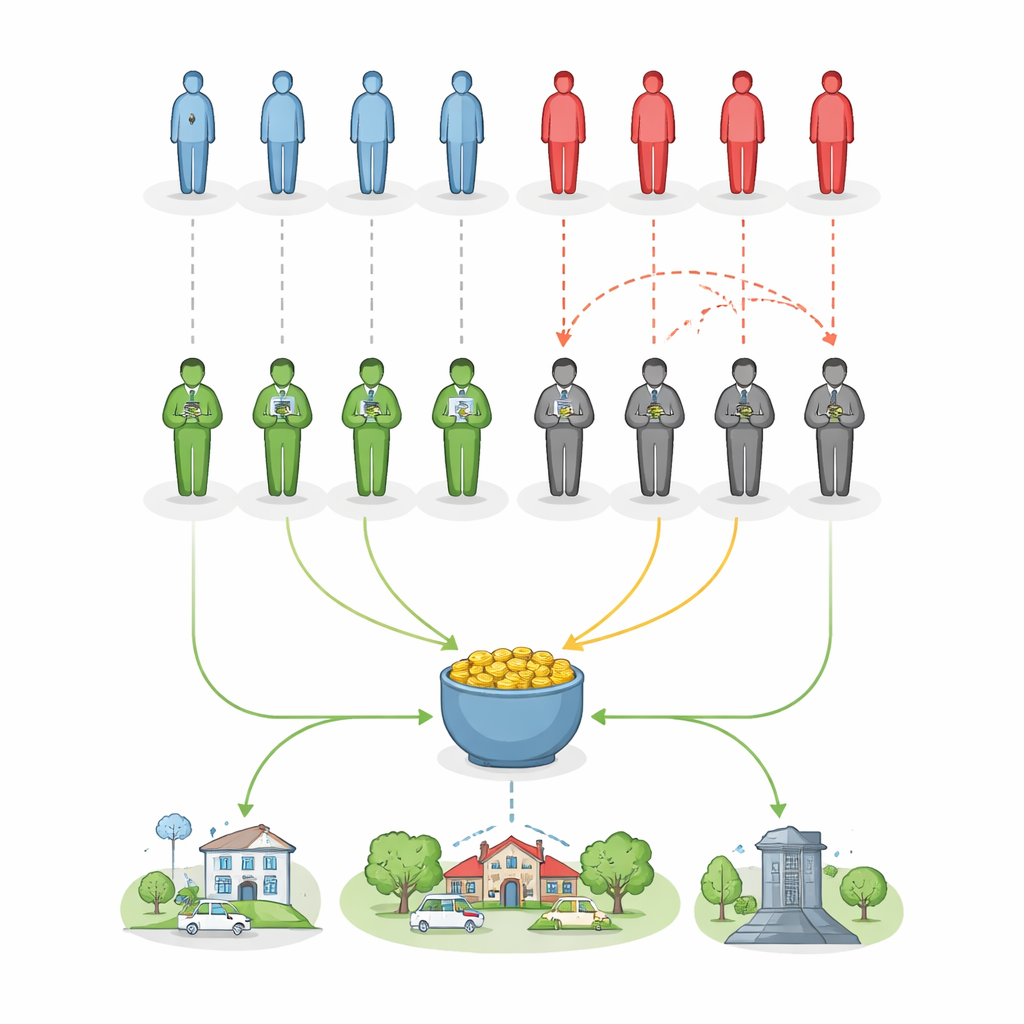
To study this tension, the authors build a virtual society made of two connected layers. In the lower layer live citizens who repeatedly face a simple choice: pay into a common pot or keep their money. When people pay, everyone benefits from the shared pool, much like real-world schools, roads, or hospitals funded by taxes. When too many people refuse, the common pot shrinks. In the upper layer are government officials whose job is to oversee groups of citizens. Some officials are fair: they punish those who refuse to pay. Others are corrupt: instead of punishing cheaters, they accept a secret side payment and look the other way. Citizens and officials alike can change their behavior over time by imitating neighbors who appear to be doing better.
How the computer world tracks payoffs and choices
The simulation keeps score for everyone. Taxpaying citizens lose a small amount when they contribute but gain back part of the enlarged common pot. Evaders gain by not contributing but may lose money if caught and fined, or if they must pay off a corrupt official. Officials receive a basic fee tied to how many taxpayers they oversee. Corrupt officials can add bribe income, but they also pay a hidden cost that represents the risk and effort of staying undetected. At each step, both citizens and officials compare their payoffs to those of their neighbors. If someone nearby is doing noticeably better, they are more likely to copy that person’s behavior—either switching from paying to evading, or from fair oversight to corruption, and vice versa.
What tougher penalties and rising bribes really do
Running the model across many settings reveals how policy levers shape the long-term balance between honesty and cheating. Increasing the size of fines for evaders lowers the threshold at which taxpaying becomes common. Once penalties are high enough, the system can flip from widespread evasion and deep corruption to broad compliance and mostly fair oversight. Bribery behaves in a more subtle, non-linear way. When bribes are small, corrupt officials do not earn enough to justify their extra risk, so fair officials gradually take over and citizens settle into paying their share. When bribes grow to moderate levels, corruption becomes highly profitable, evaders can cheaply avoid punishment, and both cheating and corruption spread. Yet if bribes become very large, evading is no longer a good deal for citizens; paying taxes can again be the safer, more rewarding option, which in turn weakens the appeal of corruption for officials.
Why official pay and anti-corruption efforts matter
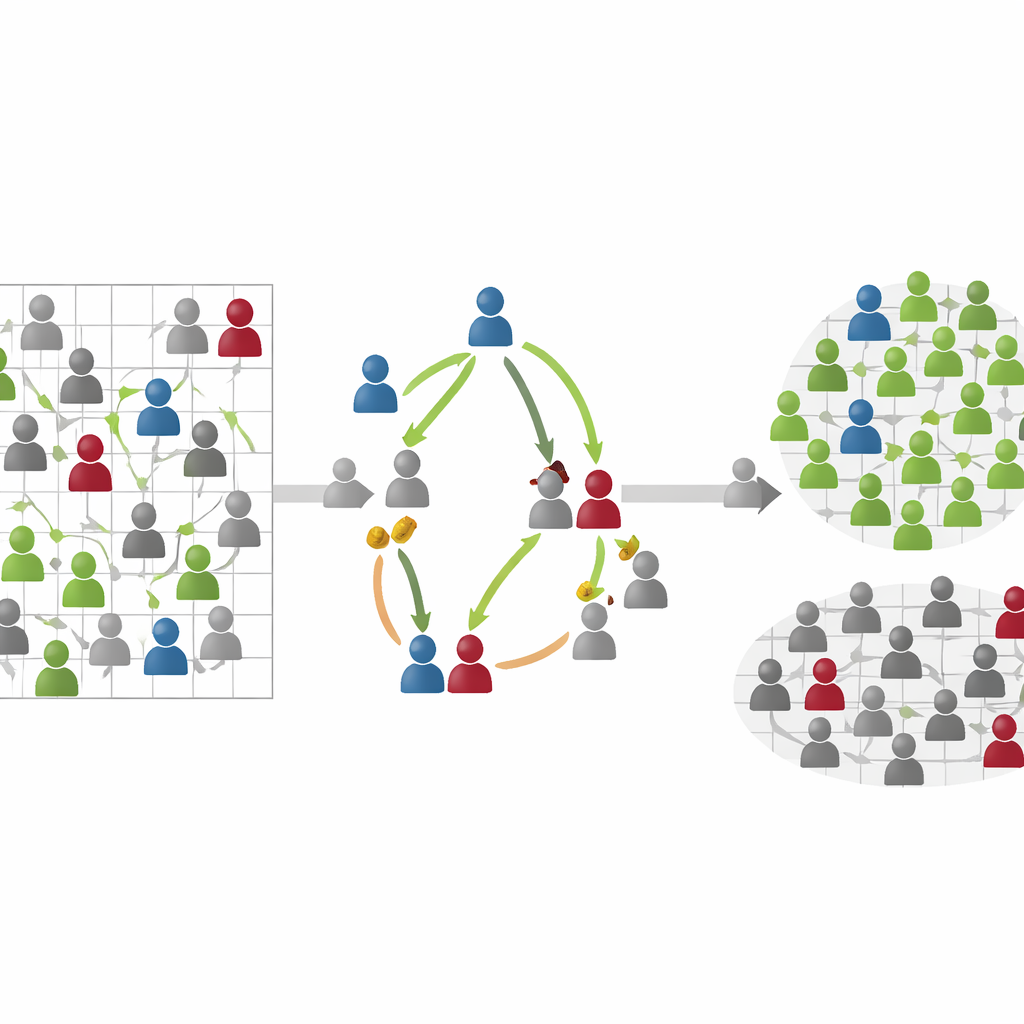
The model also shows how officials’ regular pay and the cost of corruption work together. When honest oversight is poorly rewarded, corrupt behavior tends to spread, because bribes provide a strong boost with little downside. Raising officials’ basic income gives fair behavior a firmer footing, making it easier for honest regulators to resist temptation. Likewise, increasing the extra cost that corrupt officials must bear—standing in for legal risk, audits, or social shame—shrinks the space in which corruption can thrive. In the virtual world, regions with many fair officials tend to line up with clusters of taxpaying citizens; regions with many corrupt officials are mirrored by clusters of evaders. These local pockets can grow or shrink as people observe and copy what seems to work, echoing how norms and habits spread in real communities.
What this means for real-world tax systems
For a layperson, the main message is that tax fairness is not just about scaring cheaters with big fines. The health of a tax system depends on a delicate balance between deterrence and trust. Strong penalties help only if citizens believe that rules are applied evenly and officials cannot easily be bought. At the same time, giving officials decent, reliable pay and making corruption genuinely costly helps create pockets of clean governance that can spread. This study suggests that tax compliance and honest oversight can reinforce one another in a positive feedback loop—or unravel together into a spiral of evasion and corruption. Thoughtful policy must therefore tackle both sides at once: the incentives facing taxpayers and the pressures shaping the behavior of those who oversee them.
Citation: Li, Q., Ling, T., Feng, M. et al. Supervised tax compliance and evasion from a spatial evolutionary game perspective. Humanit Soc Sci Commun 13, 447 (2026). https://doi.org/10.1057/s41599-026-06802-2
Keywords: tax compliance, tax evasion, corruption, evolutionary game, public goods