Clear Sky Science · en
The challenges of writing physical pain: Philip Roth’s voice in pain
Why Pain Stories Matter
Most of us know what it feels like to be in pain yet struggle to describe it so others truly understand. Doctors may run tests and find nothing wrong; friends may fall back on stock phrases. This article explores how the novelist Philip Roth turns stubborn, unexplained physical pain into a powerful way of talking about the body, society, and our responsibility to listen to one another. By studying two of his works, “Novotny’s Pain” and The Anatomy Lesson, the author shows how fiction can bridge the gap between the sufferer and the observer and help us rethink what empathy really is.
From Private Hurt to Shared Story
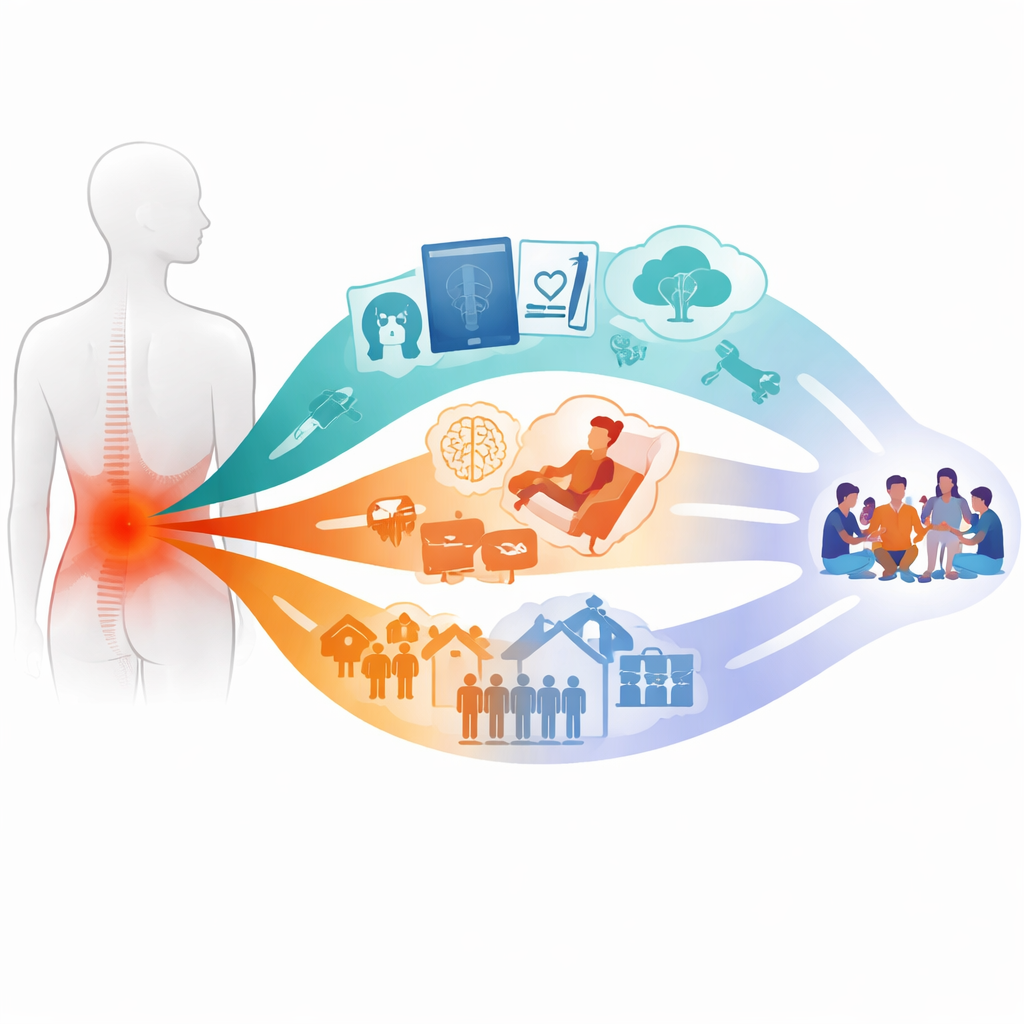
The article begins with a basic puzzle: pain is intensely real to the person who feels it but often doubtful to everyone else. Medical science has long tied pain to visible damage in the body, which means aches without a clear cause are easily dismissed as exaggerated or “all in the head.” Roth seizes on this dilemma. In “Novotny’s Pain,” a young soldier feels crippling back pain that doctors cannot explain and military superiors treat as weakness. In The Anatomy Lesson, the writer Nathan Zuckerman is tormented by chronic pain that specialists repeatedly declare to be “nothing.” These stories expose how diagnostic failure can quickly become moral judgment, turning uncertainty into blame. Roth’s fiction anticipates newer medical ideas that see pain as shaped not just by nerves and tissues, but also by mind, memory, and social pressure.

When Pain Refuses Simple Labels
Rather than depicting clear-cut illnesses, Roth is drawn to mysterious, nameless pain—discomfort that can be described but not believed. This sort of pain lives in a twilight zone between body and mind, fact and doubt. The article argues that, for Roth, this uncertainty is not a storytelling problem but a driving force. Because the pain cannot be neatly labeled, readers are pushed to imagine what is left unsaid and to weigh clashing explanations from doctors, patients, families, and institutions. Pain becomes less a medical event and more a way of asking difficult questions about who gets to define reality, whose voice counts, and how easily personal distress is swallowed by official language.
Blending Life, Fiction, and Many Voices
Roth complicates matters by drawing on his own history of back injury and controversy as a Jewish American writer while refusing to write straightforward autobiography. Instead he fuses personal traces with invention, irony, and exaggeration. Characters like Novotny and Zuckerman echo Roth’s life yet are never simple stand-ins. Around them, the narration shifts among inner thoughts, clinical descriptions, military orders, family quarrels, and cultural debates. This “many-voiced” approach, the article explains, turns the novel into a meeting ground where different ways of understanding pain collide without being forced into a single answer. Readers are asked not to melt into the characters’ feelings, but to listen closely, compare perspectives, and reflect on their own judgments.
Pain, Power, and Identity
The article also shows how Roth links bodily pain to larger structures of power and belonging. In “Novotny’s Pain,” the ache in a soldier’s back symbolizes how military and medical systems work together to discipline the body and shame those who do not conform. In The Anatomy Lesson, Zuckerman’s chronic pain is tied to the strains of postwar Jewish life in America: the pull between family loyalty and creative freedom, between holding onto heritage and blending into the mainstream. His suffering echoes the tension between immigrant parents clinging to tradition and children eager to cast it off, only to discover a new kind of emptiness. Pain here becomes a shared wound, carrying traces of historical trauma, cultural pressure, and the struggle to define oneself.
Listening as an Ethical Act
In the end, the article argues that Roth’s writing turns pain into more than a private complaint; it becomes a test of how we see and hear one another. By refusing tidy diagnoses or sentimental uplift, his stories ask readers to practice an “ethics of listening”: to stay with discomfort, to recognize how institutions can muffle or twist suffering, and to see the aching body as connected to history and community. Literature, on this view, is not a cure but a training ground for attention. It slows us down, sharpens our capacity to notice others’ distress, and reminds us that vulnerability is something we share. In a fast, distracted world where it is easy to tune out others’ pain, Roth’s painful fictions invite us to imagine more carefully—and, in doing so, to care more wisely.
Citation: Qiao, C. The challenges of writing physical pain: Philip Roth’s voice in pain. Humanit Soc Sci Commun 13, 349 (2026). https://doi.org/10.1057/s41599-026-06714-1
Keywords: literature and pain, Philip Roth, empathy, medical humanities, chronic pain