Clear Sky Science · en
The moderating effect of corporate governance reforms on the relationship between audit committee chair attributes and ESG disclosures
Why this research matters to everyday investors
When companies talk about being “green,” socially responsible, or well governed, they increasingly back it up with Environmental, Social, and Governance (ESG) reports. But how can outsiders know whether these reports are reliable or just marketing? This study looks inside corporate boards in Saudi Arabia to see how the person leading a key oversight body—the audit committee chair—shapes the quality of ESG disclosures, and how recent governance reforms tied to Saudi Vision 2030 help make those disclosures more trustworthy.
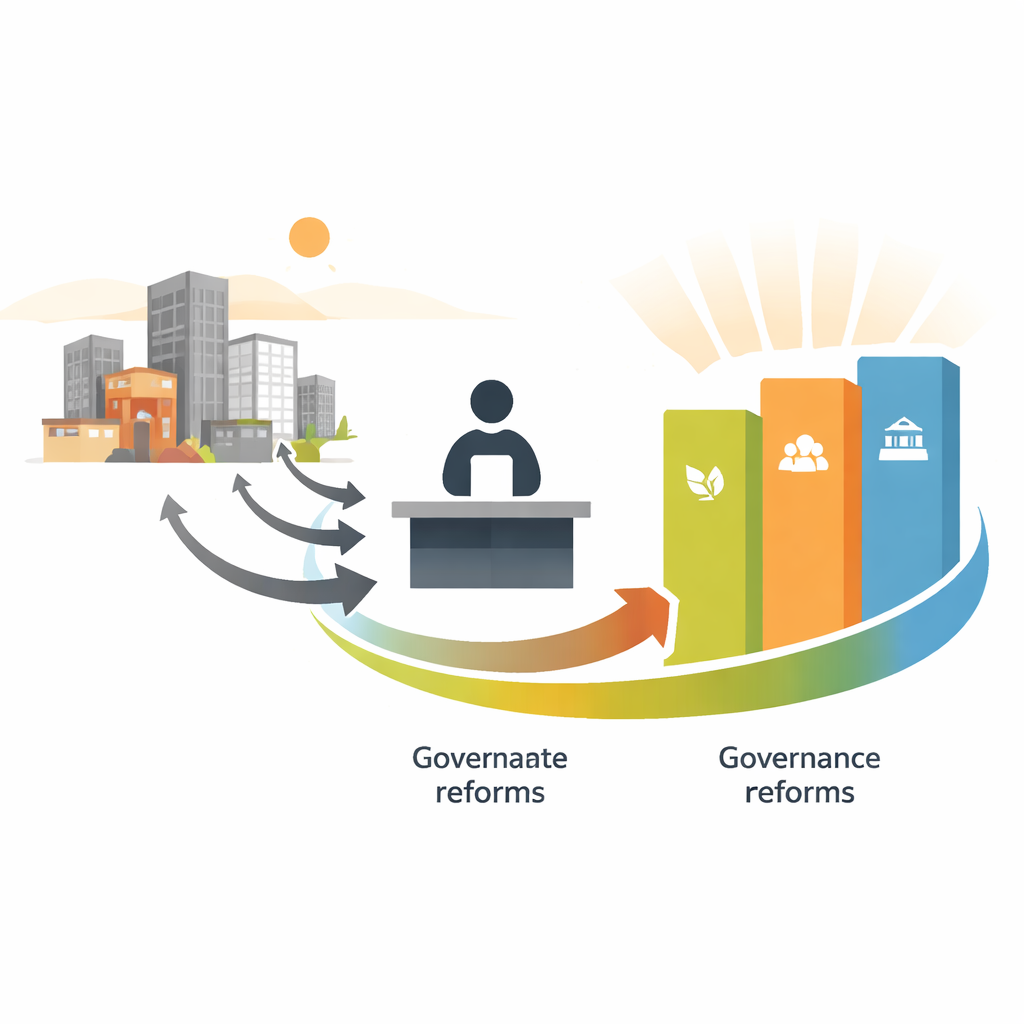
The person at the head of the table
Public companies rely on an audit committee to oversee both financial and non-financial reporting. At the center of that committee sits the chair, who sets the agenda, directs questions to management, and interacts with external auditors. The authors argue that three personal attributes of this leader matter most for ESG transparency: independence from management, professional experience (especially financial and governance expertise), and how many other board seats they hold, known as interlocking or “busyness.” Drawing on ideas from agency theory, stakeholder theory, and resource-based views of the firm, the study proposes that independent and experienced chairs are better placed to challenge managers and insist on meaningful ESG reporting, whereas overcommitted chairs may not have enough time or focus to do the job well.
A natural test case in Saudi Arabia
Saudi Arabia offers a real-world laboratory to examine these questions. As part of its Vision 2030 transformation program, the country introduced binding Corporate Governance Regulations in 2017. These rules strengthened board independence, separated oversight roles from executive positions, and clarified the responsibilities of the audit committee, including for non-financial reporting. The researchers assembled data for 27 non-financial firms listed on the Saudi stock exchange between 2014 and 2023, creating 243 firm–year observations that span the years before and after the reforms. They combined Bloomberg ESG disclosure scores with hand-collected information on each company’s audit committee chair to see how leadership traits and the new rules interacted.
What the numbers revealed
Using fixed-effects regression models and a range of robustness checks, the study finds a clear pattern. Firms with independent audit committee chairs tend to disclose more—and more detailed—ESG information. Chairs with strong experience and professional qualifications show a similarly positive effect, especially on the governance component of ESG. In contrast, chairs who sit on three or more boards are associated with weaker ESG reporting; their oversight appears stretched thin, particularly on social issues such as workers and communities. These results hold even when the authors apply more demanding dynamic panel methods designed to address the possibility that “good” firms simply attract better chairs in the first place.
Reforms that change how boards behave
The study’s second major finding is that Saudi Arabia’s 2017 governance reforms significantly strengthen these relationships. After the reforms, the beneficial impact of independence and experience on ESG disclosures becomes stronger, while the harmful influence of interlocking directorships becomes weaker. In visual terms, the reforms act like a reinforcing filter: they amplify the positive effects of good leadership qualities and dampen the negative effects of overcommitment. Pillar-by-pillar analysis shows that independent chairs are especially important for environmental transparency, experienced chairs for governance details, and reduced busyness for credible social reporting. Together, these results suggest that rules and institutions can activate the latent value of capable board leaders in emerging markets.

What this means for markets and society
For readers outside the boardroom, the message is straightforward: who leads the audit committee, and the rules under which they operate, materially affects how much you can trust a company’s ESG story. In Saudi Arabia, reforms linked to Vision 2030 that mandate independent, well-defined oversight roles help ensure that ESG reports are more than glossy brochures. Independent and experienced chairs, supported by strong governance codes and limits on excessive board memberships, make it more likely that companies report their environmental and social impacts in a way that investors, regulators, and the public can rely on. In turn, better ESG disclosures can attract international capital, support progress toward the UN Sustainable Development Goals, and encourage firms in other emerging markets to strengthen both their board leadership and their governance frameworks.
Citation: Al Naim, A., Alomair, A. & Chebbi, K. The moderating effect of corporate governance reforms on the relationship between audit committee chair attributes and ESG disclosures. Humanit Soc Sci Commun 13, 390 (2026). https://doi.org/10.1057/s41599-026-06536-1
Keywords: corporate governance, ESG disclosure, audit committee, Saudi Arabia, Vision 2030