Clear Sky Science · en
A global typology for assessing socioeconomic impacts of the circular economy
Why Everyday Life Depends on What Happens to Our Stuff
From the plastic on supermarket shelves to the phones in our pockets, governments are rewriting the rules for how products are made, used and thrown away. These “circular economy” policies aim to keep materials in use longer and cut pollution. But what do they mean for people’s jobs, health, and wallets? This article digs through more than a decade of research from around the world to reveal how circular economy rules are already reshaping work, communities and daily life—and where risks still lurk beneath the green promises.
Looking Across a Decade of Global Experience
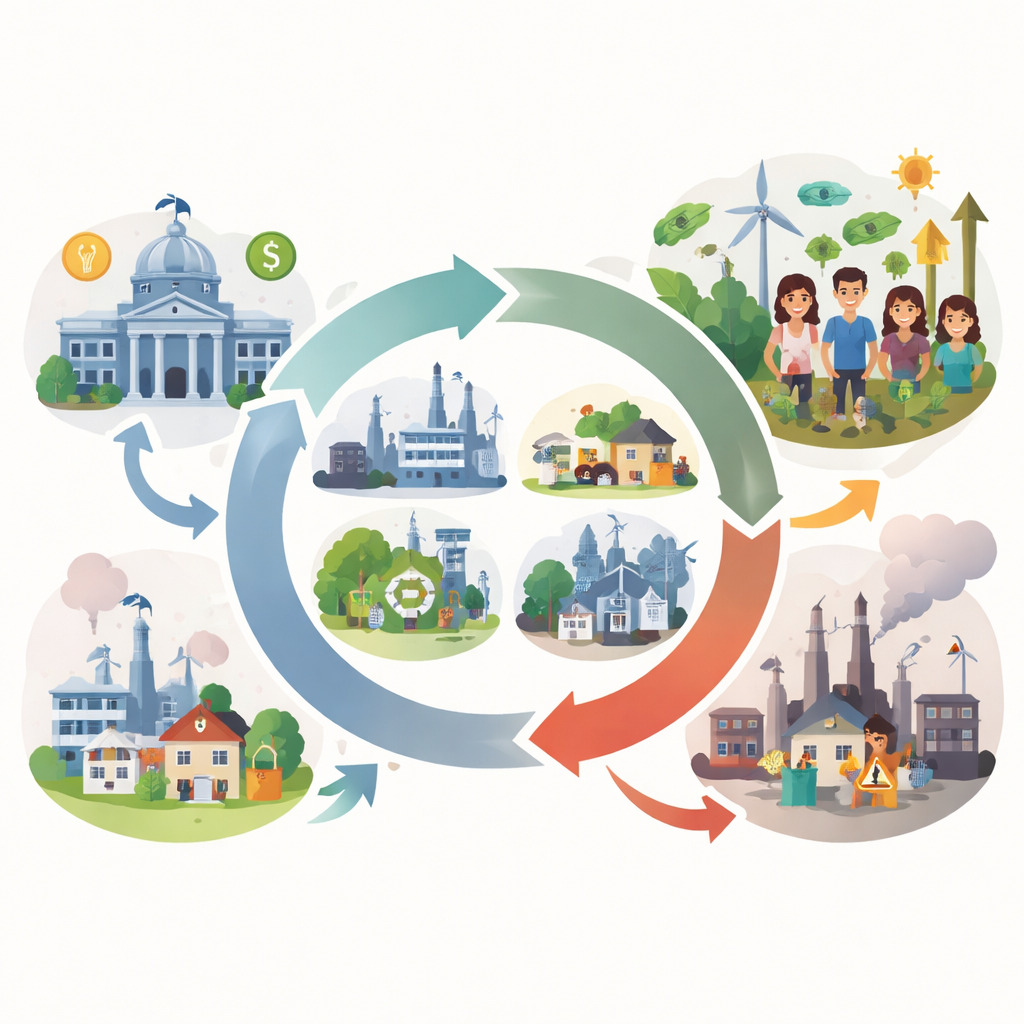
The authors systematically reviewed 128 studies published between 2012 and 2023 that looked at the social and economic fallout of circular economy policies, rather than just their environmental benefits. These studies, mostly about real-world regulations and financial incentives, covered everything from landfill taxes and recycling rules to repair schemes and eco-labels. By comparing findings, the researchers built a “typology” – a structured map of 12 main ways that circular policies affect society, from employment and health to consumer behavior and civil rights. They further broke these into 44 more detailed topics, creating a common language that policymakers and researchers can use to think beyond tonnes of waste and towards human consequences.
How Jobs, Health and Fairness Come Into Play
The research shows that jobs sit at the heart of circular change. Many studies find that activities such as repair, recycling and services can create new positions, especially in waste management, construction and rural areas. Yet these gains are uneven. Jobs may decline in mining and heavy manufacturing if demand for new raw materials falls, and new roles often require higher skills and more formal training, putting pressure on lower-skilled workers. Women, migrants and informal waste workers frequently carry the risks: they may gain opportunities but can also face unstable work and persistent pay gaps, especially in sectors such as e‑waste recycling where dangerous materials are common and protections are weak.
Communities, Consumers and the Things We Buy
Circular policies also ripple through neighborhoods and households. Cleaner air and water, fewer open dumps and better sanitation can bring health benefits to communities near landfills, industrial sites or polluted rivers. At the same time, shifting waste streams from richer to poorer countries can expose distant workers and residents to new hazards. On the consumer side, most rules studied focus on turning waste into a resource and making products last longer, especially plastics, electronics, fertilizers and pesticides. Research suggests product quality often improves when durability and reuse are encouraged, but prices do not consistently rise or fall. Some studies report that people gain cheaper access to refurbished goods like phones, while others flag the risk that new “sharing” and reuse markets could deepen existing inequalities or erode genuine community ties if everything becomes a paid service.
Where Policies Are Made and Who Is Studied
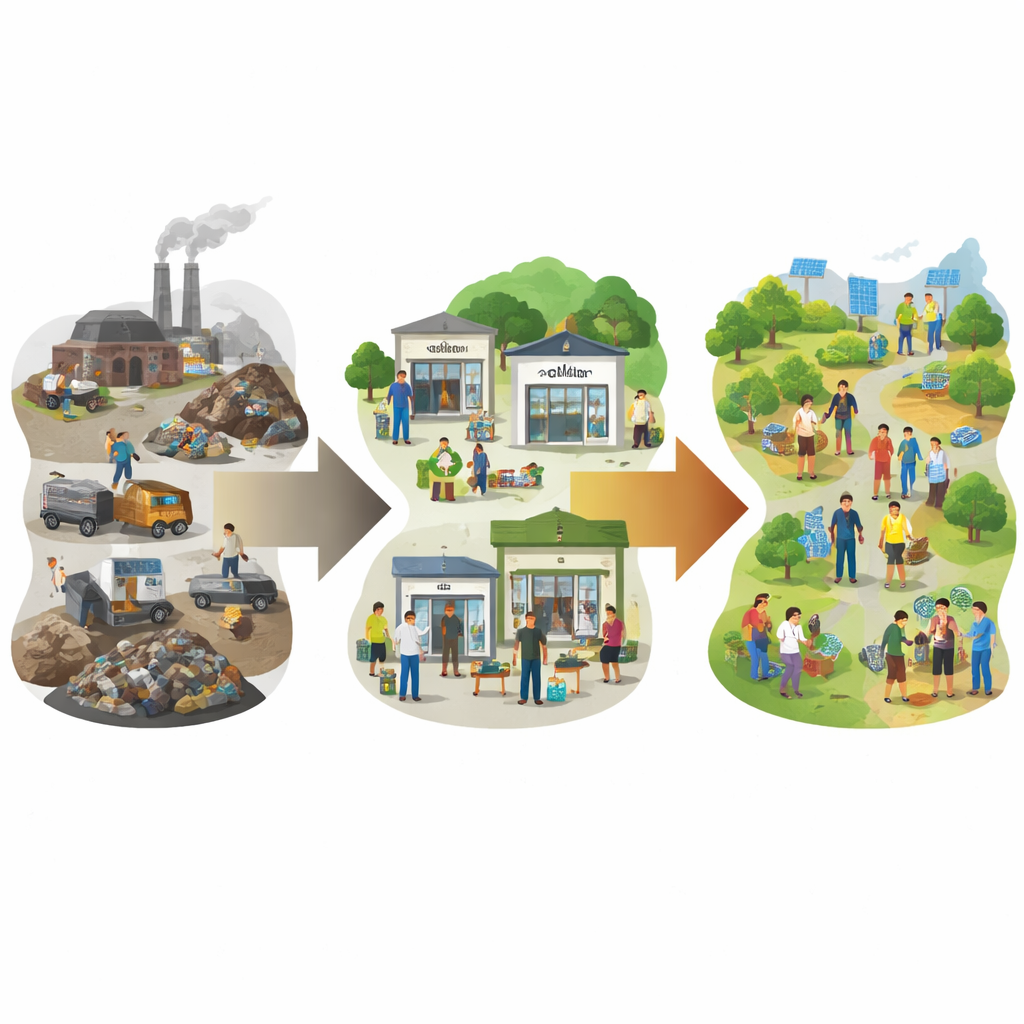
The picture that emerges is heavily shaped by Europe, which dominates the existing research, though examples from Asia, Africa and Latin America highlight global waste and trade connections. Most studies focus on national and local governments using tools such as taxes, subsidies, standards and labelling rules. Across these cases, the same clusters of social impacts reappear: employment, health and well-being, social justice, consumption patterns, food security, education and governance. Yet some important themes—such as data privacy around smart waste systems, the role of tourism, or how circular projects affect cultural traditions and indigenous communities—receive much less attention, indicating blind spots in current knowledge.
What This Means for Fair and Lasting Change
In plain terms, the article concludes that there is no single story for how circular economy policies play out in people’s lives: they can create decent jobs, cleaner neighborhoods and better access to goods, but they can also shift risks onto already vulnerable groups and widen skill and income gaps if poorly designed. The typology developed here acts like a checklist for decision-makers, reminding them to look beyond recycling rates and consider who gains, who loses and under what conditions. Used well, it can help governments, businesses and communities design circular policies that not only save resources but also support fair, healthy and inclusive societies.
Citation: Foster, G., Calisto Friant, M., Leiputė, B. et al. A global typology for assessing socioeconomic impacts of the circular economy. Commun. Sustain. 1, 55 (2026). https://doi.org/10.1038/s44458-026-00038-6
Keywords: circular economy, socioeconomic impacts, green jobs, waste policy, social justice