Clear Sky Science · en
XPro1595 in early Alzheimer’s disease with inflammation: results from the phase 2 MINDFuL trial
Why calming brain inflammation matters
Many people know that sticky protein deposits in the brain play a role in Alzheimer’s disease, but fewer realize that chronic inflammation inside the brain is also a powerful driver of memory loss and behavior changes. This study tested a new drug, XPro1595, designed to quiet harmful inflammation while leaving helpful immune defenses intact. For families facing early Alzheimer’s, the work explores whether targeting inflammation could slow decline with fewer side effects than current treatments.
A new way to dial down harmful signals
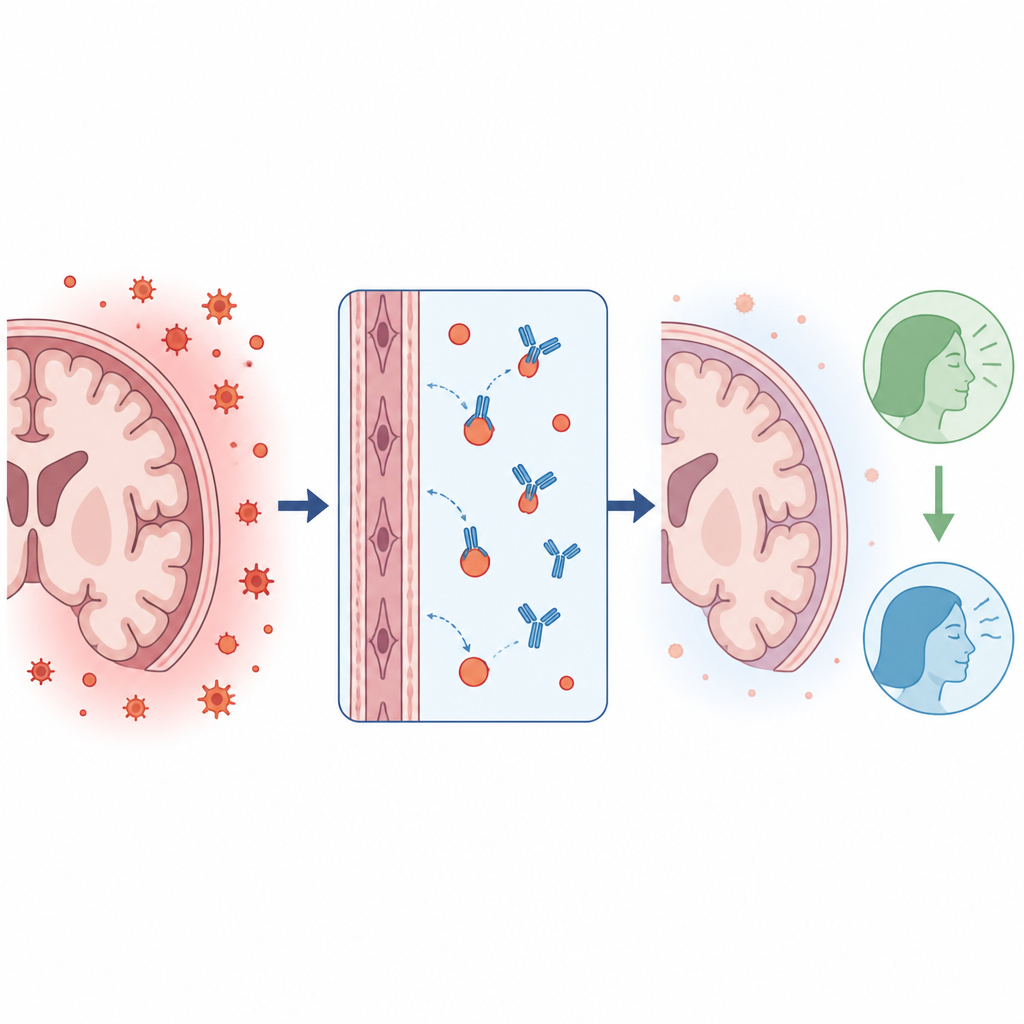
Alzheimer’s disease is increasingly seen as both a memory disorder and an immune disorder of the brain. A key player is a molecule called tumor necrosis factor, or TNF, which comes in two forms: a roaming form that tends to fan the flames of inflammation and a form anchored on cell surfaces that helps protect brain cells. Standard TNF-blocking drugs shut down both forms, which can weaken the body’s defenses. XPro1595 was engineered to block only the roaming, inflammatory version while preserving the protective one, with the goal of reducing damaging brain inflammation without raising infection risk.

Who took part in the MINDFuL trial
The Phase 2 MINDFuL trial enrolled older adults with early Alzheimer’s across eight countries. All had mild memory and thinking problems, and most had evidence of the brain changes linked to Alzheimer’s. Importantly, participants also had blood signs of ongoing inflammation, such as elevated C-reactive protein or an at-risk version of the APOE gene. They were randomly assigned to receive weekly injections of XPro1595 or a placebo for 24 weeks. The main outcome was a sensitive test battery called EMACC, which tracks subtle changes in memory, thinking speed, and mental flexibility, along with other measures of daily function, mood, and blood markers of brain health.
What the study found about thinking and behavior
Across the full study group of 200 people, XPro1595 did not outperform placebo on the primary thinking measure. An important twist, however, emerged when researchers focused on a preplanned subgroup of 100 participants who not only had amyloid signs of Alzheimer’s but also at least two inflammatory markers. In this inflammation-enriched group, those on XPro1595 showed small but consistent advantages: their thinking scores on EMACC separated from placebo over six months, and they did better on a delayed memory test. Caregivers also reported fewer behavior problems, particularly agitation and restlessness, in people receiving the drug, suggesting that calming inflammation may ease some of the symptoms that most strain families.
Signals in blood markers and a reassuring safety picture
The team also looked at two blood markers closely tied to Alzheimer’s: pTau217, which reflects the buildup of toxic tau protein, and GFAP, which signals stressed support cells in the brain. In the general trial population, these markers rose slightly in people taking XPro1595. But in the inflammation-enriched subgroup, XPro1595 blunted the usual rise seen in those on placebo, hinting that the drug may slow some underlying disease processes when inflammation is high. The treatment was generally well tolerated; the most common side effect was mild injection site reactions. Notably, unlike many anti-amyloid drugs, XPro1595 did not cause any amyloid-related brain swelling or bleeding on MRI scans, even in participants at higher vascular risk.
What this could mean for future Alzheimer’s care
For now, XPro1595 cannot be said to slow Alzheimer’s across all people with early disease, because the main study goal was not met. Still, the consistent pattern of benefits in those with both amyloid and high inflammation suggests that some patients may be especially likely to respond to this kind of immune-focused therapy. The absence of the brain imaging side effects seen with plaque-clearing antibodies also raises the possibility that XPro1595 could be used alongside existing drugs or in people who cannot safely take them. Larger, longer trials in carefully selected patients will be needed, but this work strengthens the idea that precisely tuning the brain’s immune response could become an important part of future Alzheimer’s treatment strategies.
Citation: Jaeger, J., Staats, K.A., Barnum, S. et al. XPro1595 in early Alzheimer’s disease with inflammation: results from the phase 2 MINDFuL trial. npj Dement. 2, 37 (2026). https://doi.org/10.1038/s44400-026-00091-x
Keywords: Alzheimer’s disease, brain inflammation, TNF inhibitors, clinical trial, biomarkers