Clear Sky Science · en
Biotechnological approaches for producing therapeutic peptides in plants
Turning Green Leaves into Healing Medicines
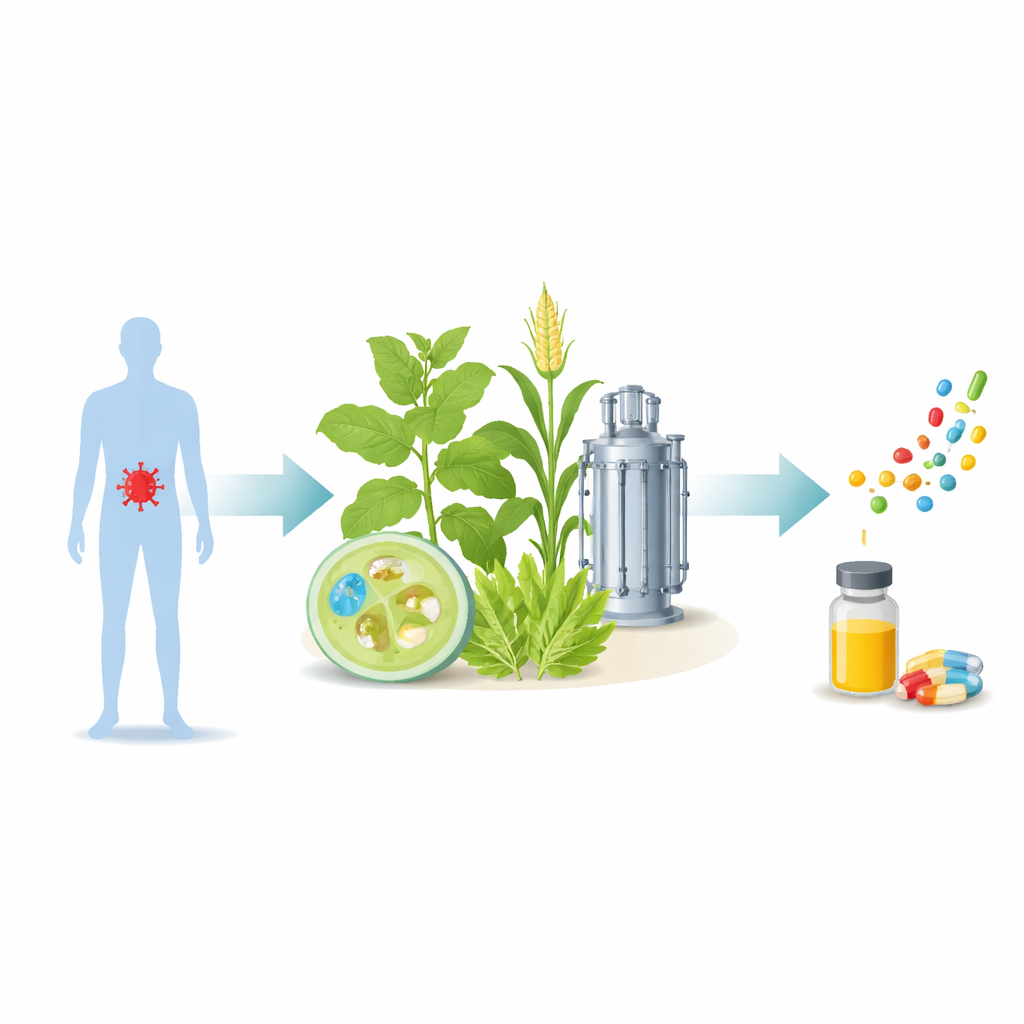
Most modern medicines, especially complex protein and peptide drugs, are made in steel tanks filled with bacteria or animal cells. This review explores a different idea: using living plants themselves as miniature factories for therapeutic peptides—short chains of amino acids that can fight infections, treat cancer, or calm an overactive immune system. The authors explain why plants could make these medicines more affordable and safer, and how scientists are learning to coax leaves, seeds, and even plant cell cultures to reliably produce potent, stable peptide drugs.
Why Plants Make Attractive Medicine Factories
Traditional production platforms such as bacteria, yeast, and mammalian cells are powerful but expensive, technically demanding, and can carry risks of contamination with human pathogens. In contrast, plants grow on sunlight, water, and simple nutrients, scale easily from greenhouses to fields, and do not harbor human or animal viruses. Over the past two decades, tobacco relatives and food crops like rice, maize, potato, and tomato have successfully produced vaccines, antibodies, hormones, and enzymes—some already tested in people or approved for use. This experience shows that plants can handle sophisticated biological products and sets the stage for expanding into peptide-based drugs, which are smaller but often trickier to make and stabilize.
Boosting How Much Peptide Plants Can Make
Getting a plant to churn out useful amounts of a therapeutic peptide requires carefully tuning every step from gene to final product. Researchers choose strong or tissue-specific genetic switches (promoters) so the peptide is made mainly in safe locations such as seeds, which naturally store large amounts of protein and keep products stable for long periods. They also use viral-inspired DNA tools that temporarily copy the therapeutic gene many times inside leaf cells, giving rapid, high peaks of production. Adjusting the genetic code to match plant preferences can further raise output, although it must be done thoughtfully so the resulting RNA still folds and functions well. Together, these strategies can transform a plant from a reluctant producer into a high-yield biofactory.
Keeping Fragile Peptides Safe Inside the Plant
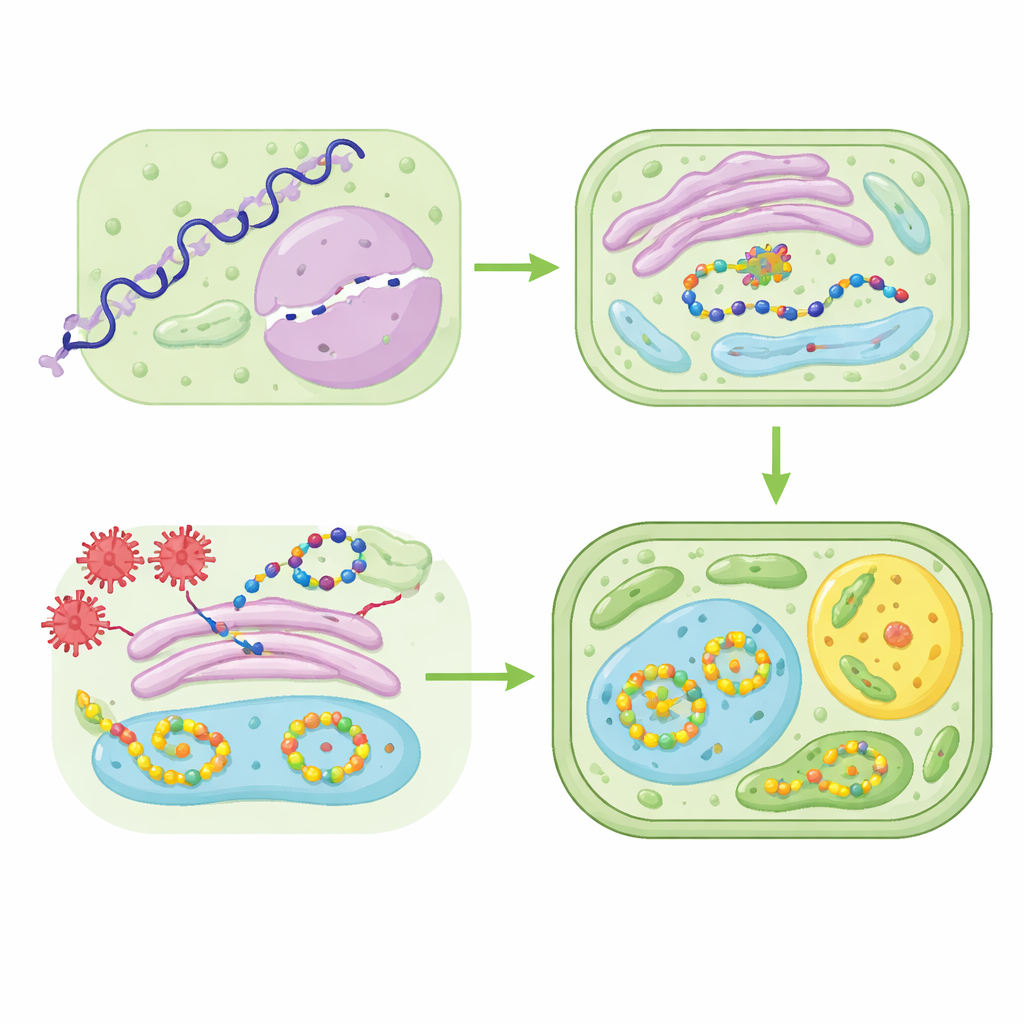
Once made, peptides must survive the plant’s own housekeeping systems, which continuously break down proteins, respond to stress, and remove damaged molecules. The review highlights several ways to protect valuable products from this internal wear and tear. One is co-producing natural protease inhibitors or selectively disabling the most troublesome plant proteases, reducing unwanted degradation. Another is directing peptides into safer cellular spaces such as the endoplasmic reticulum, vacuoles, chloroplasts, or the apoplast outside the cell membrane, where fewer destructive enzymes lurk or where needed chemical decorations are added. A particularly powerful approach is encouraging plants to form cyclic peptides—closed-loop molecules found in some wild species—that resist digestive enzymes and remain stable enough to be given by mouth.
Design Tricks to Reduce Plant Stress and Toxicity
Many therapeutic peptides are designed to punch holes in microbial membranes or interfere with signaling, which means they can also harm plant cells if produced in the wrong place or at the wrong time. To sidestep this, scientists use inducible switches that keep genes silent until an external trigger, such as a spray, turns them on after the plant has grown. They confine expression to seeds, tubers, or specific cellular compartments where peptides are less likely to damage vital tissues. Special fusion partners can temporarily mask peptide activity, help them fold correctly, form dense protein bodies for storage, and simplify purification. The authors also describe how mild heat treatments and antioxidant chemicals can calm stress responses during gene delivery, boosting transformation efficiency and transient expression.
Engineering Metabolism and Overcoming Real-World Hurdles
Beyond the peptide itself, plant metabolism must supply the right building blocks without becoming overwhelmed. Metabolic engineering allows researchers to add missing biosynthetic genes, block side reactions that create unwanted by-products, and fine-tune expression levels so plants stay healthy while still producing high-value compounds such as anticancer precursors or insect pheromones. At the same time, the field must navigate practical obstacles: keeping product quality consistent from batch to batch, aligning open-field or greenhouse production with pharmaceutical manufacturing standards, and reducing the costs of extracting and purifying drugs from complex plant tissues. Controlled plant cell cultures and hairy root systems offer one route to more standardized, GMP-compatible production pipelines.
From Experimental Plots to Everyday Therapies
The review concludes that plants are poised to play a major role in the next generation of peptide medicines but that success will depend on tailoring strategies to each individual molecule. Factors such as whether a peptide needs disulfide bonds, cyclisation, special sugar attachments, or strict protection from degradation will dictate the best choice of plant species, tissue, cellular compartment, and genetic control system. By combining advances in gene design, cell biology, metabolic engineering, and stress management, researchers aim to build robust, scalable plant-based platforms that can deliver stable, potent therapeutic peptides at lower cost and with global reach.
Citation: Thanthrige, N., Lawrence, N. & Craik, D.J. Biotechnological approaches for producing therapeutic peptides in plants. npj Sci. Plants 2, 12 (2026). https://doi.org/10.1038/s44383-026-00021-z
Keywords: plant molecular farming, therapeutic peptides, plant-made pharmaceuticals, recombinant protein production, metabolic engineering in plants