Clear Sky Science · en
The impact of stress on personality state expressions
Why stress changes who we seem to be
Most of us know that stress can leave us tired, cranky, or on edge, but this research asks a deeper question: does stress briefly change our very personality? By tracking people in the lab and in everyday life, the authors show that stressful moments are linked to reliable shifts in how open, kind, outgoing, and anxious we feel we are in that moment, suggesting that “who we are” is more flexible than fixed.
Personality as a moving target
Personality is often described in terms of broad traits like openness, conscientiousness, extraversion, agreeableness, and neuroticism. Traditionally these traits are treated as stable, but newer work views them as averages across many short-lived “states” that rise and fall with the situation. This study fits that newer view by treating stress as an inner situation, not just a feeling, and asking whether stressful moments nudge our personality states in predictable ways beyond simple good or bad mood.
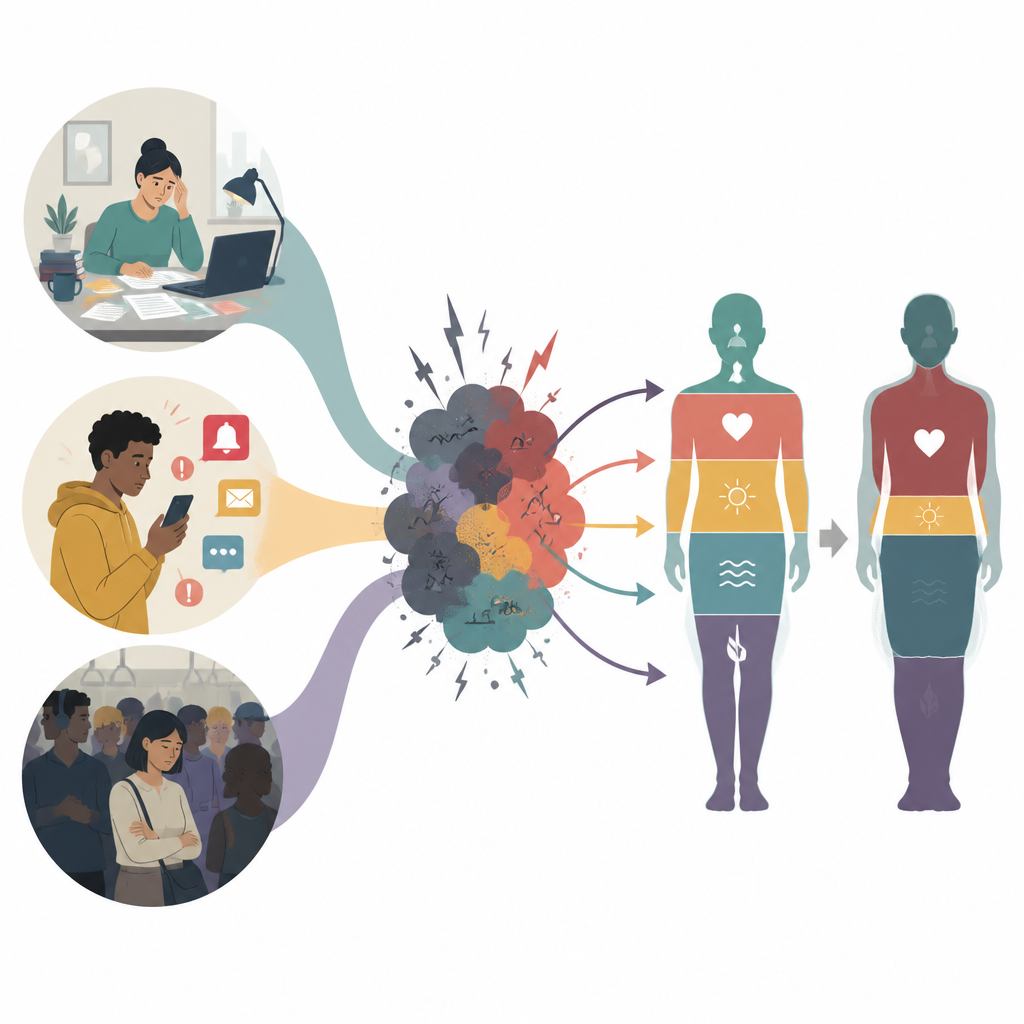
Testing stress in an online experiment
In the first study, nearly 800 adults completed an online task designed to be either stressful or relaxed. Some participants faced difficult timed questions, constant performance feedback, and a discouraging final message, while others answered easier questions without pressure. Everyone rated how imaginative, careful, energetic, generous, and tense or relaxed they felt both before and after the task. Compared with the relaxed group, stressed participants became less curious and imaginative, less diligent, less outgoing, and less generous, while also feeling more insecure and tense. These shifts stayed largely intact even after the researchers took overall mood into account, suggesting that stress itself, not just feeling bad, was driving the changes.
Following stress in daily student life
The second study moved from the lab to daily life. Over two weeks, more than 700 university students received short surveys up to four times a day on their phones. They reported how stressed they felt right then, how positive or negative their mood was, and how curious, lazy, quiet, kind, and anxious they had been in the last 15 minutes. Using statistical models that followed each person over time, the researchers found that moments of higher stress tended to go along with feeling less outgoing and less kind, and more anxious and easily upset. These links remained even when the students’ earlier ratings of themselves were taken into account, indicating that the shifts tracked changes from one moment to the next.
When stress sharpens curiosity
One surprising pattern emerged around curiosity, a key slice of openness. In the lab experiment, the stressful performance task seemed to dampen curiosity, but in everyday life, higher stress was actually tied to feeling more curious. Additional analyses suggested that this effect showed up especially when students were studying or on campus, places and activities that naturally mix pressure with mental engagement. In other words, certain stressful situations, such as preparing for exams, may push people to feel both under strain and mentally alert, highlighting how the type of stressor and setting shape personality states.
What these findings mean for everyday life
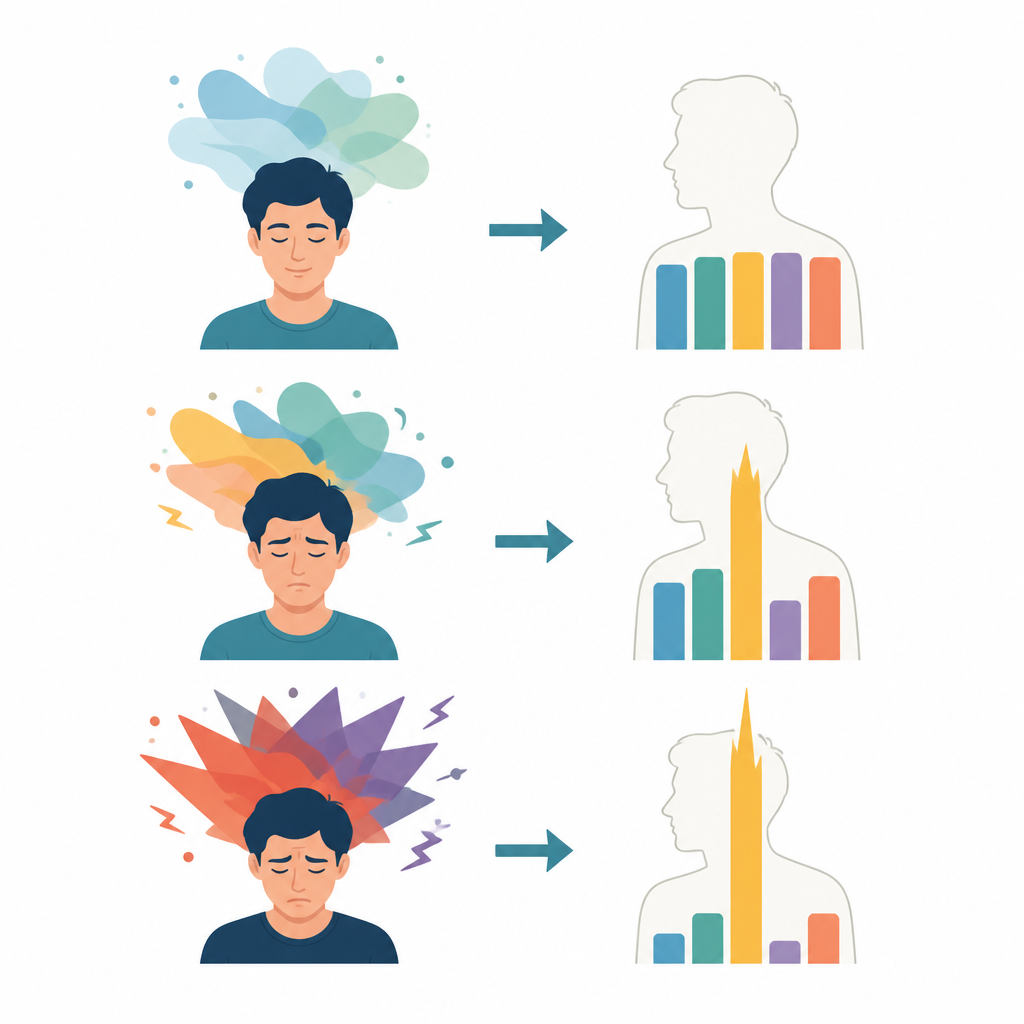
Taken together, the two studies show that stress is more than background noise: it is a common, shifting force that changes how people see and express themselves from moment to moment. Under stress, people tend to feel less sociable and warm and more anxious, and in some contexts they may also feel less or more curious. Because these patterns appear even after accounting for mood, the work suggests that stress has its own distinct influence on personality states. Rather than viewing personality as fixed, this research highlights how our everyday stress levels quietly tilt our behavior, interactions, and self-perception throughout the day.
Citation: Grayson, S.J., Harari, G.M. & Matz, S.C. The impact of stress on personality state expressions. Commun Psychol 4, 81 (2026). https://doi.org/10.1038/s44271-026-00438-3
Keywords: stress, personality states, Big Five traits, daily experience, emotion and behavior