Clear Sky Science · en
Alpha power increases spontaneously during a neurofeedback session
Why brain-training isn’t as simple as it sounds
Many apps and clinics now promise to "train your brain" using neurofeedback: you watch a moving display that supposedly reflects your brainwaves, and by adjusting your thoughts you learn to steer those waves in helpful directions. This study tested a central claim behind such promises: that people can quickly gain precise control over a key brain rhythm, called alpha, during a single neurofeedback session. The authors show that alpha activity does rise during the session—but in ways that look more like a natural drift over time than evidence of genuine mental control, raising important questions about how neurofeedback really works.
How brainwaves became a target for self-improvement
Electrical activity in the brain, recorded with EEG, naturally forms rhythmic patterns such as theta, alpha, and beta waves. Decades of research have linked these rhythms to attention, memory, and mental health, inspiring the idea that deliberately changing them might improve mood or performance. Neurofeedback tries to harness this by turning brain signals into real-time visual feedback: for example, a circle that grows when alpha power increases. People are told to find mental strategies that make the circle larger, under the assumption that they will learn to voluntarily adjust their brain activity. Yet neurofeedback sessions also introduce many other influences—motivation, expectations, fatigue, and simple repetition—that can change brain signals even when the feedback is unrelated to the person’s own brain.
A three-way test of real versus fake feedback
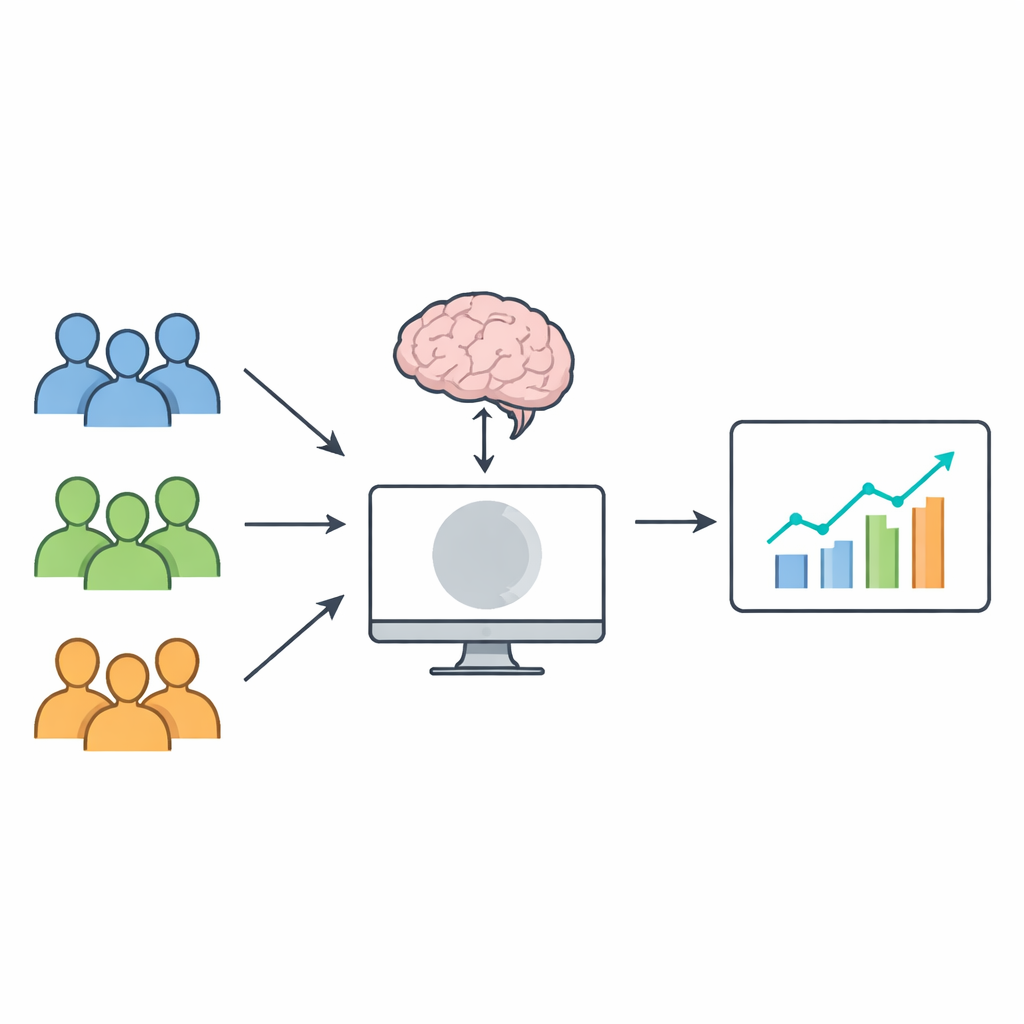
To separate true brain control from these non-specific influences, the researchers ran a preregistered, double-blind experiment with three groups of young adults. One group received genuine neurofeedback: the size of the on-screen circle reflected their own alpha power recorded from a parietal electrode. A second group saw a circle driven by someone else’s pre-recorded alpha activity, although they believed it was their own. A third, “passive” group from an earlier study simply watched the same kind of circle without any instruction to change it. All groups completed three training blocks in which the circle was updated at different speeds, followed by a transfer block where the circle stayed fixed while participants in the active groups tried to apply their learned strategies without feedback.
Alpha rises on its own—no matter what people do
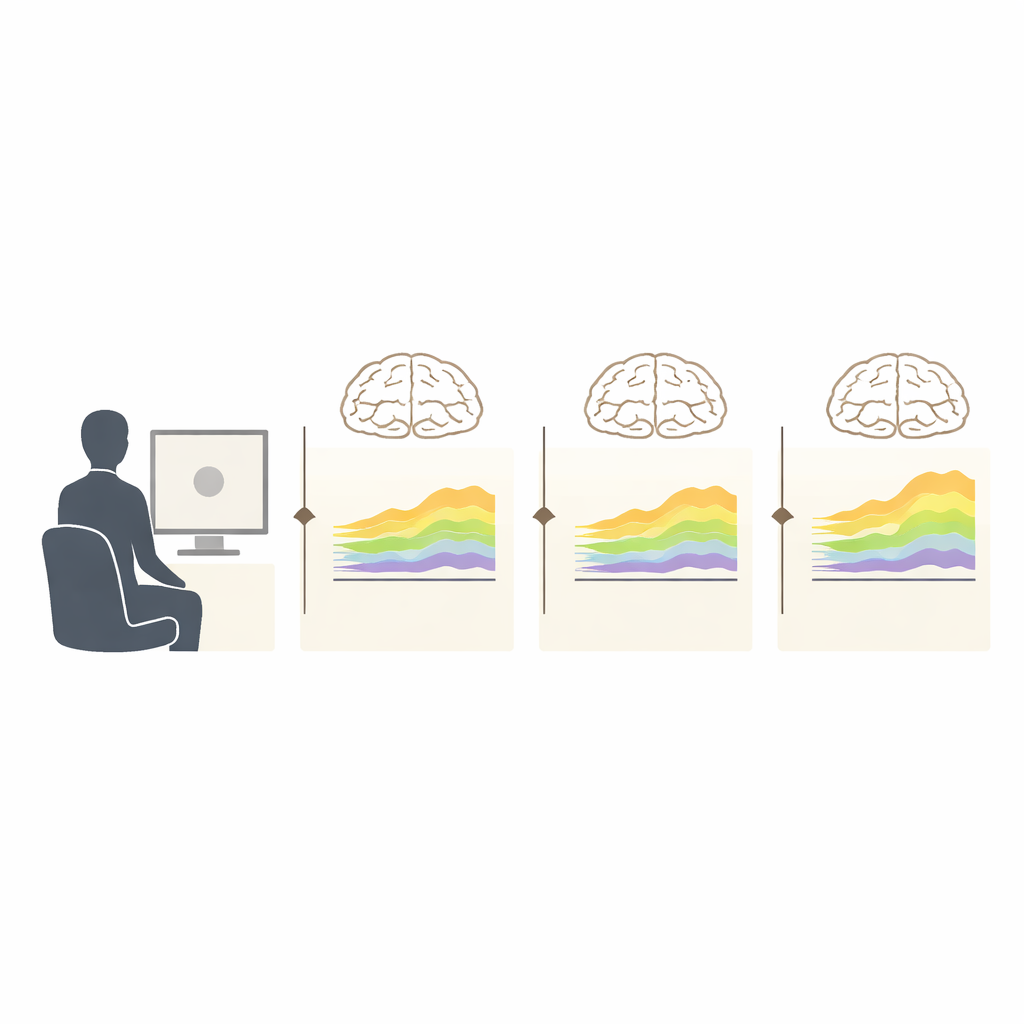
Across the session, alpha power steadily increased for all groups, whether they received genuine feedback, sham feedback, or just passively watched the display. Sophisticated Bayesian statistical models showed extremely strong evidence that alpha grew with trial repetition, but equally strong evidence that this growth did not depend on whether the feedback was real or fake, or whether people were even trying to control it. The rate at which the feedback display was updated (slow, medium, or fast) also made no detectable difference. During the transfer block, when no feedback was shown, alpha continued to climb in all groups, again without any advantage for those who had trained with genuine feedback. Subjective reports suggested that participants in the genuine and sham conditions felt similar levels of control and were similarly unsure about whether the feedback was random.
Not just one rhythm: broader brain activity drifts upward
If neurofeedback were precisely shaping alpha alone, changes might be confined to that band. Instead, the study found that other brain rhythms—such as slower theta waves and the sensorimotor rhythm—also tended to increase over time, while beta activity remained more stable. These broadband shifts appeared regardless of feedback type or task instructions, echoing earlier work showing that simply spending time on a visual task can gradually boost certain EEG rhythms. The pattern suggests that general factors like fatigue, mind wandering, or adaptation to the task environment may quietly nudge multiple frequency bands upward during an hour-long session.
What this means for brain-training promises
To a lay reader, the core message is that the brain’s alpha waves naturally drift upward during repeated trials, even when people receive fake feedback or no instructions to control them. In this study, providing true real-time feedback about alpha did not produce stronger or more specific changes than sham or passive conditions. That does not mean neurofeedback can never work, especially in longer or differently designed programs, but it does challenge the assumption that any observed rise in alpha during a single session proves successful self-regulation. The findings call for more rigorous control groups and careful interpretation before concluding that neurofeedback hardware and software are truly giving users reliable, voluntary control over their brain rhythms.
Citation: Maaz, J., Waroquier, L., Dia, A. et al. Alpha power increases spontaneously during a neurofeedback session. Commun Psychol 4, 75 (2026). https://doi.org/10.1038/s44271-026-00431-w
Keywords: EEG neurofeedback, alpha brainwaves, placebo effects, brain training, cognitive fatigue