Clear Sky Science · en
Decarbonization pathways for Canada’s federated energy system using a subnational integrated assessment model
A Country at a Climate Crossroads
Canada is one of the world’s major energy producers and also a nation that has promised to bring its greenhouse gas emissions down to “net zero” by 2050. This article explores whether that promise can realistically be kept, and if so, what it will mean for everyday energy use, jobs, and investments in different parts of the country. Using a new open, publicly available computer model, the authors show that a cleaner energy future is technically possible and does not have to cost more overall than staying on today’s path—but it will look very different from province to province.
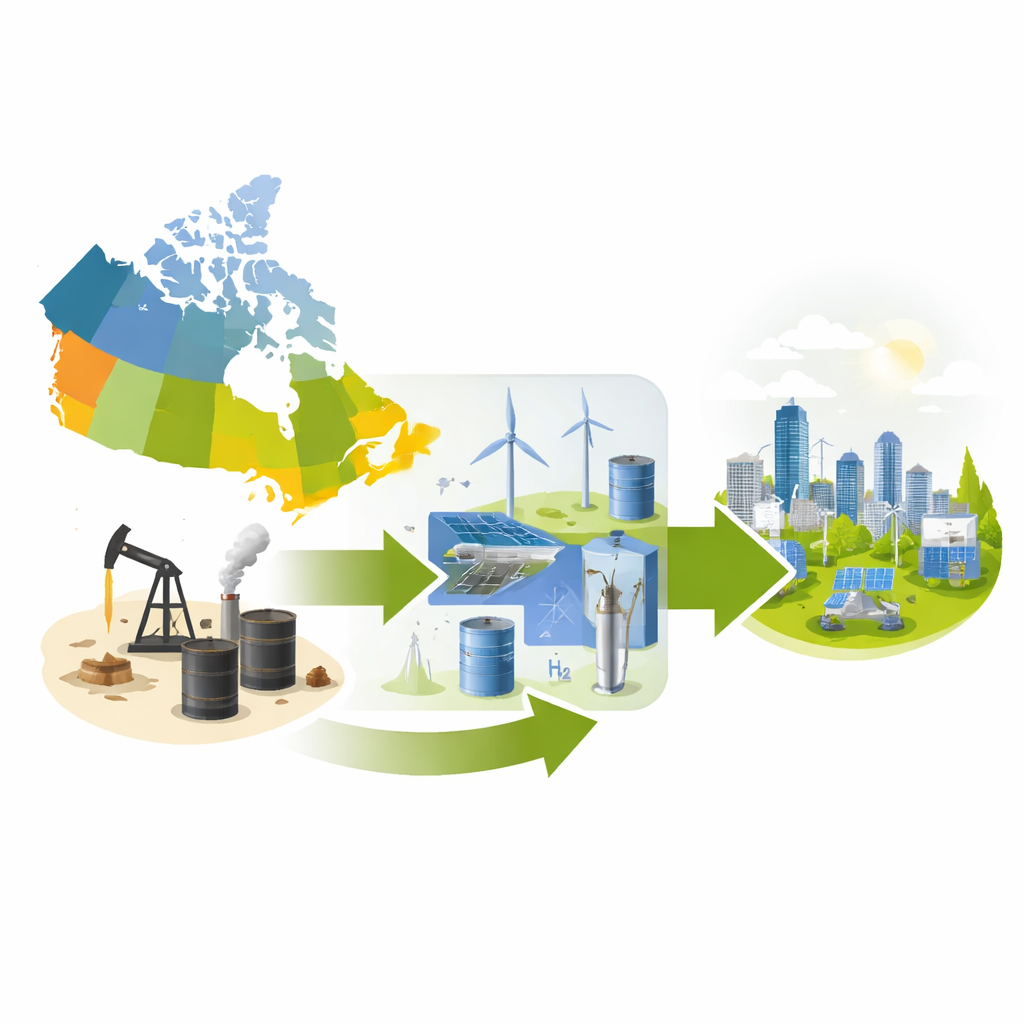
Why One National Goal Needs Many Local Paths
Canada’s energy system is a patchwork. Some provinces, like Quebec, British Columbia, and Manitoba, already rely heavily on hydropower and have relatively low‑carbon electricity. Others, such as Alberta and Saskatchewan, depend much more on coal, oil, and natural gas, both for power and for industry. The authors argue that this diversity makes it impossible to design climate policy with a one‑size‑fits‑all mindset. Instead, the country needs a clear view of how each province and territory can cut emissions while preserving energy security and economic stability. Until now, many of the tools used to explore such futures were proprietary or too coarse, making it hard for outsiders to test assumptions or compare regional options.
A New Open Window into Canada’s Energy Future
To address this gap, the researchers created MESSAGEix‑Canada, the first open‑source model that simulates Canada’s energy system province by province out to 2050. The model links resources like oil, gas, wind, and water to power plants, fuel production, buildings, factories, and vehicles, and then searches for the least‑cost way to meet energy needs under different policy rules. It follows international “FAIR” principles, meaning that data, code, and assumptions are all publicly documented and reusable. This allows policymakers, researchers, and the public to see how results change when they adjust key inputs such as technology costs, climate targets, or local policies.
Two Possible Futures: Business as Usual vs. Net Zero
The study compares two main scenarios. In the “Legislated” case, only policies that are already on the books—such as carbon pricing for big industrial emitters, coal power phase‑outs, and certain clean‑energy incentives—are included. In the “Net Zero” case, the country as a whole must reach net‑zero emissions by 2050, and the model finds the cheapest combination of changes to get there. The results show that emissions can fall from about 500 million tonnes of carbon dioxide in 2025 to under 60 million tonnes in 2050. Cuts happen in every region and sector, especially in transport and industry. Alberta, currently the largest emitter, sees the biggest drop, helped by a shift away from fossil‑based electricity and the use of carbon capture on some remaining facilities.
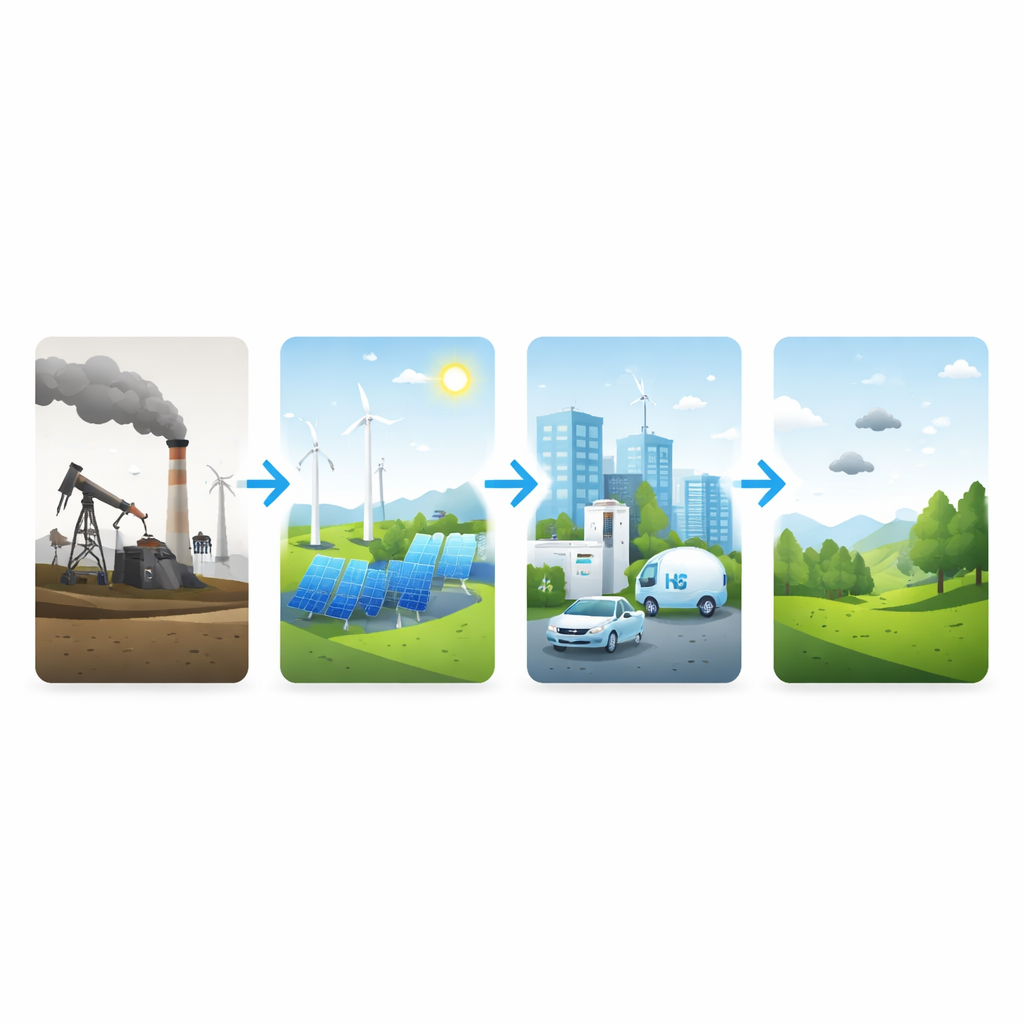
How Energy Use and Investments Shift
Under the Net Zero scenario, final energy use across Canada actually declines by roughly one quarter by 2050, even though the volume of useful energy services—heated homes, freight transport, industrial production—remains. This reduction comes from using energy more efficiently and switching to technologies that waste less, such as electric vehicles and heat pumps. Electricity and low‑carbon hydrogen take on much larger roles, especially in transport and buildings, while direct use of oil and gas shrinks. Importantly, the total amount of money invested in the energy system through 2050 is slightly lower than in the Legislated case. The difference lies in where the money goes: away from new oil and gas extraction and toward wind and solar farms, stronger grids, storage, and hydrogen production. Provinces rich in fossil fuels face steep declines in extraction, while those with abundant water and wind become hubs for clean power and hydrogen.
What This Means for Policy and People
The authors conclude that reaching net zero in Canada is technically feasible and economically manageable, but only if policies are coordinated across levels of government and tuned to local realities. Fossil‑fuel‑dependent regions will need support to diversify their economies and help workers transition into new roles, while hydro‑ and wind‑rich provinces can anchor clean electricity and hydrogen supply. Because the model is open and modular, it can be updated as technology, policy, and markets evolve, serving as a shared reference point for debate. For a lay reader, the main takeaway is that Canada can, in principle, hit its climate goals without spending more overall on energy or sacrificing comfort—but doing so will require smart planning, early investment in clean options, and careful attention to how the transition plays out in each province and territory.
Citation: Awais, M., Azevedo, D. & McPherson, M. Decarbonization pathways for Canada’s federated energy system using a subnational integrated assessment model. npj Clim. Action 5, 42 (2026). https://doi.org/10.1038/s44168-026-00355-5
Keywords: net zero, energy transition, Canada climate policy, electrification, hydrogen