Clear Sky Science · en
Gestational weight gain and adverse perinatal outcomes among individuals with gestational diabetes
Why pregnancy weight gain matters
Pregnancy often comes with extra pounds, but for women who develop high blood sugar during pregnancy, called gestational diabetes, how much weight they gain can strongly influence health for both mother and baby. This study used information from more than 1.6 million births in the United States to ask a simple question with big consequences: what range of weight gain is linked to the fewest problems when gestational diabetes is present?
Looking at real births across the country
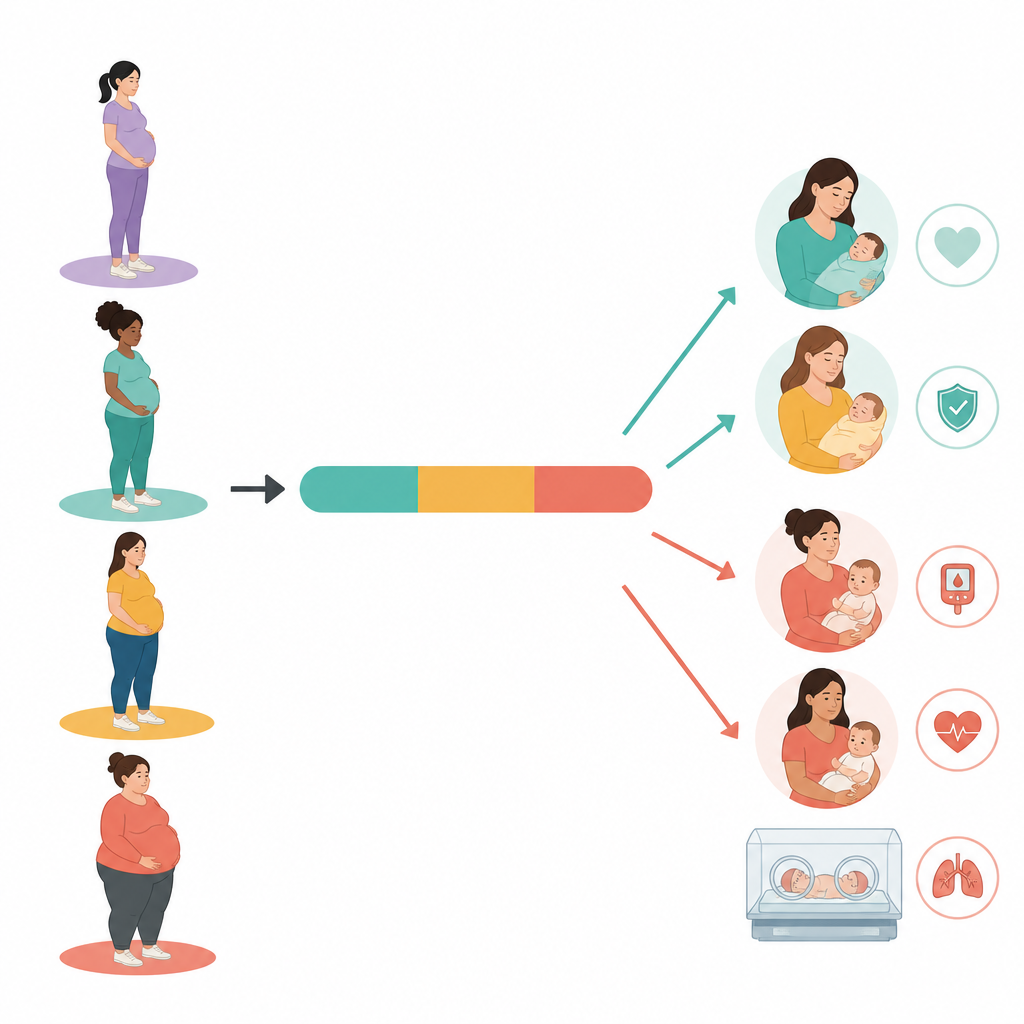
The researchers examined national birth certificate data from 2015 to 2021, focusing on singleton pregnancies complicated by gestational diabetes. After removing records with missing or uncertain information, they analyzed about 1.37 million pregnancies as a main group and another 280,000 as a check to confirm the findings. For each woman, they calculated body mass index before pregnancy and total weight gained by delivery, then grouped women as underweight, normal weight, overweight, or different classes of obesity.
What counts as a problem for mother and baby
To capture the overall safety of pregnancy, the team combined several serious outcomes into one “any adverse outcome” measure. This included pregnancy-related high blood pressure, preeclampsia, first-time cesarean birth, need for blood transfusion or intensive care, birth before 37 weeks, and babies who were unusually small or large for their gestational age or needed intensive care soon after birth. More than half of all women with gestational diabetes experienced at least one of these problems, and the risk climbed steadily as pre-pregnancy body size increased.
Finding safer weight gain ranges
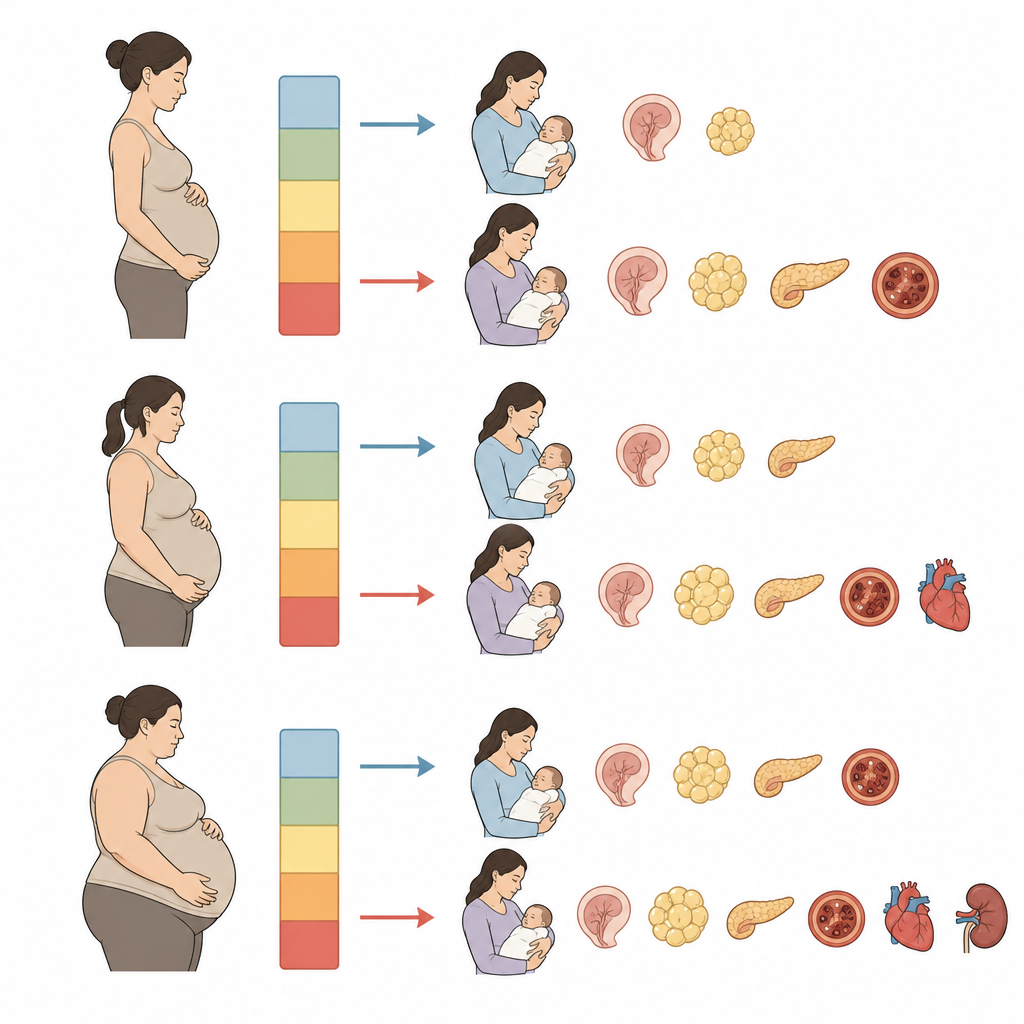
Next, the scientists tested how different amounts of weight gain were linked to these complications within each body size group. For underweight and normal weight women, moderate weight gain during pregnancy seemed safest, roughly 12 to less than 20 kilograms for underweight and 8 to less than 16 kilograms for normal weight. Gaining much less raised the chance of having a small baby, while gaining much more raised the chance of a very large baby and other issues. In contrast, women who started pregnancy overweight or with obesity had fewer complications when they gained very little weight or even lost some weight overall.
When less weight gain is actually better
Among women with overweight, the lowest risk was seen when total gain stayed between no gain and about 14 kilograms. For those with class 1 obesity, staying between no gain and 10 kilograms was linked to fewer problems, and for class 2 or 3 obesity, the safest range was no gain up to about 8 kilograms. Across all obesity groups, more weight gain nearly always meant higher risk. Importantly, starting pregnancy at a higher body mass index predicted complications more strongly than how much weight was gained during pregnancy itself, underlining the value of entering pregnancy at a healthier weight when possible.
What this means for families and clinicians
For women with gestational diabetes, current general pregnancy weight gain guidelines may be too generous, especially for those who begin pregnancy with overweight or obesity. This large national study suggests that tighter limits on weight gain, and in some cases even slight weight loss under medical supervision, are linked to fewer complications without a clear rise in very small babies. While individual care must always be personalized, these findings support more specific, body size based advice on weight management before and during pregnancy to improve outcomes for both mothers and their newborns.
Citation: Zhao, X.B., Su, X.J., Qi, X. et al. Gestational weight gain and adverse perinatal outcomes among individuals with gestational diabetes. Commun Med 6, 292 (2026). https://doi.org/10.1038/s43856-026-01544-3
Keywords: gestational diabetes, pregnancy weight gain, maternal obesity, perinatal outcomes, birth complications