Clear Sky Science · en
Extreme droughts shrink suitable habitats and reduce fitness for large mammals in the American West
Why dry years matter for big animals
Across the American West, long, dry spells are becoming more common, but their impact is not just brown lawns and empty reservoirs. This study asks what extreme drought means for some of the region’s most familiar large animals—mule deer, black bears, and cougars—and shows how shrinking green places on the map translate into fewer safe, food‑rich areas and, for deer at least, fewer fawns born and surviving.
Following animals across a drying landscape
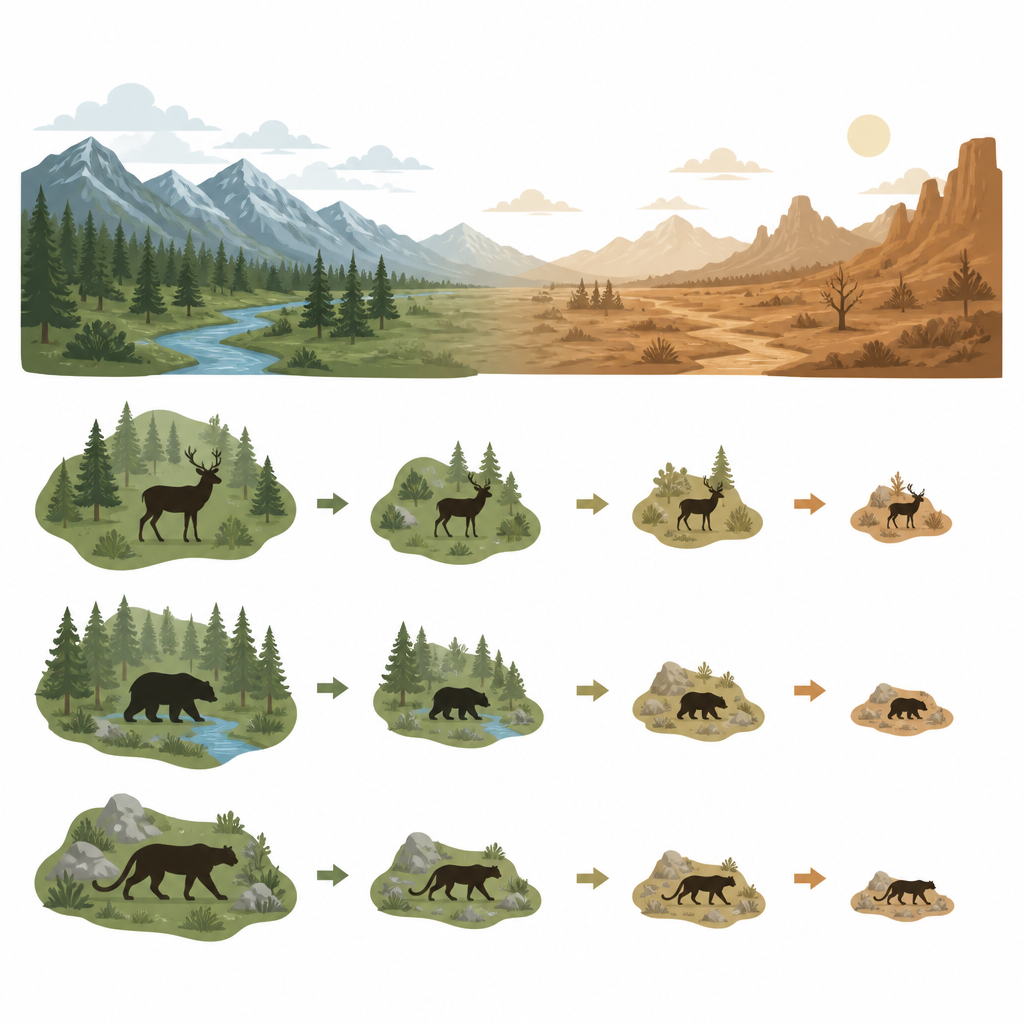
The researchers pulled together 12 years of GPS collar data from nearly 3,000 mule deer, just over 100 black bears, and about the same number of cougars living across Utah and Nevada. These animals roam an enormous area that stretches from high mountains to hot deserts, and over that same period the region swung between relatively wet seasons and harsh droughts. By pairing each animal’s movements with satellite images of vegetation, terrain, and drought intensity, the team built detailed maps showing which kinds of places each species preferred at the height of summer, when water is scarce and plants are under stress.
Mapping where animals most want to be
From these data, the scientists identified “highly selected” habitat—the top 10 percent of locations that animals chose most strongly relative to what was available. For all three species, the total area of this most valued habitat shrank as drought worsened. Comparing the wettest and driest years, mule deer lost about 10 percent of their top‑tier habitat, black bears lost 14 percent, and cougars lost more than 18 percent. In other words, the higher an animal sits in the food chain, the more its best options tightened during extreme dry years. The maps also showed that bears and cougars tended to favor places with more plant biomass, while mule deer often avoided the densest vegetation unless it came in the form of productive shrublands.
Why shrubs help deer but not enough
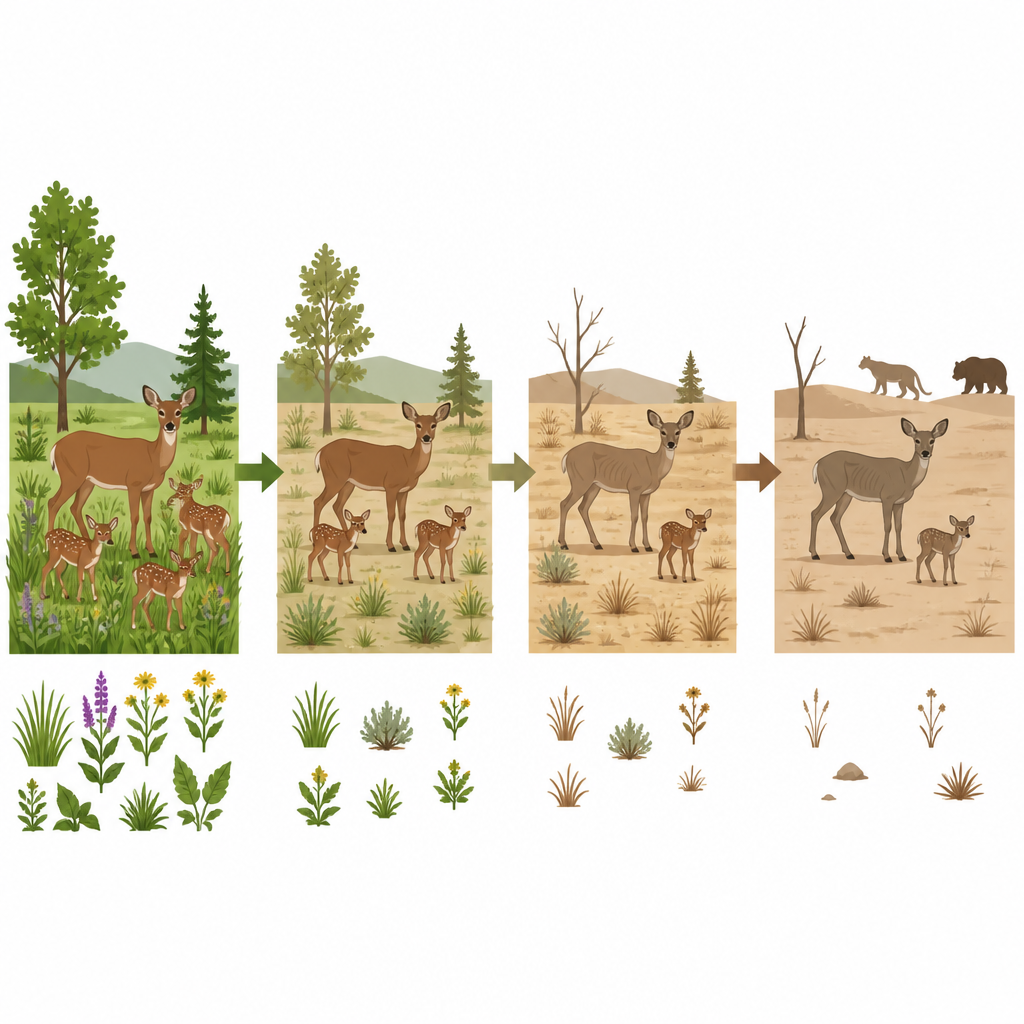
Mule deer proved somewhat flexible in the face of drought. Unlike bears and cougars, which generally steered clear of shrublands, deer increasingly used shrub‑dominated areas as conditions dried. Shrub communities, although far from immune to drought, can be more resilient than grassy areas and may hold onto food and cover longer into a dry spell. This shift suggests that deer can partly buffer themselves by seeking out these tougher plants and the edges between different habitat types. Still, the total amount of high‑quality habitat for deer declined in bad years, and the benefits of shrub use did not fully offset the broader loss of lush summer forage.
Fewer fawns in the driest years
To see how these habitat changes play out in animal success, the team focused on mule deer fawn recruitment, measured as the number of fawns per 100 adult females. They found that fawn numbers dropped sharply once drought intensity crossed from moderate into more severe categories. Across the full range from no drought to extreme drought, recruitment fell by more than a third. While the amount of highly selected habitat in an area was linked to higher fawn recruitment, drought intensity itself was the strongest predictor. This likely reflects the many ways dry summers can weaken mothers and young—by reducing not just the quantity but also the quality of food, thinning cover that hides fawns from predators, and pushing animals to crowd around the last remaining water sources.
What this means for wildlife and people
The study shows in clear terms that intensifying drought in the American West is squeezing the best habitats for large mammals and quickly eroding mule deer reproductive success. Because deer fawns are a key food source for both cougars and bears, these changes are likely to ripple upward, though with time delays. As natural habitats lose productivity, animals may increasingly seek refuge in agricultural fields and towns, raising the chances of conflict with people. By tying animal movement maps directly to a simple measure of fitness—how many fawns make it into the population—this work highlights the value of using habitat selection models to identify future refuges and prioritize conservation in a warming, drying world.
Citation: Leclerc, M., Mills, K.L., Ditmer, M.A. et al. Extreme droughts shrink suitable habitats and reduce fitness for large mammals in the American West. Commun Earth Environ 7, 450 (2026). https://doi.org/10.1038/s43247-026-03530-y
Keywords: drought, mule deer, habitat loss, large mammals, American West