Clear Sky Science · en
Reclaiming abandoned croplands to adapt wheat production to a warmer world
Why old farm fields matter for your future bread
Wheat provides about one fifth of the calories people eat worldwide, making it a quiet backbone of global food security. As the planet warms, heat and shifting rainfall threaten wheat harvests, raising questions about how to keep bread, pasta, and noodles affordable and available. This study asks a simple but powerful question: instead of pushing farming into new wild areas, could we bring back into use the vast stretches of cropland that have been abandoned over the past few decades, and in doing so help winter wheat adapt to a hotter world?
Hidden potential in forgotten fields
Across North America, Europe, and Asia, millions of hectares of former farmland have been left idle because of economic shifts, changing policies, and rural depopulation. At the same time, demand for wheat is expected to rise sharply as the global population approaches 9 billion. The authors focus on winter wheat, the type sown in autumn and harvested the following summer, which already accounts for more than three quarters of global wheat output. Climate projections suggest that warming will hurt wheat yields in many low- to mid-latitude regions, but could actually improve conditions in cooler northern areas—precisely where much abandonment has occurred.
Using data and machines to see tomorrow’s harvests
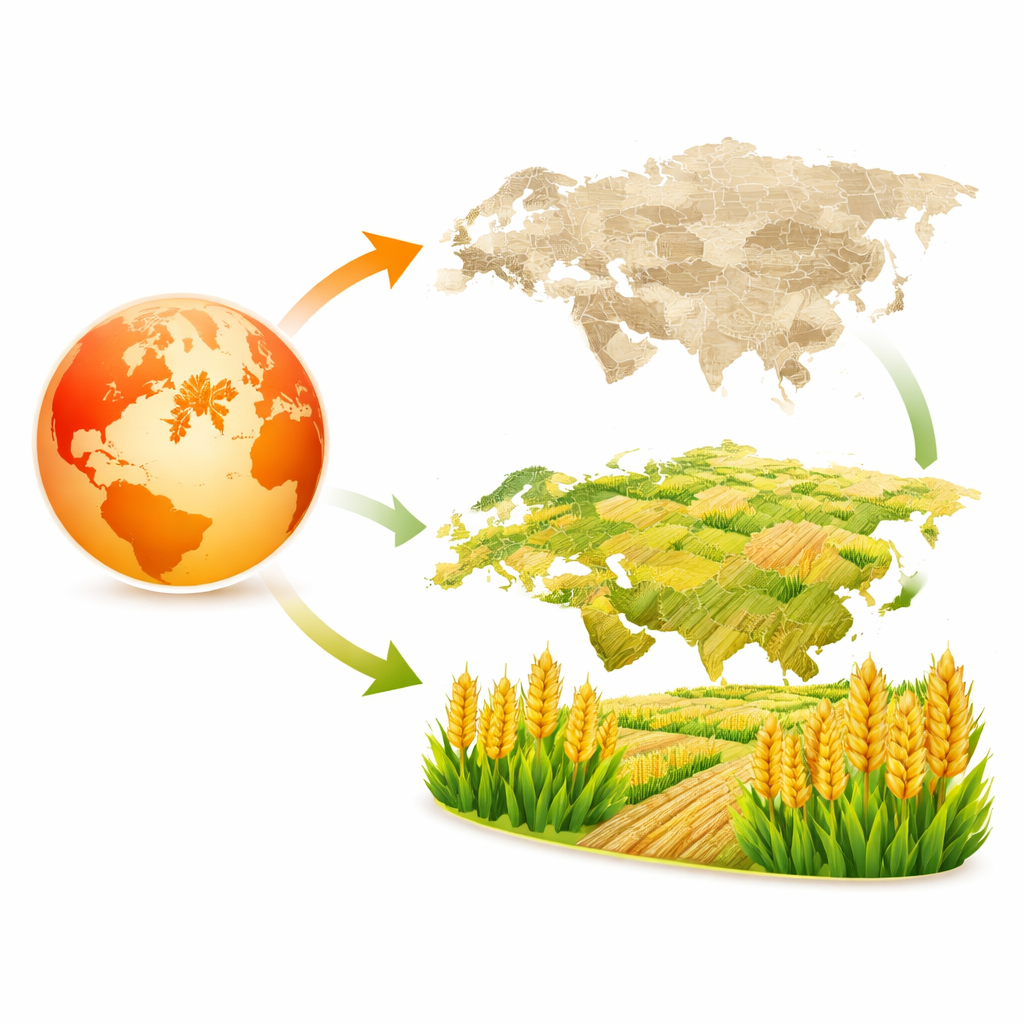
To explore these possibilities, the researchers trained machine learning models on more than three decades of data linking past winter wheat yields to weather, soils, terrain, irrigation, and fertilizer use. They then combined these models with future climate simulations representing a world that is 3 degrees Celsius warmer than in pre-industrial times. This allowed them to estimate how yields would change not only in today’s wheat fields, but also on land that used to be cropped and is still biophysically suitable for winter wheat, while holding farming practices constant at recent levels. By comparing many climate models and algorithms, they also captured a range of uncertainty around their projections.
Gains and losses in a warmer climate
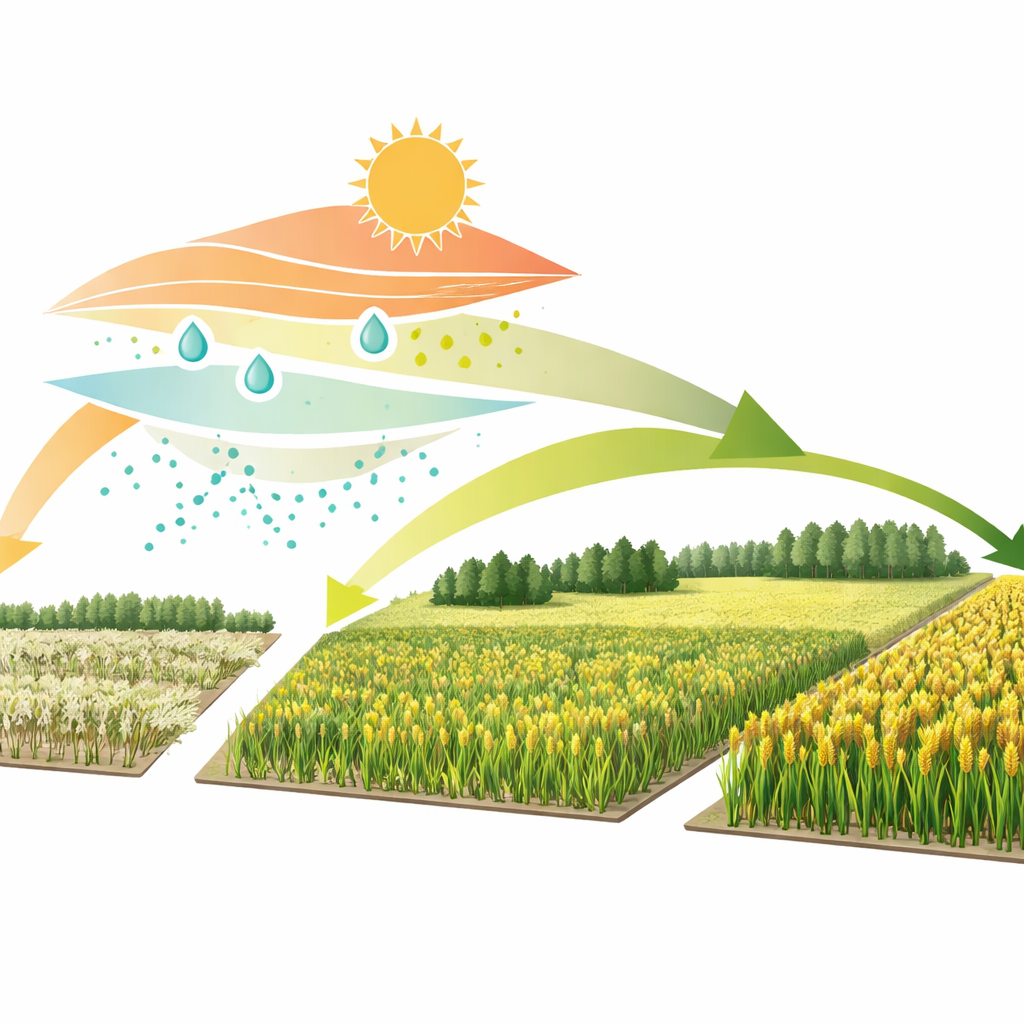
The results show an uneven future. Even without changing where wheat is planted, total winter wheat production across Eurasia and North America falls slightly—about 2%—under 3 degrees of warming. Highly productive regions in countries such as India, Germany, France, and Pakistan tend to lose yield as heat and water stress increase, while parts of northern China, Russia, and Poland see gains. Overall, the share of land with very high yields shrinks, and marginal lands expand, signaling a shift from fewer top-performing areas to more middling ones. This pattern underscores how climate change can erode the most productive breadbaskets even as it opens new opportunities elsewhere.
Bringing abandoned land back into the wheat belt
Turning to abandoned croplands, the study identifies about 30.8 million hectares—an area roughly the size of Italy and the United Kingdom combined—that are suitable for winter wheat and not currently forest, protected, urban, or too steep. If all of this land were recultivated under future climate conditions, it could produce an additional 110 million tonnes of winter wheat each year, about one fifth of current output in the studied regions. The potential is not evenly spread: Russia, China, and the United States hold the largest areas, but the most productive abandoned fields cluster in northern China and parts of western and central Europe. By focusing first on the highest-yield patches, the world could obtain roughly 70% of this extra production by using only half of the land.
Balancing food security, nature, and practicality
Reclaiming abandoned cropland is not as simple as planting seeds. Some fields have degraded soils, poor access to water, or have naturally regrown with shrubs and trees, making them costly to bring back into production. Social and economic barriers—including labor shortages, shifting markets, and land tenure issues—will decide where recultivation is realistic. There are also trade-offs with climate and biodiversity if regrown forests are cleared. Yet in many places, careful management, better irrigation, and targeted incentives could make recultivation attractive, easing pressure to convert untouched ecosystems and supporting rural economies.
What this means for your daily bread
The study concludes that, in a warmer world, reclaiming suitable abandoned croplands could substantially boost winter wheat harvests and help offset climate-related losses in today’s key growing regions. By strategically focusing on the most productive idle fields in countries such as China, Germany, France, the United Kingdom, Russia, and the United States, policymakers could produce more grain with less land, while leaving more natural landscapes intact. For consumers, this approach offers one pathway to keeping global wheat supplies resilient—helping ensure that staple foods remain on tables worldwide despite the mounting challenges of climate change.
Citation: He, L., Ren, C. & Rosa, L. Reclaiming abandoned croplands to adapt wheat production to a warmer world. Commun Earth Environ 7, 392 (2026). https://doi.org/10.1038/s43247-026-03386-2
Keywords: wheat production, climate change adaptation, abandoned cropland, food security, land use planning