Clear Sky Science · en
Dynamic deepwater invertebrate populations challenge the concept of oxygen-rich reference conditions for European lakes
Why the Deep Parts of Lakes Matter
When we stand on a lakeshore, the water can look calm and unchanging. Yet far below the surface, the amount of oxygen in deep water can make the difference between a thriving hidden world and a near-dead zone. This study of Bichelsee, a small lake in Switzerland, shows that deepwater life and oxygen levels have shifted dramatically over the last 13,500 years—and that these changes do not follow a simple story of “natural purity” spoiled only by modern pollution. Instead, the research reveals several different natural states and a long, shifting history of human influence that challenges how we define a “pristine” lake.
A Long Memory Written in Mud
The scientists drilled a nearly 11‑meter‑long core of mud from the deepest part of Bichelsee. Layer upon layer of sediment has built up there since the end of the last Ice Age, quietly recording what lived in the lake and what was happening around it. Using dozens of radiocarbon dates and other isotopes, the team created a precise timeline covering 13,500 years. In each slice of this core they counted tiny, well‑preserved remains of aquatic invertebrates—especially the head capsules of non‑biting midges (chironomids) and other small animals. Different species of these bottom‑dwelling larvae thrive under different oxygen conditions, so shifts in their remains allow the researchers to reconstruct how much oxygen was available in deep water through time.
From Clear, Cool Depths to Stagnant Bottom Waters
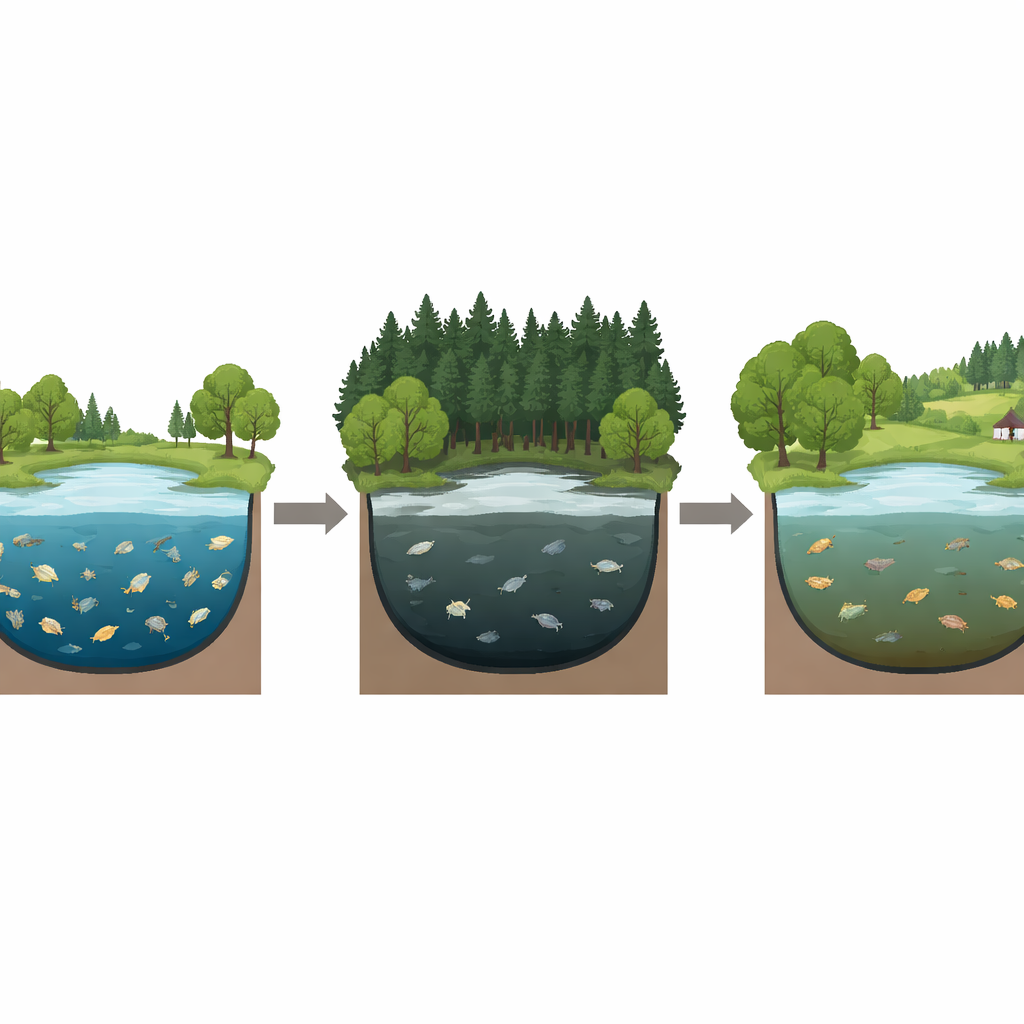
For thousands of years after the last Ice Age, Bichelsee’s deep waters appear to have been consistently rich in oxygen. The sediments from this early and middle Holocene period are packed with remains of deepwater midge species known to favor cool, well‑oxygenated depths. Then, around 7,100 years ago, the lake shifted sharply. The number of deepwater midges collapsed, while species that tolerate or even benefit from oxygen‑poor conditions became more common. This transition coincides with a major change in the surrounding forest: shade‑tolerant beech and alder trees expanded, forming dense woods—especially along the shore. These close, tall forests likely sheltered the lake from wind, reducing mixing, while their falling leaves and other organic debris increased oxygen demand at the bottom, driving the deepwater toward long‑lasting hypoxia, or low‑oxygen conditions.
Early Farmers as Unexpected Helpers
After this shift, Bichelsee spent millennia in a broadly hypoxic state, but deepwater oxygen did not remain constant. From about 4,800 years ago, the researchers detected repeated bursts in the abundance of deepwater midges that lined up with pollen evidence for early farming and forest clearings during the Neolithic and Bronze Age. Opening the forest canopy around the lake seems to have allowed more wind to mix the water and slightly reduced the input of leaf litter, improving conditions for deepwater animals for decades to centuries at a time. In other words, moderate early land use sometimes made the deep parts of the lake more, not less, oxygenated—an outcome that runs counter to the modern image of human disturbance always degrading lake health.
When Human Pressure Turns the Tide
From the Iron Age and Roman times onward, the picture changed. The surrounding landscape became more intensively farmed, with wider clearings, cultivated fields, and the use of the lakeshore for activities such as hemp retting. Pollen data show more crop plants and aquatic vegetation, while the sediments record rising organic matter and signs of nutrient enrichment. During these periods of strong land use, deepwater midge populations dropped and oxygen conditions worsened, likely because more nutrients and organic material washed into the lake. Strikingly, the core also shows partial recoveries in deepwater oxygen and invertebrate populations during times of social and economic crisis, such as after the fall of the Western Roman Empire and during the Medieval plague years, when agriculture retreated. In the 20th century, nutrient pollution from modern eutrophication again pushed the lake into severely low‑oxygen conditions.
Rethinking What “Natural” Really Means
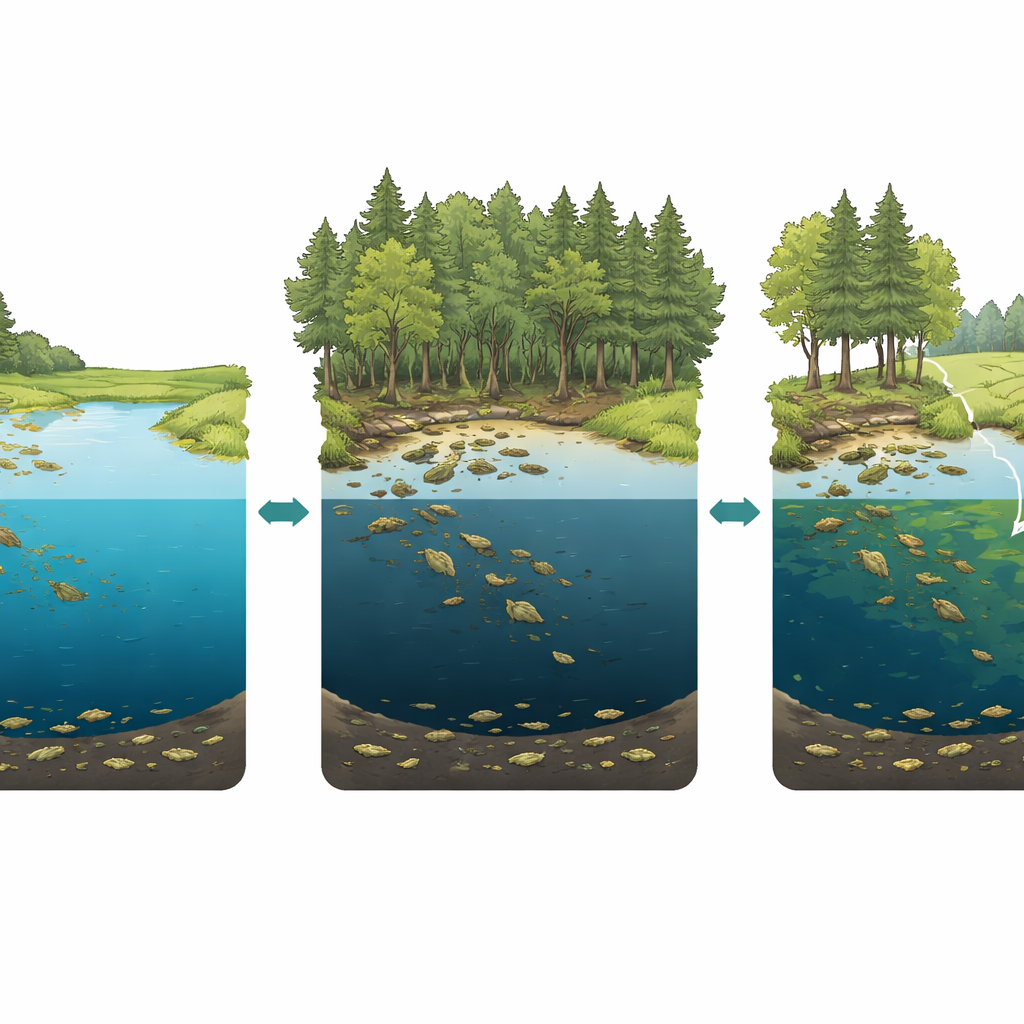
Overall, the study shows that Bichelsee has not had a single, simple “natural” state. Long before heavy industry, the lake alternated between oxygen‑rich and oxygen‑poor deep waters under different forest arrangements and degrees of human activity. Modest early farming could temporarily improve deepwater oxygen, while later, more intensive land use drove the system toward stronger hypoxia. These findings suggest that many small European lakes may have experienced multiple, contrasting baseline conditions over millennia, shaped by vegetation, climate and people. As a result, choosing one past moment—such as the decades before 1850—as a universal reference for restoration may be arbitrary. Instead, protecting and managing lakes will require acknowledging their complex histories and the many ways human societies have already shaped these hidden underwater worlds.
Citation: Lapellegerie, P., Breu, S., Wick, L. et al. Dynamic deepwater invertebrate populations challenge the concept of oxygen-rich reference conditions for European lakes. Commun Earth Environ 7, 301 (2026). https://doi.org/10.1038/s43247-026-03284-7
Keywords: lake oxygen, palaeolimnology, Holocene lakes, human land use, aquatic invertebrates