Clear Sky Science · en
Robot-assisted lumbar facet joint infiltration improves accuracy and reduces radiation exposure compared to the manual technique in a comparative phantom study
Why back pain injections are getting a robotic helper
Many people with chronic low back pain receive tiny injections near the spine to diagnose and relieve their symptoms. Placing the needles for these injections is delicate work that usually relies on X ray guidance and the steady hand of a specialist. This study explores whether a compact bedside robot can guide those needles more precisely while exposing both patients and doctors to less radiation.
A small robot built for tight clinical spaces
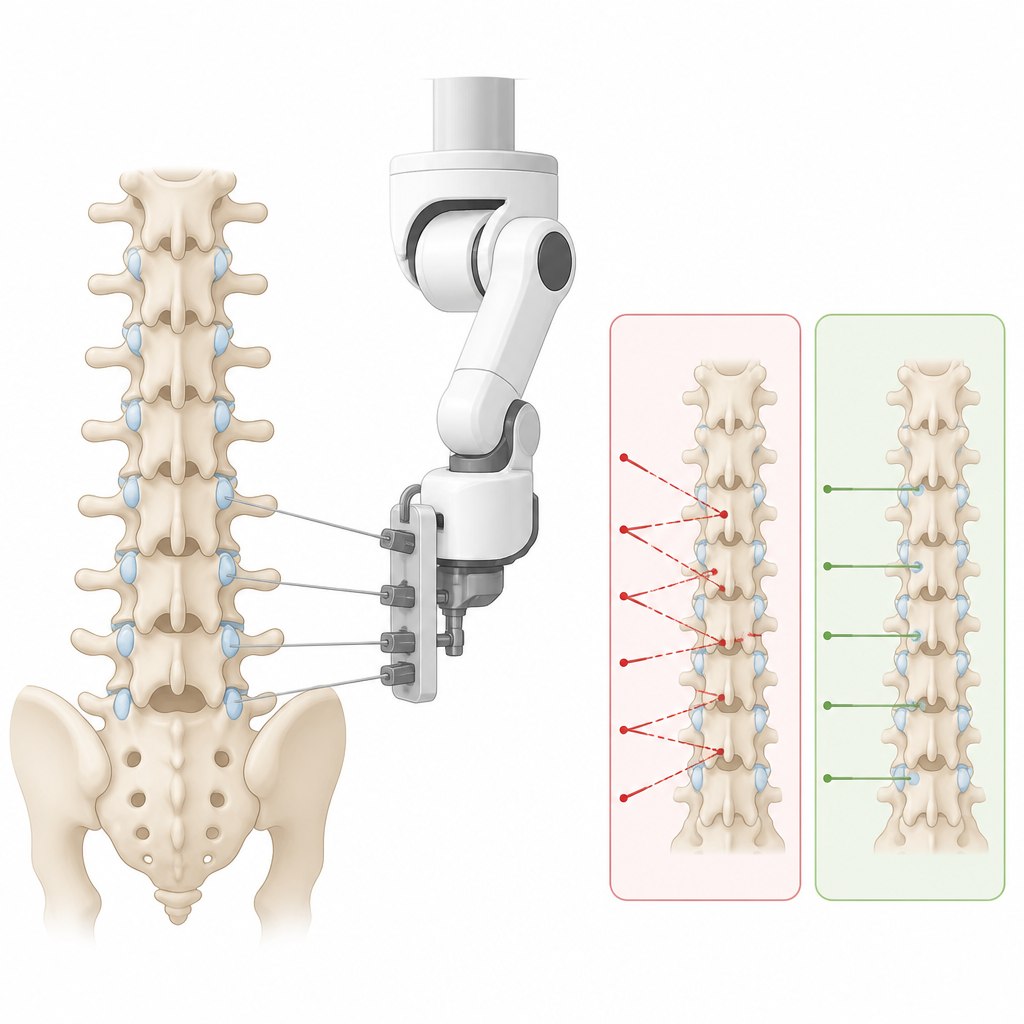
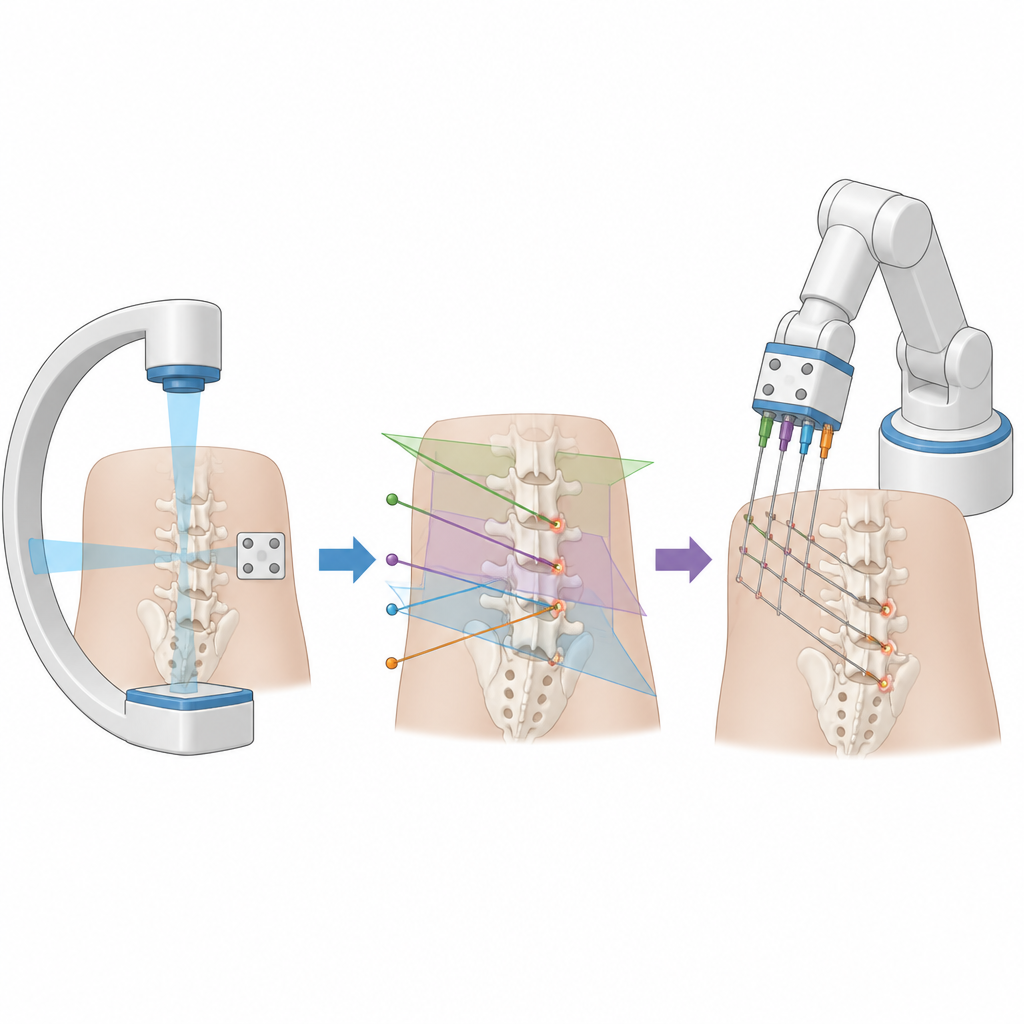
The researchers tested a shoebox sized robotic arm designed for use outside a full operating room, in places like pain clinics or outpatient centers. Instead of needing a detailed CT scan, the robot uses just two simple X ray images taken at right angles to understand where the patient’s spine sits in three dimensional space. Once this quick registration is done, the robot can line up the needle path to several levels of the lower spine in sequence, without taking new images each time. The doctor still inserts the needle by hand through a guiding tube, but the robot fixes the angle and entry point.
Simulating spinal injections in a controlled model
To compare robot guided injections with the traditional manual technique, the team built a realistic model of the lower spine. A plastic lumbar spine was embedded in a soft, opaque gel inside a box, mimicking how bones are hidden under soft tissue. Twenty two neurosurgeons, ranging from beginners to highly experienced specialists, performed the same series of ten injections twice on this model: first manually under live X ray, then with robotic assistance after a short introduction to the device. The researchers recorded how long each procedure took, how many X ray images were needed, how often needles had to be repositioned, and how close each needle tip came to a set of ideal target points.
Sharper aim with less radiation
The robot guided approach clearly reduced radiation. Compared with the manual method, surgeons used about half as many X ray images and spent roughly two thirds less time under fluoroscopy, resulting in a radiation dose cut of about 38 percent. At the same time, the needle tips ended up closer to their intended targets. On average, robot guided needles missed the ideal point by about 6 millimeters, versus more than 7 millimeters by hand, and they hit the predefined “sweet spot” area more than twice as often. Manual procedures required frequent needle adjustments to correct the path, while the robot protocol achieved its accuracy without any repositioning, suggesting less poking through tissue in real patients.
Time trade offs and learning the new tool
The main drawback was time. Total procedure time was more than twice as long with the robot, largely because planning and setup were new to all participants. However, once the robot was registered and the paths planned, the actual injection phase was as fast as the manual one. The second series of robot assisted injections was already noticeably quicker than the first, hinting at a learning curve that could shorten real world procedures. Interestingly, doctors with less experience tended to feel more confident and precise when using the robot, while highly experienced surgeons were more evenly split in their preference between manual and robotic methods.
What this could mean for people with back pain
In simple terms, the study shows that a small clinic friendly robot can help doctors place spinal injection needles more accurately while using less X ray exposure, at the cost of extra setup time. Because the system works with standard two dimensional X ray equipment instead of full CT scanners, it could make safer, low radiation injections more accessible in outpatient settings where resources are limited. While this work was done in a model rather than in patients, it suggests that future back pain treatments and related procedures might become more precise and comfortable, with less radiation, when supported by compact robotic guides.
Citation: Kosterhon, M., Schluechtermann, L. & Ringel, F. Robot-assisted lumbar facet joint infiltration improves accuracy and reduces radiation exposure compared to the manual technique in a comparative phantom study. Sci Rep 16, 14746 (2026). https://doi.org/10.1038/s41598-026-52435-5
Keywords: robotic spine injection, lumbar facet joint, radiation dose reduction, fluoroscopy guided procedure, needle placement accuracy