Clear Sky Science · en
Dietary index for gut microbiota (DI-GM) and irritable bowel syndrome: a case–control study
Why your gut and your plate matter
Irritable bowel syndrome, or IBS, affects millions of people with ongoing stomach pain, bloating, and erratic trips to the bathroom, often without clear answers about why it happens. At the same time, scientists are learning that the trillions of microbes living in our intestines respond strongly to what we eat, and that these microbes, in turn, can influence digestion, mood, and the body’s immune system. This study asks a simple but important question: does eating in a way that supports healthy gut microbes relate to who has IBS and how severe their symptoms are?
A new way to score everyday eating
Instead of focusing on single nutrients, the researchers used a recently developed score called the Dietary Index for Gut Microbiota, or DI-GM. This index rates how friendly a person’s overall diet is to gut microbes, based on how much fiber, colorful plant foods, whole grains, fermented foods, and resistant starch it contains. Higher scores reflect diets richer in these foods, which earlier work has linked to more diverse and resilient gut microbes. The team recruited 175 adults with IBS, diagnosed using standard medical criteria, and 175 adults without IBS who were similar in age and sex. All participants reported what they typically ate using a detailed questionnaire, allowing the scientists to calculate DI-GM scores for each person. 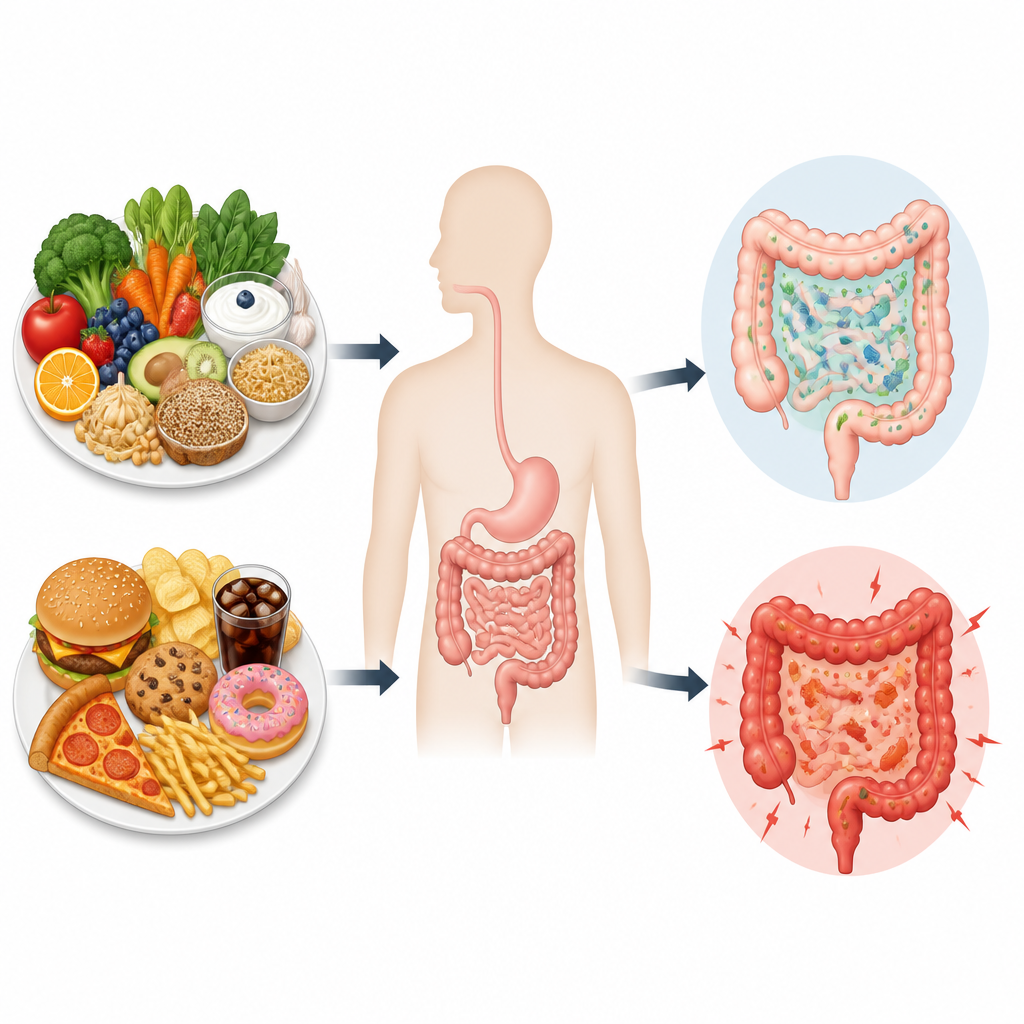
Comparing people with and without IBS
When the researchers compared the two groups, a clear pattern emerged. On average, people with IBS had substantially lower DI-GM scores than those without IBS, indicating that their diets were less supportive of gut microbes. The two groups were otherwise similar in body weight, age, education, income, smoking, drinking, and overall calorie intake. However, IBS participants reported less physical activity, more symptoms of depression, and poorer sleep. This suggests that IBS does not just involve the gut, but also connects with lifestyle and mental wellbeing, and that diet is only one piece of this larger puzzle.
Diet, inflammation, and how sick people feel
To understand what might link diet and IBS, the researchers measured several markers in the blood that reflect inflammation and the “leakiness” of the gut barrier. These included C-reactive protein, lipopolysaccharide, zonulin, and key immune signaling molecules. They also measured quality of life, sleep, and mood. Within the IBS group, those with the highest DI-GM scores had lower levels of inflammatory markers and zonulin, fewer depressive symptoms, better sleep, milder IBS symptom scores, and higher gut-related quality of life than those with the lowest scores. Each step up in DI-GM was tied to a drop in inflammation-related measurements, even after accounting for age, sex, body size, and calorie intake. 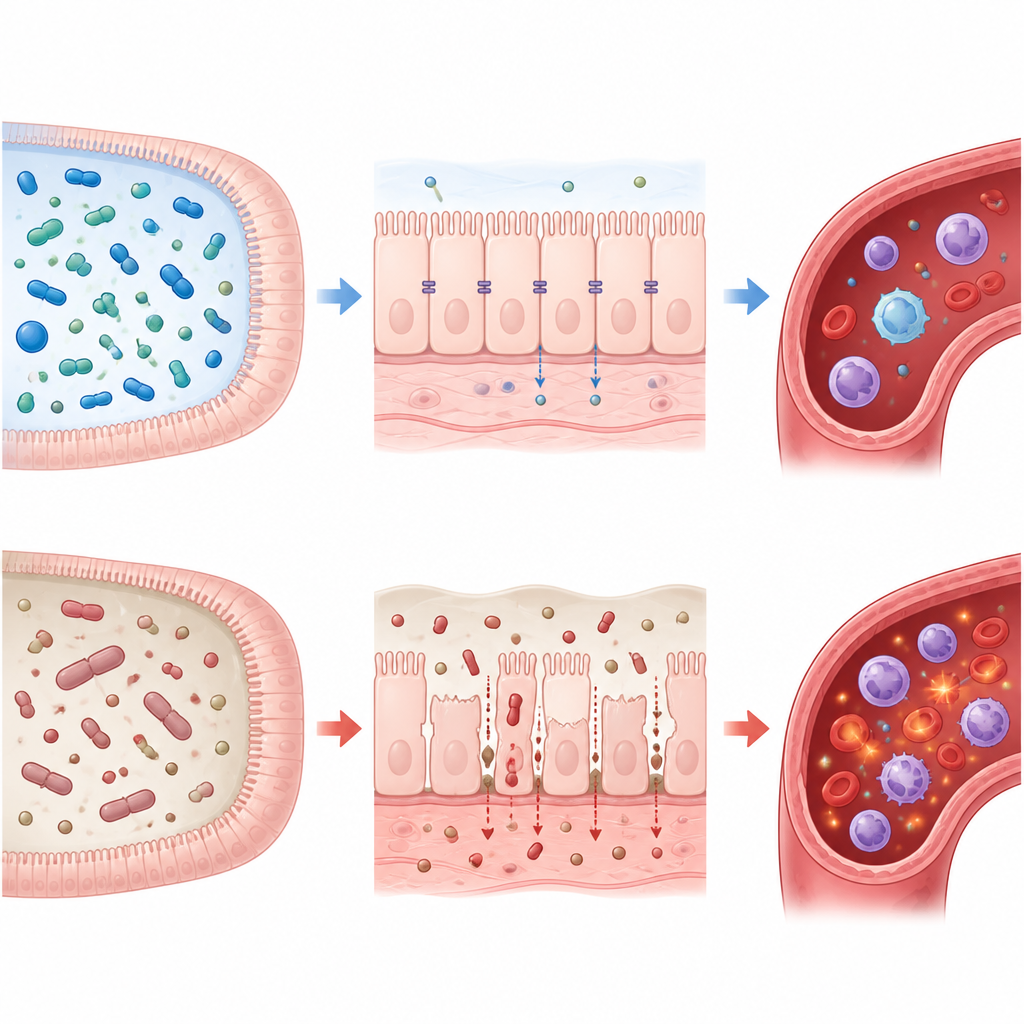
When symptoms may reshape the diet
At the same time, the study uncovered another, more complicated story. Among people with IBS, those who felt the worst had the highest levels of inflammation and signs of a leaky gut barrier. The links were especially strong for C-reactive protein, lipopolysaccharide, and zonulin. Many people with severe IBS try to control their symptoms by cutting out troublesome foods, including some high-fiber grains and plant foods that would otherwise boost the DI-GM score. This raises the possibility that the direction of cause and effect may run both ways: symptoms may lead people to restrict certain foods, which could, in turn, worsen their gut microbes and inflammation over time.
What this means for people living with IBS
Overall, the study shows that people whose diets better support gut microbes are less likely to have IBS and, among those who do have it, tend to have lower inflammation and better quality of life. However, because this research captured only a single moment in time, it cannot prove whether diet changes drive IBS or whether IBS drives changes in diet. The findings highlight a close and tangled relationship between what we eat, how our gut barrier and immune system behave, and how we feel day to day. Future long-term and intervention studies will be needed to see whether gently shifting toward more microbe-friendly foods can ease IBS symptoms without making them worse.
Citation: Wang, Y., Zhang, G., Lin, S. et al. Dietary index for gut microbiota (DI-GM) and irritable bowel syndrome: a case–control study. Sci Rep 16, 15728 (2026). https://doi.org/10.1038/s41598-026-50647-3
Keywords: irritable bowel syndrome, gut microbiota, diet quality, intestinal inflammation, gut barrier