Clear Sky Science · en
Comparison of socioeconomic and psychosocial profiles between Brazilian and Swedish women with temporomandibular disorders
Why Jaw Pain and Everyday Life Are Connected
Many people think of jaw pain as a simple dental problem, but for millions of women worldwide it is part of a broader condition called temporomandibular disorders, or TMD. These problems can make it hard to chew, talk, or even smile without discomfort, and they are closely tied to stress, mood, and life circumstances. This study compares women with TMD in Brazil and Sweden—two countries with very different social and economic conditions—to explore how factors like education, work, anxiety, and whole‑body pain might shape their experience of jaw pain.
Two Countries, One Painful Condition
The researchers focused on 300 women between 18 and 50 years old who all had muscle‑related TMD pain, a common form that affects the chewing muscles. One group came from a university dental clinic in Brazil, an upper‑middle income country with large social inequalities. The other group came from a specialist pain clinic in Sweden, a high‑income welfare state. All women were examined with the same standardized international TMD criteria and completed detailed questionnaires about their pain levels, daily limitations, mood, body symptoms, and habits such as clenching or grinding their teeth. This allowed the team to make a careful, side‑by‑side comparison of their physical, emotional, and social profiles. 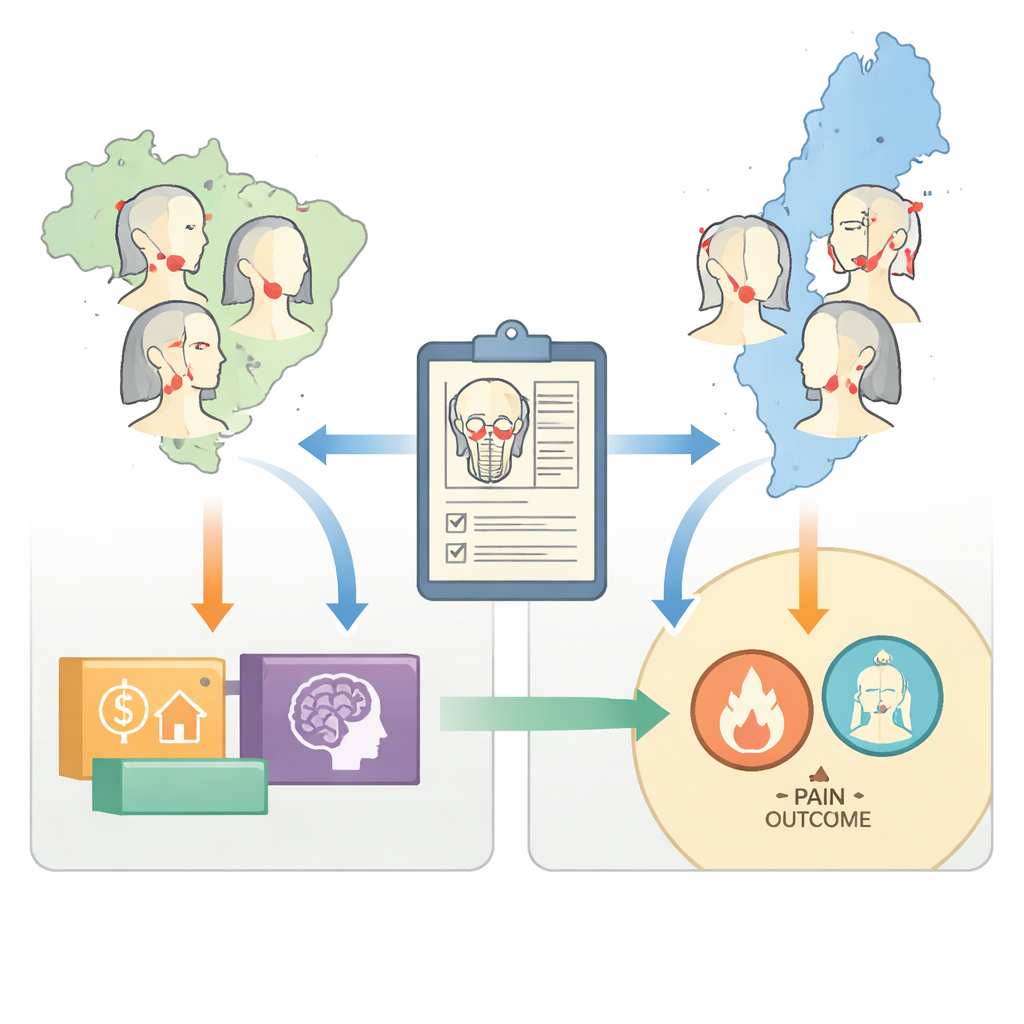
Life Situation and Background Differences
The study revealed striking contrasts in the women’s everyday circumstances. Brazilian participants tended to have a slightly higher body mass index and were more often single, but they also more frequently had a university education compared with Swedish participants. Employment patterns differed as well: more Brazilian women were retired, while Swedish women were more often on sick leave. These patterns hint at how health, work, and social roles are organized differently in each country—and suggest that women may reach specialty care through different pathways depending on local health systems and safety nets.
Pain, Function, and Whole‑Body Symptoms
When it came to how much TMD disrupted life, Swedish women generally reported more severe impact. Nearly half of them fell into the most limiting category of chronic pain interference, compared with a much smaller share in Brazil. Swedish participants also described more difficulties with jaw function—such as chewing or opening the mouth—and were more likely to experience widespread pain across several body regions, not just in the jaw. In contrast, the intensity of jaw pain itself, as well as the frequency of oral habits like clenching, was similar in both groups. This combination suggests that Swedish patients arriving at a specialist clinic may represent more complex, whole‑body pain cases, while Brazilian patients at a university setting may have somewhat less disabling but still persistent jaw pain. 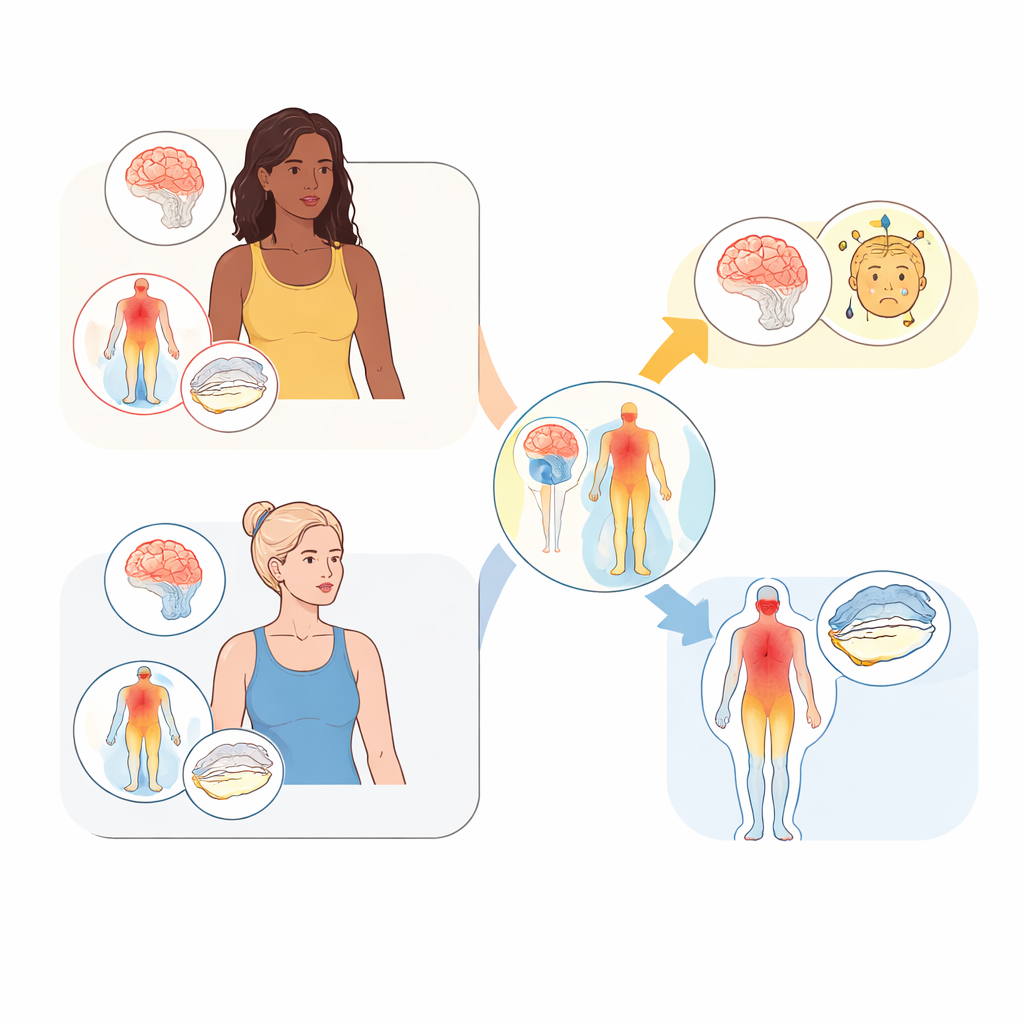
Mood, Stress, and Hidden Body Symptoms
Emotional health told another part of the story. Symptoms of anxiety were higher among Brazilian women, aligning with broader data that show high rates of anxiety disorders in Brazil. However, depression scores and general physical complaints—such as fatigue, stomach discomfort, or dizziness—did not differ meaningfully between countries, and both groups showed relatively high levels of stress‑related oral behaviors. Overall, the findings support the idea that TMD is strongly embedded in a person’s psychological world, but that the particular shape of this distress—more anxiety in one country, more widespread pain and disability in another—can vary with culture and socioeconomic setting.
What This Means for Patients and Care
Despite the differences, the study also found important similarities: women in both Brazil and Sweden shared core features of TMD pain and often had more than one jaw‑related diagnosis at the same time. This reinforces the view that TMD is a complex, whole‑person condition that transcends borders, even as local culture and living conditions modify how it appears. For patients, the message is that jaw pain is not “just in the head,” but it is also not just in the jaw—it is intertwined with stress, mood, overall body pain, and life circumstances. For clinicians and policymakers, the results highlight the need for comprehensive assessment that includes social and psychological factors, and for tailoring treatment and research to the realities of different countries and health systems.
Citation: Dias, M.F., Jasim, H., de Godoi Gonçalves, D.A. et al. Comparison of socioeconomic and psychosocial profiles between Brazilian and Swedish women with temporomandibular disorders. Sci Rep 16, 12030 (2026). https://doi.org/10.1038/s41598-026-47939-z
Keywords: temporomandibular disorders, chronic jaw pain, psychosocial factors, women’s health, cross-cultural comparison