Clear Sky Science · en
Egyptian clover exhibits favorable physicochemical and nutritional characteristics for valorization as a sustainable forage ingredient in poultry diets
Why farmers and consumers should care
Chicken is a key source of affordable protein worldwide, but feeding billions of birds puts pressure on crops like maize and soy, which are costly and often imported. This study looks at Egyptian clover, a common forage plant, to see whether it could partially replace these traditional ingredients in broiler chicken feed, cutting costs and supporting more sustainable farming.
A common field plant with hidden value
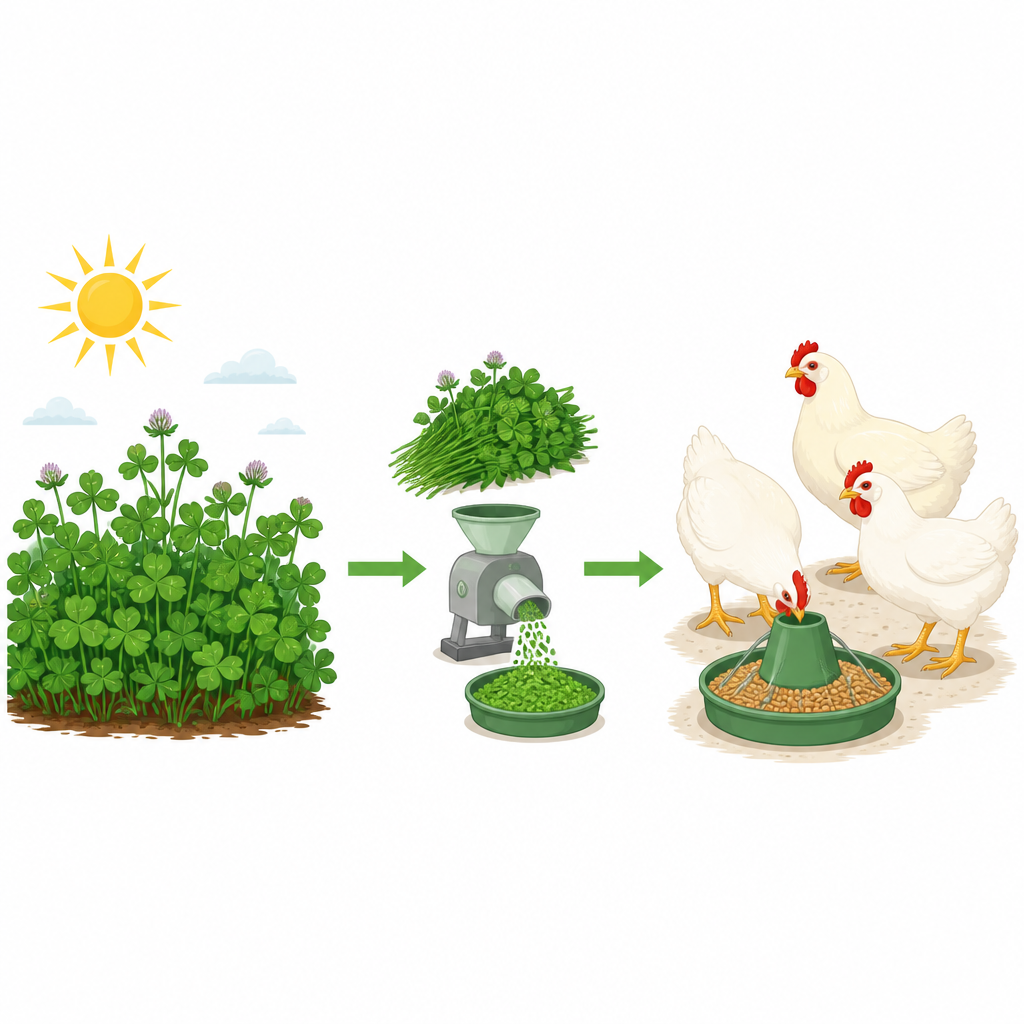
Egyptian clover, also called berseem, has been grown for thousands of years as animal fodder, especially in Egypt, the Mediterranean region and parts of Asia. Farmers value it because it grows well in different soils, produces several harvests in one season and helps enrich the soil with nitrogen. The researchers asked a simple but important question: does this familiar forage plant have the right nutrients to become a real ingredient in modern poultry feed, rather than just rough fodder?
Checking what is inside the plant
To answer that question, the team collected Egyptian clover from fields in Algeria, dried and ground it, and then carefully measured what it contained. They found that the plant is rich in protein, a key nutrient for building muscle and supporting growth in broiler chickens. It also contains carbohydrates, a small amount of fat and several types of fiber. Using advanced laboratory tools, they identified beneficial plant molecules and a mixture of fats, including a high share of alpha linolenic acid, a fatty acid linked in other studies to health benefits in animals and humans.
Minerals, vitamins and helpful plant compounds
The researchers then turned to minerals and vitamins, which support bone strength, immunity and many body functions. Egyptian clover provided useful amounts of phosphorus, potassium and calcium, along with trace elements such as iron, zinc and copper, although overall mineral levels were lower than in some reports from other regions. Vitamin testing revealed the presence of vitamins A and E in particular, plus several B vitamins and vitamin C. These nutrients are known to aid growth, fertility, disease resistance and meat quality in poultry, suggesting that the plant offers more than just basic calories.
The fiber challenge and how to manage it
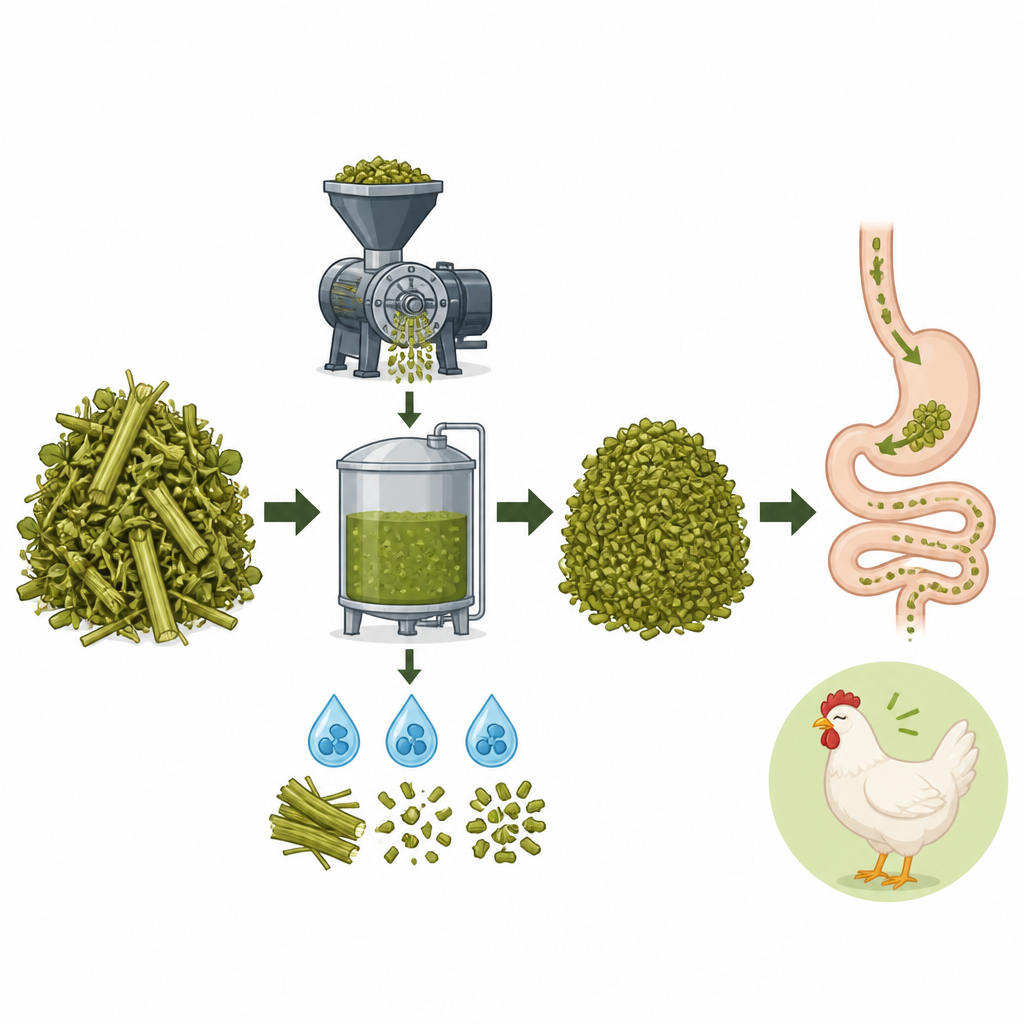
Despite these strengths, Egyptian clover has a drawback for chickens: a relatively high level of fiber and cellulose. Chickens have a limited ability to break down tough plant cell walls, so too much fiber can slow digestion, reduce nutrient absorption and enlarge parts of the gut without improving growth. The authors argue that this does not rule out the plant as a feed ingredient, but it means it should not be added in its raw form at high levels. Instead, they recommend processing methods that cut fiber down and improve digestibility, such as fine grinding, fermentation, enzyme treatments or extracting leaf protein.
What this means for future chicken feed
Overall, the study shows that Egyptian clover has many of the qualities needed to serve as a sustainable protein source in broiler diets, provided its fiber is managed. At modest inclusion levels, especially when processed to be easier to digest, it could help farmers rely less on imported soy and maize while still raising healthy birds. The authors stress that the next step is to test these ideas in live feeding trials, to confirm how Egyptian clover affects growth, feed use and meat quality in real flocks.
Citation: Benmoussa, A., Lankri, E.H., Meziane Ahmed, M. et al. Egyptian clover exhibits favorable physicochemical and nutritional characteristics for valorization as a sustainable forage ingredient in poultry diets. Sci Rep 16, 15668 (2026). https://doi.org/10.1038/s41598-026-47029-0
Keywords: Egyptian clover, poultry feed, broiler nutrition, forage protein, sustainable agriculture