Clear Sky Science · en
Combined mesenchymal stem cells and metformin therapy modulates key macromolecular pathways in pulmonary fibrosis based on evidence from untargeted metabolomics
Why Scarring Lungs Matter
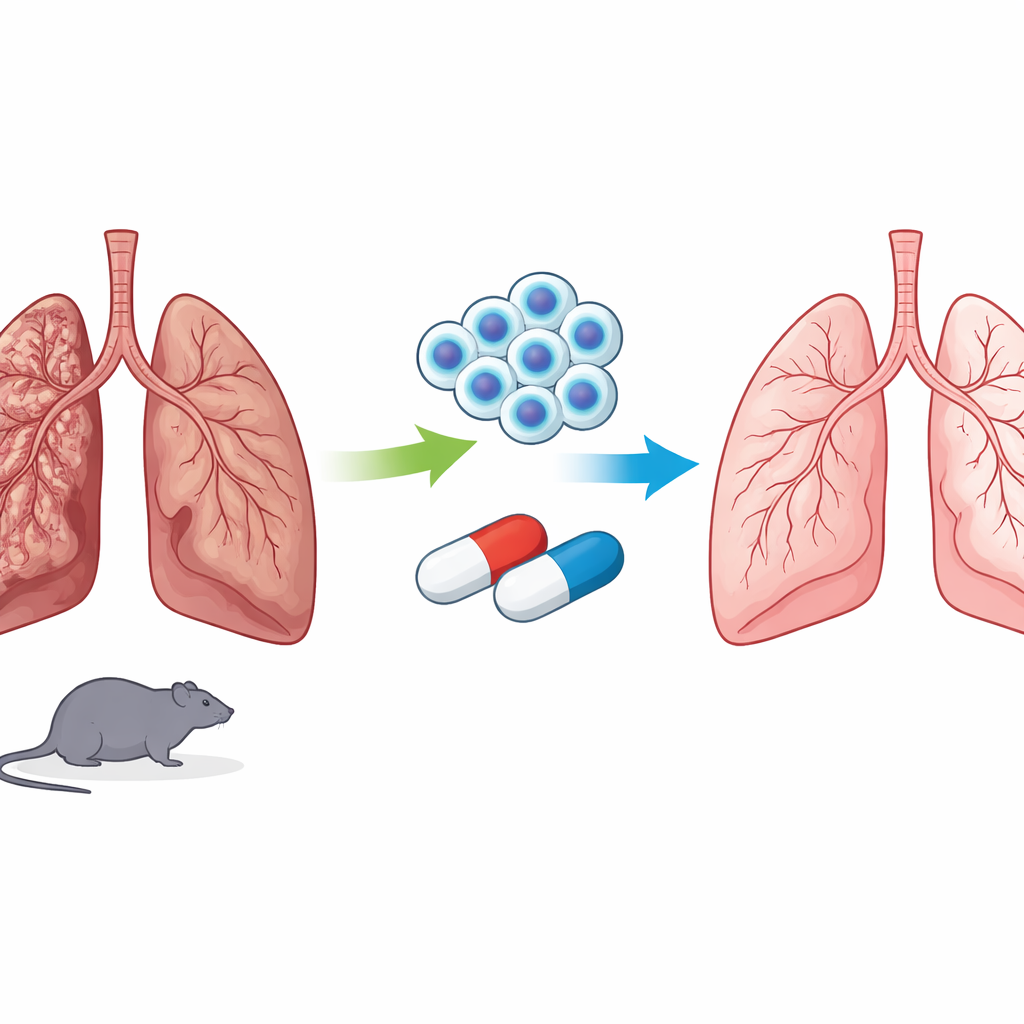
Idiopathic pulmonary fibrosis is a relentless lung disease in which normal, spongy lung tissue is slowly replaced by stiff scar. People struggle to breathe, yet current medicines mostly just slow the decline rather than truly repairing the damage. This study in rats explores a fresh idea: pairing a common diabetes drug, metformin, with living repair cells called mesenchymal stem cells to see whether together they can both soften lung scarring and reset the body’s disturbed chemistry.
Scarring in the Lungs
In idiopathic pulmonary fibrosis, tiny air sacs in the lungs become thickened and distorted as layers of collagen and other fibers build up. The exact trigger is unknown, but repeated injury to the cells lining the air sacs and faulty wound healing drive a vicious cycle of inflammation, overactive scar‑forming cells, and loss of normal lung structure. Survival after diagnosis is often only a few years. Existing drugs approved for this condition can slow further scarring but rarely reverse tissue that is already damaged, so researchers are searching for treatments that can both calm the disease and help the lungs rebuild.
Two Helpers: A Diabetes Drug and Repair Cells
Metformin is best known as a safe, inexpensive pill for type 2 diabetes, where it helps cells handle energy more efficiently. Recent laboratory work suggests it can also switch scar‑forming cells in the lung into a less harmful state. Mesenchymal stem cells, which can be taken from tissues like fat or bone marrow, home in on injured organs and release molecules that dampen inflammation and support tissue repair. Because these two therapies act in different ways—one by reprogramming cell metabolism, the other by calming immune reactions and promoting healing—the authors reasoned that using them together might offer a stronger, more complete benefit than either alone.
Testing the Combination in Rats
To explore this idea, the team used a standard rat model of pulmonary fibrosis in which a chemotherapy drug, bleomycin, is placed directly into the windpipe to trigger lung scarring. After fibrosis developed, animals received metformin, stem cells, both treatments together, or no treatment. The researchers examined thin slices of lung tissue under the microscope and also measured hundreds of small molecules in blood and lung samples using an advanced chemistry technique called untargeted metabolomics. This allowed them to see not only whether scarring improved, but also how the body’s internal chemistry shifted with each treatment.
What Changed Inside the Lungs and Blood
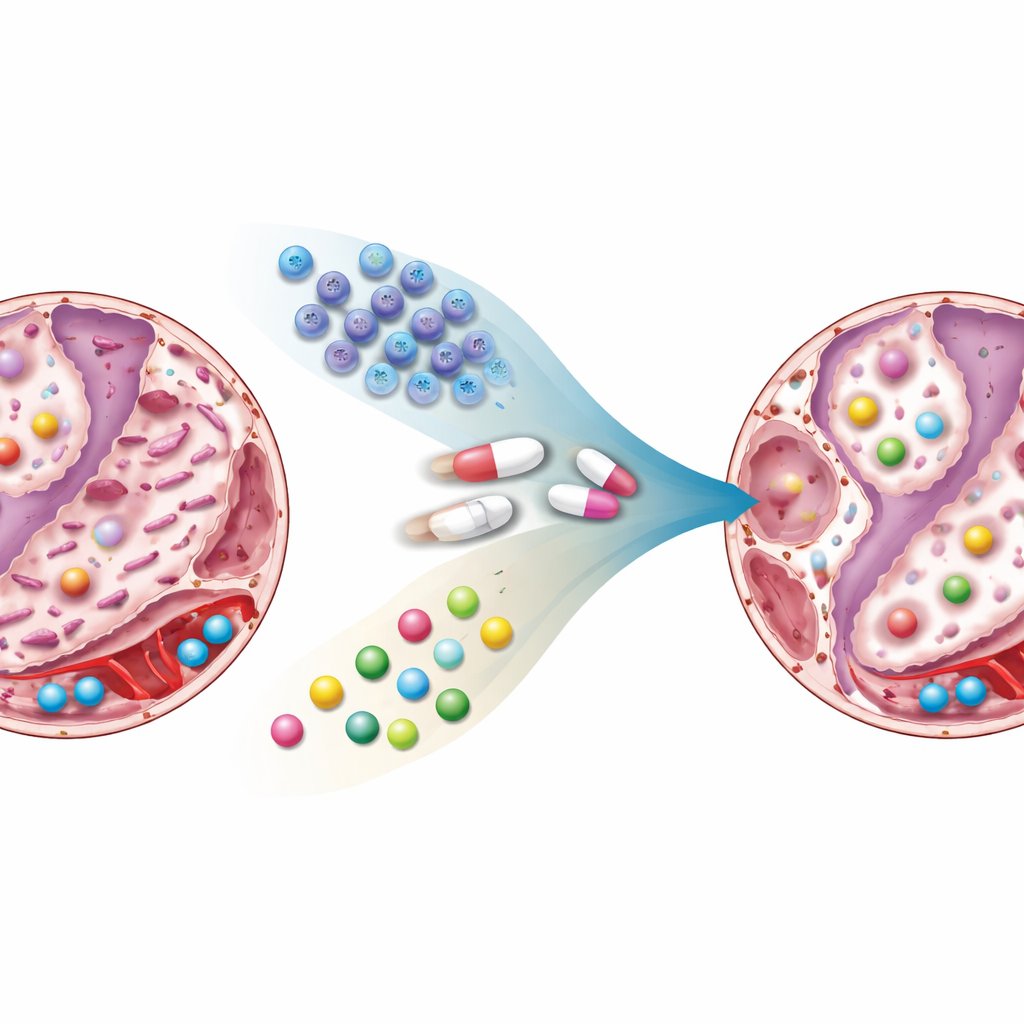
Metformin or stem cells alone each reduced scarring to some extent, but the combination therapy produced the most striking effect: lung tissue looked close to normal, with thinner walls, less collagen, and fewer fibrotic spots. The chemical fingerprints told a similar story. In untreated fibrotic rats, many metabolites tied to sugar use, fats, stress hormones, and signaling molecules were clearly disturbed. Levels of compounds linked to serotonin breakdown, stress hormone production, and certain lipids and amino acids were shifted in ways that favor ongoing scarring. With treatment, especially the combination, these molecules moved back toward the pattern seen in healthy rats. Some changes seemed more tied to metformin, others to stem cells, and some appeared only when both were given together, hinting at genuine synergy.
Clues for Future Treatments
By lining up chemical changes with tissue healing, the study highlights nine small molecules in blood and lung tissue that track closely with disease severity and response to therapy. These include markers of sugar handling, energy balance, hormone activity, and cell‑to‑cell signaling. In the future, such molecules could serve as simple blood tests to monitor how fibrosis is progressing or how well a treatment is working, without needing repeated lung biopsies. Just as important, they point to the underlying processes that might be worth targeting with new drugs or combinations.
What This Could Mean for Patients
For a layperson, the bottom line is that combining metformin with mesenchymal stem cells in a rat model did more than just slow lung scarring—it partly reversed it and helped restore a healthier internal chemical environment. While this work is still at an early, preclinical stage and done only in animals, it suggests that attacking fibrosis from multiple angles at once may be key. If future studies in people confirm these findings, a familiar pill plus carefully prepared repair cells might one day offer those with pulmonary fibrosis not just more time, but better‑functioning lungs.
Citation: Morsi, K., Abdelmoneim, T.K., Youssef, N.A. et al. Combined mesenchymal stem cells and metformin therapy modulates key macromolecular pathways in pulmonary fibrosis based on evidence from untargeted metabolomics. Sci Rep 16, 14641 (2026). https://doi.org/10.1038/s41598-026-46691-8
Keywords: idiopathic pulmonary fibrosis, mesenchymal stem cells, metformin, metabolomics, lung fibrosis therapy