Clear Sky Science · en
Mediating role of alcohol dependence in the associations between adult ADHD symptoms and a wide range of physical comorbidities
Why this study matters to everyday health
Many people think of attention deficit hyperactivity disorder, or ADHD, as a condition that mainly affects school performance and focus. This study shows that ADHD symptoms in adults may also be tied to a surprisingly wide range of physical health problems, and that alcohol dependence could be an important link in this chain. Understanding this connection could help people with ADHD symptoms, their families, and clinicians reduce long term health risks by paying closer attention to alcohol use.
Looking at ADHD beyond the mind
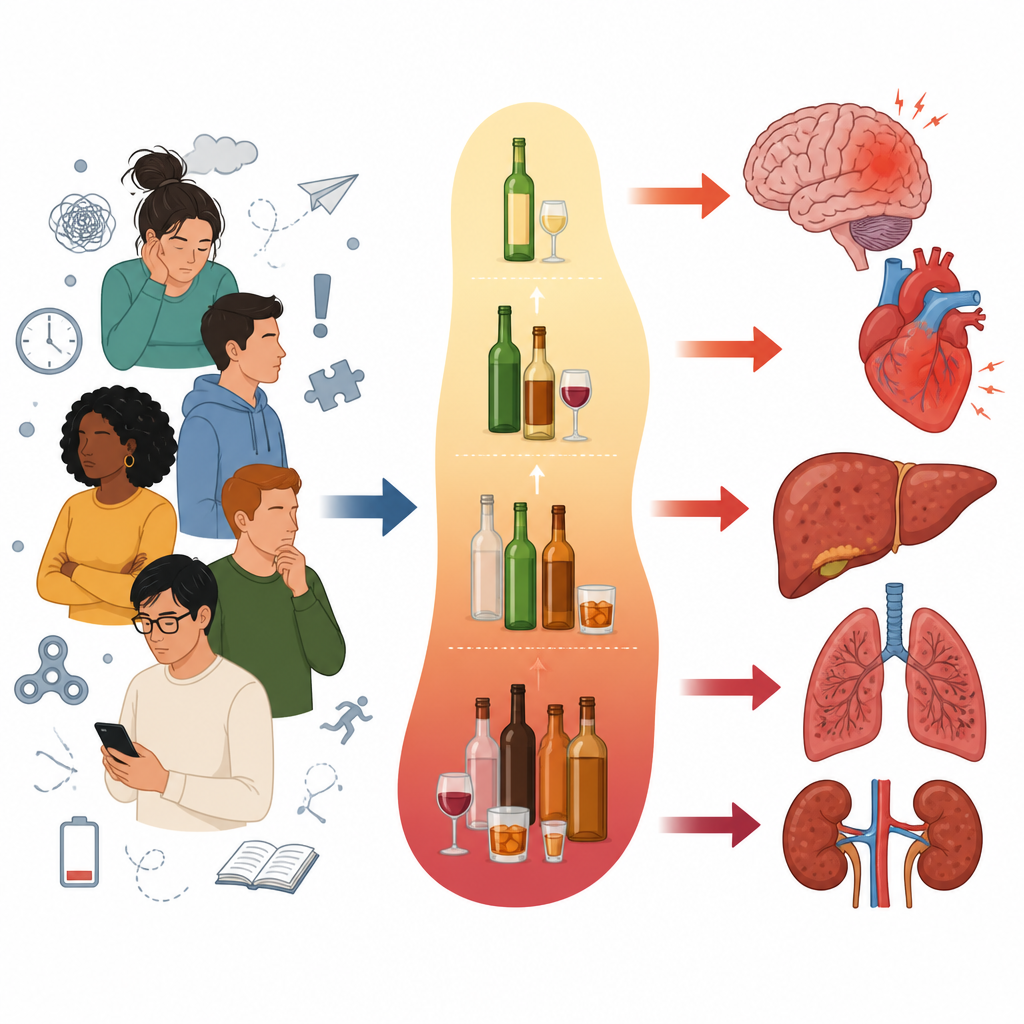
The researchers started from a new view of ADHD as not only a mental health condition, but one that may affect the whole body. Past large scale studies have reported that adults with ADHD have higher rates of heart, lung, and metabolic diseases. At the same time, adults with ADHD are more likely to smoke, have poorer sleep, and drink heavily. Alcohol dependence in particular is common and can worsen attention and self control, creating a cycle that is hard to break. Yet no previous study in Asia had asked how much alcohol dependence might statistically explain the link between ADHD symptoms and physical illness.
A large national survey in Japan
To explore this question, the team analyzed data from more than 29,000 people aged 16 and older who took part in a nationwide online survey in Japan in 2024. Participants answered short screening questions about ADHD symptoms, alcohol use, and 18 different physical conditions, including high blood pressure, diabetes, liver disease, stroke, cancer, chronic pain, and epilepsy. The researchers also collected information on age, sex, education, income, marriage, and smoking. They used statistical methods to make the survey resemble the general Japanese population and then examined how strongly ADHD symptoms were linked to each health problem.
ADHD symptoms tied to many body problems
Adults who screened positive for ADHD symptoms made up about four percent of the sample. Compared with others, they were younger, had lower incomes, and were more often unmarried and current smokers. Crucially, they also had a much higher rate of probable alcohol dependence: about 17 percent versus 4 percent. After taking demographic factors and smoking into account, ADHD symptoms were linked to higher odds of 17 of the 18 physical conditions studied. The strongest links were seen for chronic liver disease, chronic lung disease, epilepsy, stroke, and heart disease, with roughly two to four times higher odds compared with adults without ADHD symptoms.
Alcohol as a key middle step
The heart of the study was a mediation analysis, a technique that asks whether one factor partly sits between two others. Here, the researchers tested whether alcohol dependence statistically sat between ADHD symptoms and each physical disease. For many conditions, alcohol dependence explained a sizable share of the link. For cancer, about 90 percent of the association between ADHD symptoms and having cancer ran through alcohol dependence in the model; for stroke, about 75 percent did. Alcohol also accounted for more than half of the association with chronic liver disease, diabetes, epilepsy, serious lung disease, kidney disease, and some infections. In women with ADHD symptoms, the relative link with alcohol dependence was especially strong, and the alcohol related pathway seemed to play a larger role for severe conditions such as stroke.
What these findings mean in real life
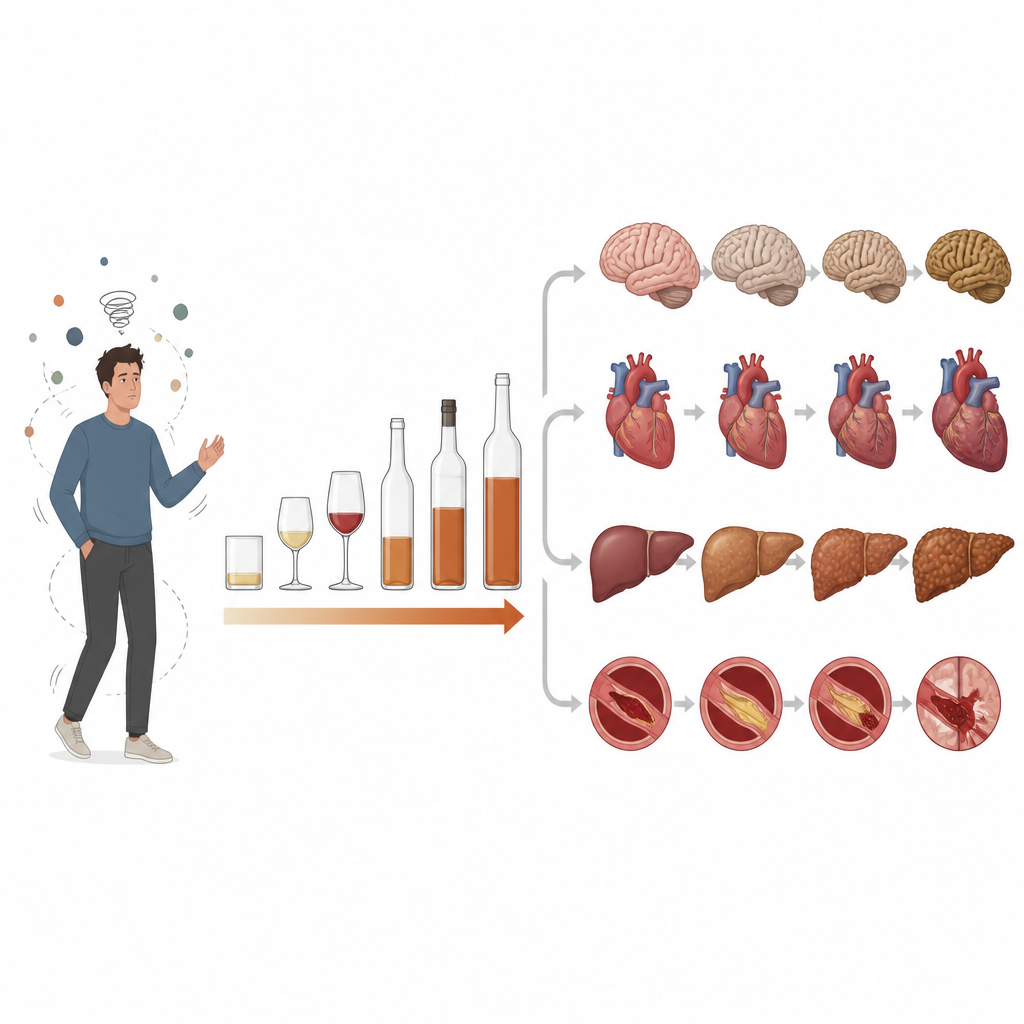
Because this was a single point in time survey and relied on self report, it cannot prove that ADHD symptoms cause later alcohol dependence or physical disease. Other lifestyle or biological factors may also play important roles. Still, the results support the idea that for adults with ADHD symptoms, alcohol dependence is a common and potentially modifiable behavior that may contribute to many serious health problems. For patients and clinicians, this suggests that caring for adults with ADHD symptoms should include careful attention to drinking patterns and support for healthier choices, alongside treatment for attention and impulse difficulties.
Citation: Tokumitsu, K., Sugawara, N., Tabuchi, T. et al. Mediating role of alcohol dependence in the associations between adult ADHD symptoms and a wide range of physical comorbidities. Sci Rep 16, 15363 (2026). https://doi.org/10.1038/s41598-026-46388-y
Keywords: adult ADHD, alcohol dependence, physical comorbidities, Japanese population, mediation analysis