Clear Sky Science · en
Seroprevalence of SARS-CoV-2 in rural communities of Burkina faso (West Africa) assessed through blood-fed mosquitoes
Why mosquitoes can tell us about past COVID infections
In many parts of rural Africa, people live far from clinics and testing centers, which makes it hard to know how widely COVID-19 has spread. Scientists working in Burkina Faso turned to an unexpected helper: mosquitoes that had recently fed on people. By testing the blood inside these insects, they explored whether a simple mosquito catch could give a window into past coronavirus infections in remote villages.
Following the trail of a hidden pandemic
Official COVID-19 figures in Burkina Faso, like in many African countries, come mostly from city hospitals and airports. Yet more than half of the population lives in rural areas where doctors, laboratories, and test kits are scarce. Earlier studies in the country showed that far more people carried antibodies to SARS-CoV-2 than case reports suggested, especially in large cities. What remained largely unknown was how much the virus had circulated in smaller communities, where the disease could spread quietly with few records.
Using village mosquitoes as tiny blood collectors
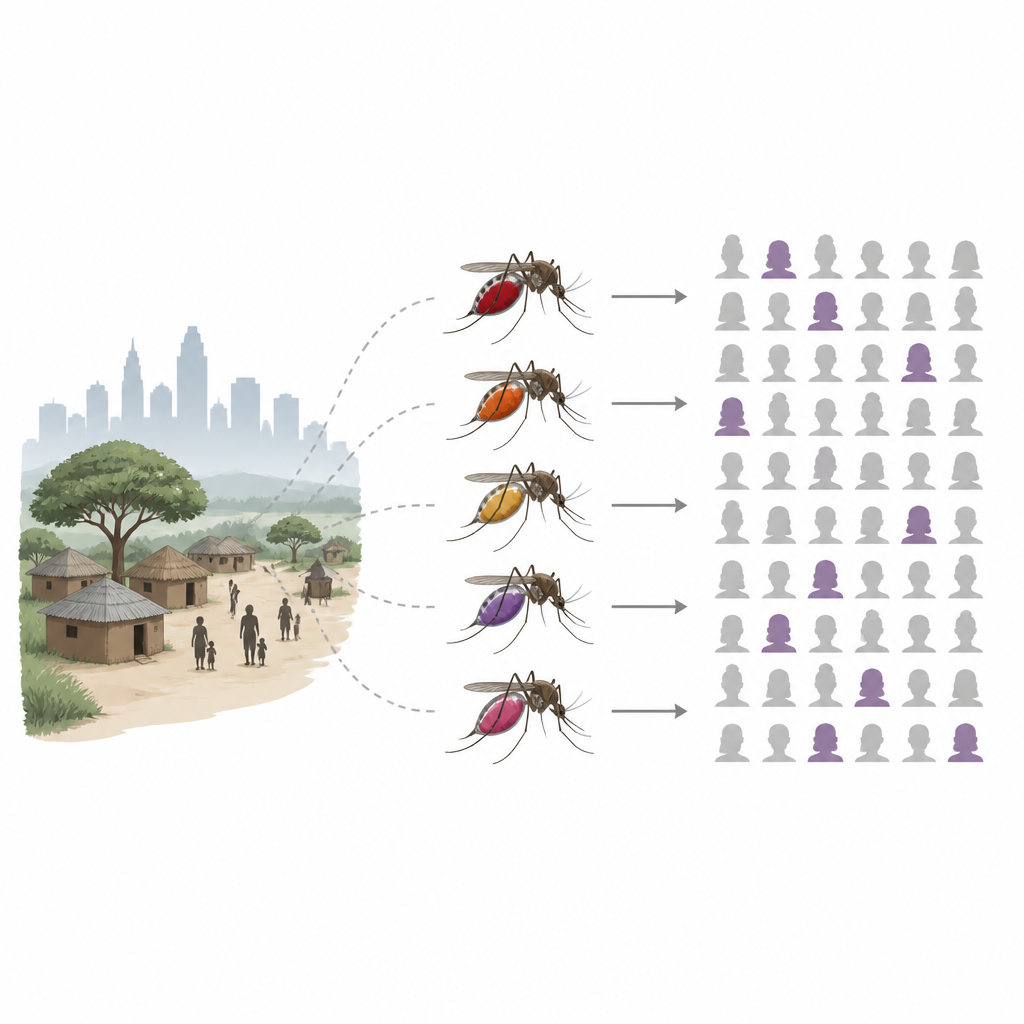
To tackle this problem, the researchers relied on a concept called xenosurveillance, which uses blood-feeding insects as stand-ins for direct human sampling. From October to November 2021 they visited eleven villages located about 50 kilometers from Burkina Faso’s two largest cities, Bobo-Dioulasso and Ouagadougou. Early each morning, after getting permission from household heads, they collected live mosquitoes resting inside bedrooms and kept only those with visibly swollen abdomens showing a recent blood meal. Each mosquito was stored carefully so the human antibodies in its gut would remain intact for testing.
How the mosquito blood was tested
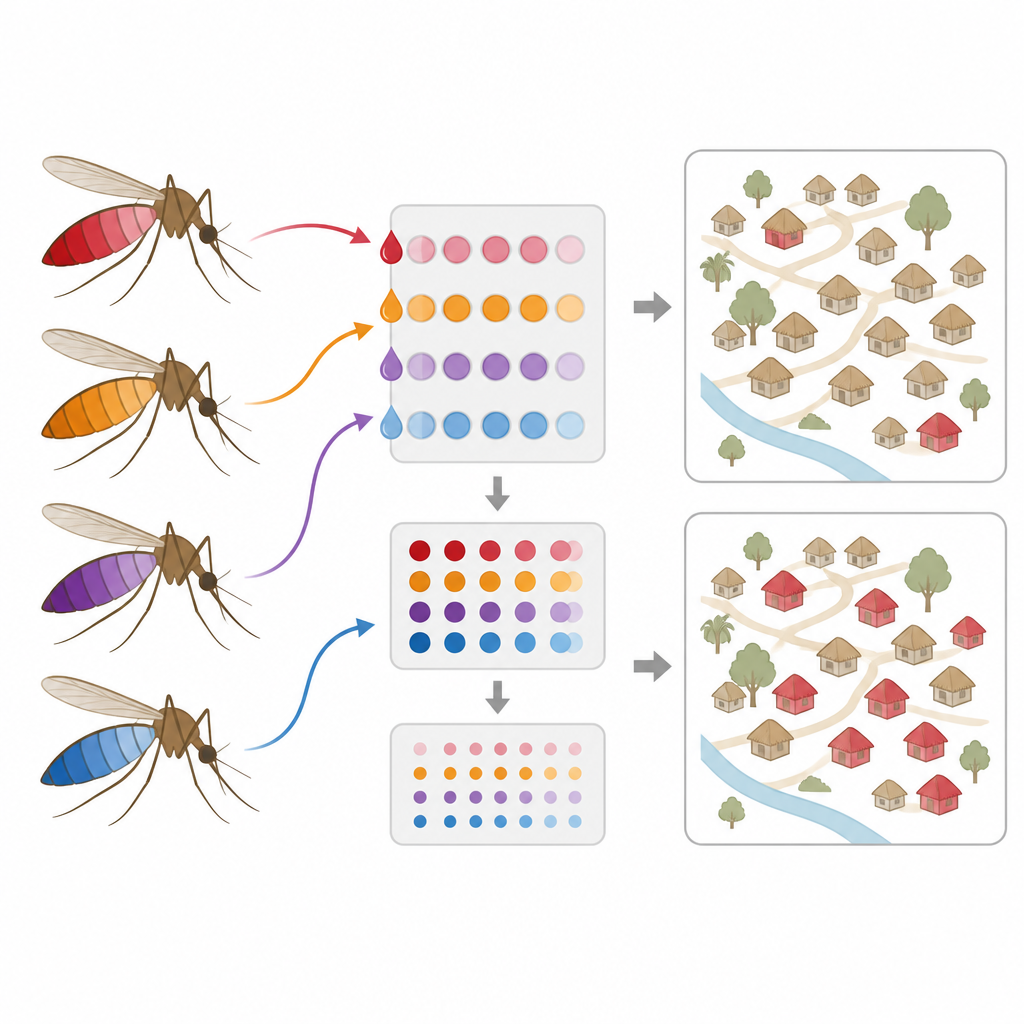
Back in the laboratory, scientists dissected individual mosquito abdomens and mixed the blood with a simple salt solution. They then used standard antibody tests, similar to those used on human blood, to look for immune proteins that recognize the coronavirus spike and its receptor binding site. Only mosquitoes whose samples reacted in both tests above defined cutoffs were counted as positive. This careful approach meant that each positive insect served as evidence that at least one person it had bitten previously had been infected with SARS-CoV-2.
What the mosquitoes revealed about village exposure
Altogether, 690 blood-fed mosquitoes were tested from 299 households. Four species were identified, mostly Anopheles gambiae and Anopheles funestus, well known malaria vectors, along with smaller numbers of Culex quinquefasciatus and Anopheles rufipes. About one in three mosquitoes carried detectable human antibodies to the coronavirus, with an overall seroprevalence of 31 percent. Villages near Bobo-Dioulasso showed higher mosquito-based seroprevalence than those near Ouagadougou, mirroring patterns previously reported in direct human studies. At the village scale, some communities had nearly half of tested mosquitoes positive, while in one village none were positive at all. When results were grouped by household, the share of homes with at least one positive mosquito was even higher, as catching more insects per house increased the chance of finding evidence of past infection.
Different mosquito species, different clues
The team also compared how well different mosquito species captured human antibody signals. Culex quinquefasciatus, a species that often feeds on people and rests indoors, had the highest fraction of positive blood meals, while Anopheles rufipes had the lowest. The two common Anopheles species fell in between. These contrasts suggest that mosquito ecology and feeding habits shape how useful each species is for this kind of surveillance. Although antibodies in a mosquito gut remain detectable for only about a day, the timing of collections early in the morning likely matched recent night-time bites, helping preserve the signal.
What this means for rural health monitoring
The study shows that analyzing blood from naturally fed mosquitoes can reveal where the coronavirus has circulated, even in places with little formal testing. Because the method avoids taking blood directly from people, it can be cheaper, less invasive, and easier to organize than large serological surveys, especially in remote regions. While the results cannot give exact infection rates, they provide a useful minimum estimate and highlight differences between communities. In the future, combining mosquito blood analysis with tools that identify which hosts were bitten could help track both human and animal exposure to a range of pathogens, offering a practical way to watch for new and known diseases at the edge of the health system.
Citation: de Souza, R.M., Bilgo, E., Gnambani, E.J. et al. Seroprevalence of SARS-CoV-2 in rural communities of Burkina faso (West Africa) assessed through blood-fed mosquitoes. Sci Rep 16, 15816 (2026). https://doi.org/10.1038/s41598-026-46133-5
Keywords: SARS-CoV-2, COVID-19 surveillance, rural Burkina Faso, mosquito sampling, xenosurveillance