Clear Sky Science · en
Comparative analysis of the detection capabilities of BacT/ALERT and BACTEC blood culture systems for simulated and clinical bacteremia specimens
Why finding germs in blood matters
When dangerous bacteria enter the bloodstream, every hour counts. Doctors rely on machines called blood culture systems to spot these infections so they can choose the right antibiotics. This study asks a practical question that affects many hospital patients in intensive care: which of two widely used systems, BacT/ALERT or BACTEC, does a better job of finding germs in blood, especially when patients are already on powerful antibiotics?
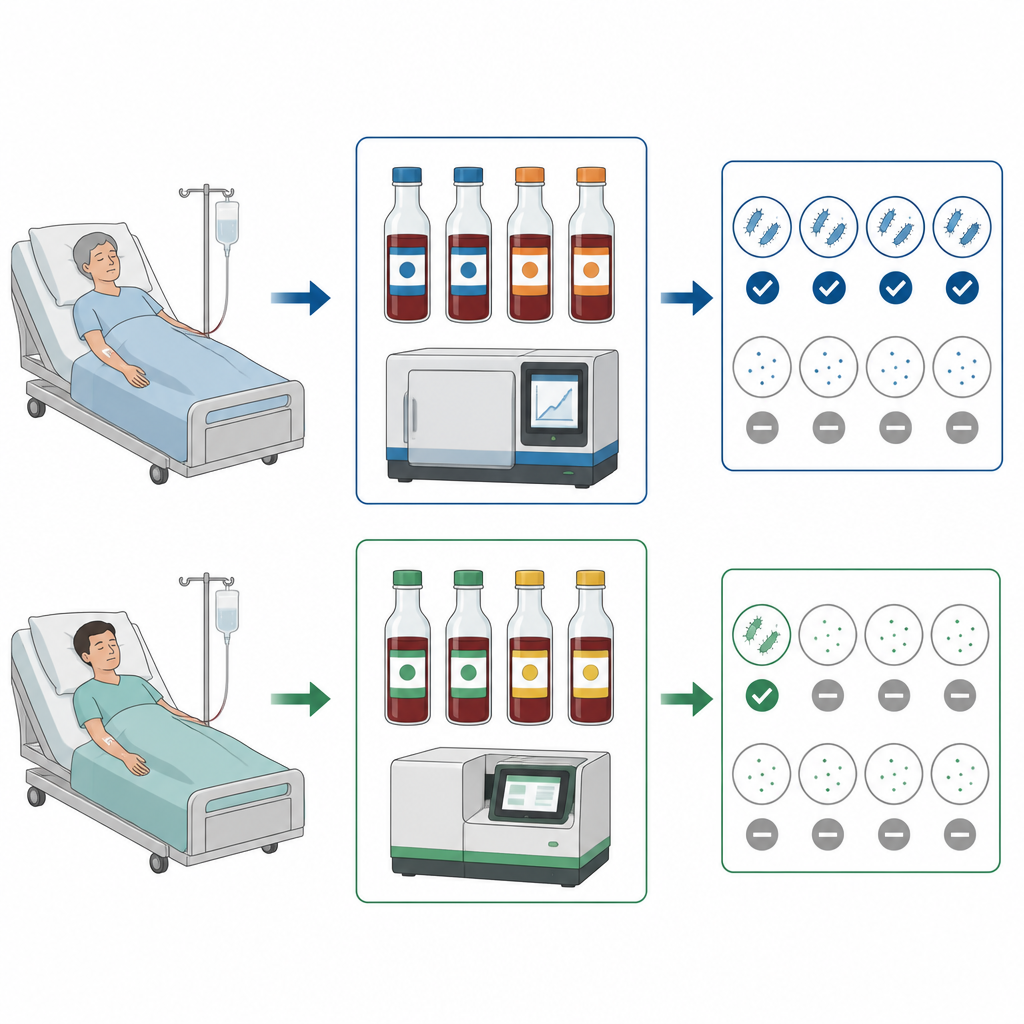
Two testing systems under the microscope
The researchers compared several types of bottles from the BacT/ALERT and BACTEC systems. These bottles hold a patient’s blood inside an automated machine that watches for signs of growing microbes. The team tested both simulated infections, using known strains of bacteria and yeast in the lab, and real blood samples from 228 very ill patients in emergency and intensive care units. In each patient, blood was drawn from both arms and split so that one set went into BacT/ALERT bottles and the other into BACTEC bottles, creating a fair, side by side comparison.
How antibiotics can hide infections
Many patients with suspected bloodstream infections are already receiving antibiotics. These drugs can kill or weaken microbes in the blood before they reach the culture bottle, making infections harder to detect. Some modern culture bottles try to solve this problem by including special materials that soak up antibiotics while allowing germs to grow. In the lab tests, the team combined specific antibiotics with common microbes, such as Escherichia coli, Staphylococcus aureus, Bacteroides fragilis, and Candida albicans, to see which bottles could still detect growth. Bottles without these absorbent additives generally failed when antibiotics were present, while certain BacT/ALERT bottles neutralized several drugs and still revealed hidden microbes.
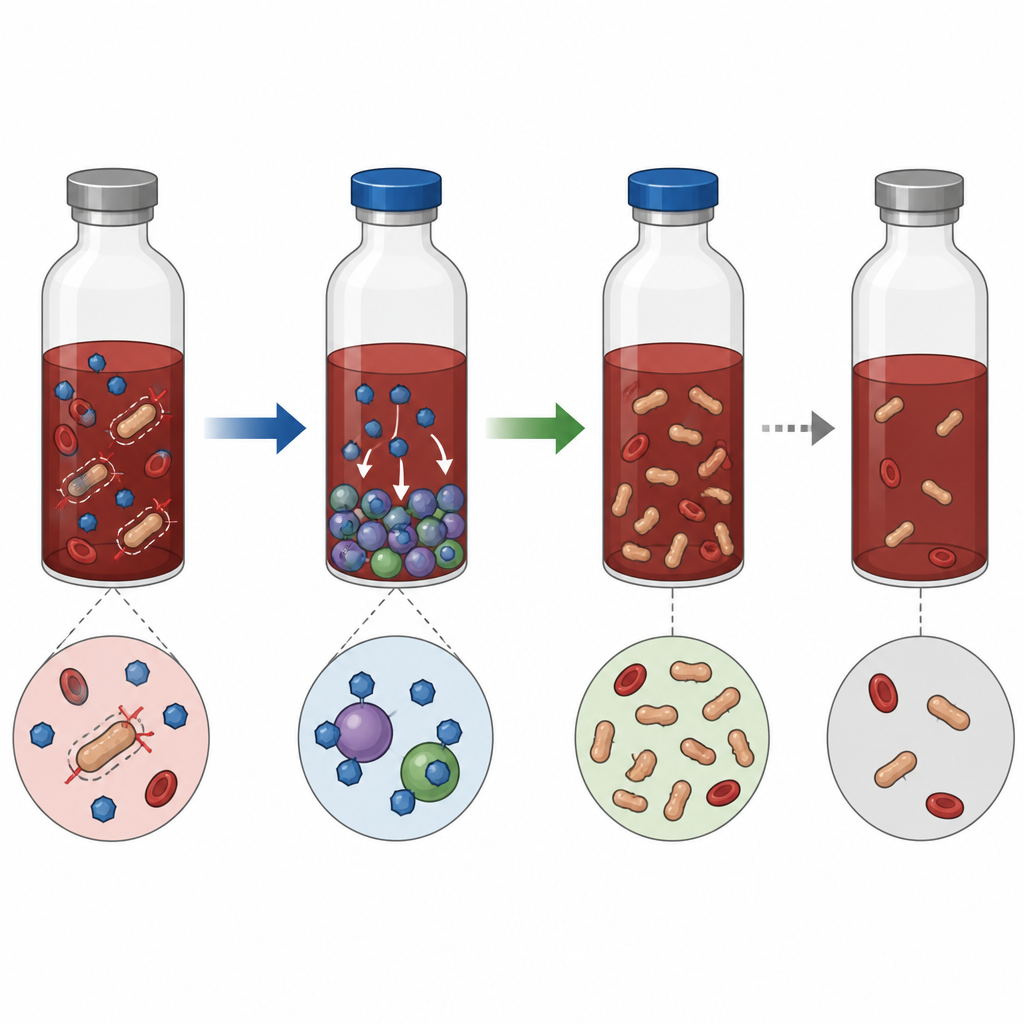
Which system found more real infections
When the researchers turned to real patient samples, the differences became clinically important. After removing false alarms and contaminated samples, BacT/ALERT bottles detected bloodstream infections in about 18 percent of patients, compared with about 12 percent for BACTEC. The advantage was even clearer for anaerobic bottles, which are designed to grow microbes that dislike oxygen: BacT/ALERT’s FN Plus bottles were positive in about 15 percent of patients, while the comparable BACTEC Lytic bottles were positive in about 6 percent. Overall, BacT/ALERT recovered more kinds of bacteria and more total strains, suggesting a broader reach for different pathogens.
Antibiotic use and missed cases
A closer look at patients whose infections appeared only in certain bottles revealed a pattern. In all cases where only the BacT/ALERT FN Plus anaerobic bottle flagged an infection, the patients had received carbapenem antibiotics, such as meropenem, within the previous two days, and the infecting bacteria were still sensitive to these drugs. Laboratory experiments supported this finding: FN Plus bottles effectively absorbed meropenem and other agents, allowing bacteria to grow despite the drug. In contrast, the BACTEC Lytic anaerobic bottles sometimes failed to show growth under the same conditions, meaning that infections in patients on these strong antibiotics could be missed or detected much later.
What this means for patient care
For people in intensive care, faster and more reliable detection of bloodstream infections can guide doctors to tailor or stop antibiotics sooner, reduce side effects, and improve outcomes. This study suggests that, especially for patients already treated with powerful drugs like carbapenems, choosing BacT/ALERT bottles may increase the chances of catching serious infections and do so in less time. The authors conclude that hospital laboratories should match their blood culture systems to the antibiotics their patients receive, and that paying attention to the antibiotic absorbing features of culture bottles is a practical step toward better diagnosis and treatment.
Citation: Wang, D.D., Jiang, X., Hu, B.T. et al. Comparative analysis of the detection capabilities of BacT/ALERT and BACTEC blood culture systems for simulated and clinical bacteremia specimens. Sci Rep 16, 15290 (2026). https://doi.org/10.1038/s41598-026-46118-4
Keywords: blood culture, bacteremia, antibiotic resistance, clinical microbiology, intensive care